autonomic nervous system

PPT 34 pages 4.6 MB Free download

Page preview (5 pages)

Scroll down 👇
1 / 34
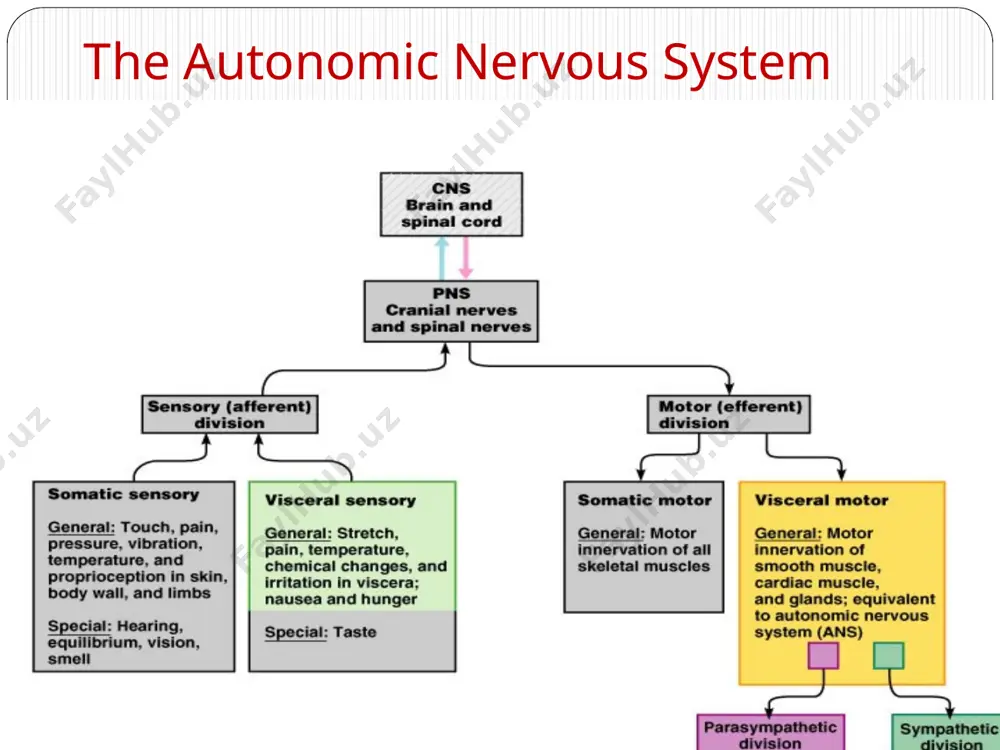
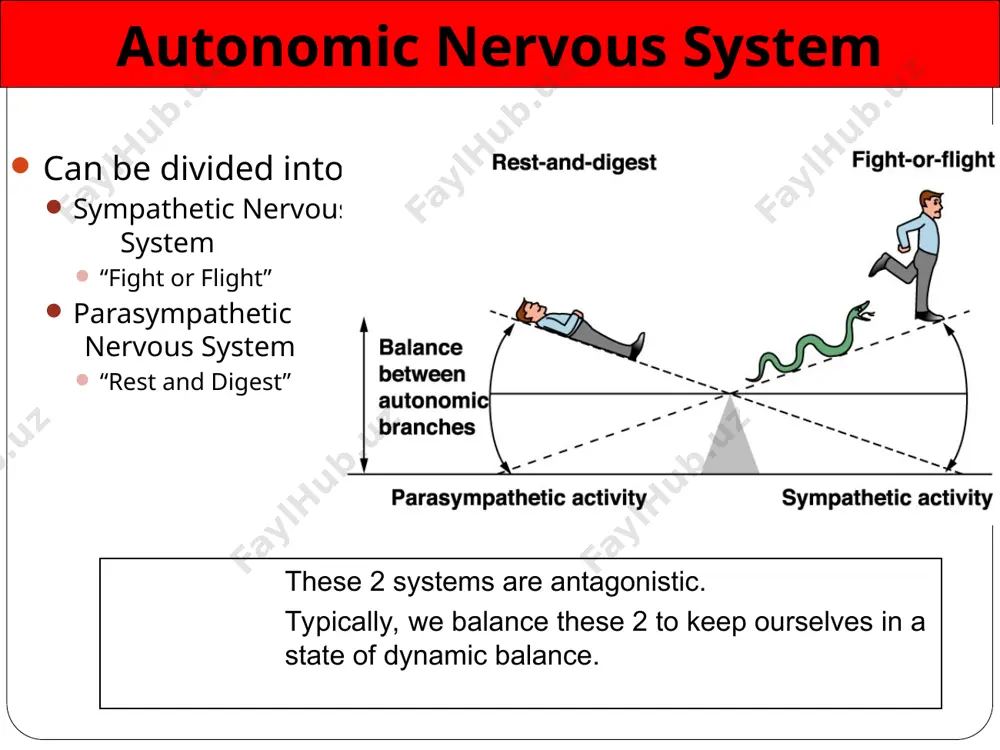
anatomy & physiology i autonomic nervous system dr. khaled alkhamesy physio-2013 * learning objectives at the end of this lecture students should be able to describe the structure and function of the ans function of the sympathetic and parasympathetics divisions of the ans role of the neurotransmitter & adrenergic and cholinergic receptors visceral reflex arcs referral pain central control of the ans. * the autonomic nervous system autonomic nervous system can be divided into: sympathetic nervous system “fight or flight” parasympathetic nervous system “rest and digest” these 2 systems are antagonistic. typically, we balance these 2 to keep ourselves in a state of dynamic balance. autonomic nervous system (ans) the autonomic nervous system is the subdivision of the peripheral nervous system that regulates body activities that are generally not under conscious control autonomic tone- a balance between the sympathetic and parasympathetic activity. regulated by the hypothalamus via subconscious control consists …
2 / 34
ed and the receptor type of the effectors comparison of somatic and autonomic systems divisions of the ans ans divisions: sympathetic and parasympathetic the sympathetic mobilizes the body during extreme situations the parasympathetic performs maintenance activities and conserves body energy the two divisions counterbalance each other parasympathetic division outflow vagus nerve carries nearly 80% of the total craniosacral flow. cranial outflow cranial nerve ganglion effector organ(s) occulomotor (iii) ciliary eye facial (vii) pterygopalatin submandibular salivary, nasal, and lacrimal glands glossopharyngeal (ix) otic parotid salivary glands vagus (x) located within the walls of target organs heart, lungs, and most visceral organs sacral outflow s2-s4 located within the walls of the target organs large intestine, urinary bladder, ureters, and reproductive organs structure of the parasympathetic division * role of the parasympathetic division concerned with keeping body energy use low involves the d activities – digestion, defecation, and diuresis its activity is illustrated …
3 / 34
ood pressure. dilation of the airways. constriction of blood vessels that supply the kidneys and gastrointestinal tract. ↑ blood supply to the skeletal muscles, cardiac muscle, liver and adipose tissue ↑ glycogenolysis ↑ blood glucose. ↑ lipolysis. adrenal gland on top of kidneys adrenal medulla (inside part) is a major organ of the sympathetic nervous system * adrenal gland is exception synapse in gland can cause body-wide release of epinephrine = adrenaline and norepinephrine in an extreme emergency (adrenaline “rush” or surge) * referred pain pain in visceral organs is often perceived to be somatic in origin: referred to somatic regions of body that receive innervation from the same spinal cord segments visceral sensory and autonomic neurons participate in visceral reflex arcs many are spinal reflexes such as defecation and micturition reflexes some only involve peripheral neurons: spinal cord not involved (not shown)* * examples of responses voluntary actions eating …
4 / 34
t of ach binding to nicotinic receptors is always stimulatory cont, 2- muscarinic receptors occur on all effector cells stimulated by postganglionic cholinergic fibers the effect of ach binding: can be either inhibitory or excitatory depends on the receptor type of the target organ adrenergic receptors the two types of adrenergic receptors are alpha and beta each type has two or three subclasses (1, 2, 1, 2 , 3) effects of ne binding to:  receptors is generally stimulatory  receptors is generally inhibitory a notable exception – ne binding to  receptors of the heart is stimulatory effects of drugs atropine – blocks parasympathetic effects neostigmine – inhibits acetylcholinesterase and is used to treat myasthenia gravis tricyclic antidepressants – prolong the activity of ne on postsynaptic membranes over-the-counter drugs for colds, allergies, and nasal congestion – stimulate -adrenergic receptors beta-blockers – attach mainly to 1 receptors and reduce heart …
5 / 34
autonomic nervous system - Page 5

Want to read more?

Download all 34 pages for free via Telegram.

Download full file

About "autonomic nervous system"

anatomy & physiology i autonomic nervous system dr. khaled alkhamesy physio-2013 * learning objectives at the end of this lecture students should be able to describe the structure and function of the ans function of the sympathetic and parasympathetics divisions of the ans role of the neurotransmitter & adrenergic and cholinergic receptors visceral reflex arcs referral pain central control of the ans. * the autonomic nervous system autonomic nervous system can be divided into: sympathetic nervous system “fight or flight” parasympathetic nervous system “rest and digest” these 2 systems are antagonistic. typically, we balance these 2 to keep ourselves in a state of dynamic balance. autonomic nervous system (ans) the autonomic nervous system is the subdivision of the peripheral nervous …

This file contains 34 pages in PPT format (4.6 MB). To download "autonomic nervous system", click the Telegram button on the left.
Tags: autonomic nervous system PPT 34 pages Free download Telegram