the evolution of germanic verb in modern germanic languages
Sahifa ko'rinishi (5 sahifa)
Pastga aylantiring 👇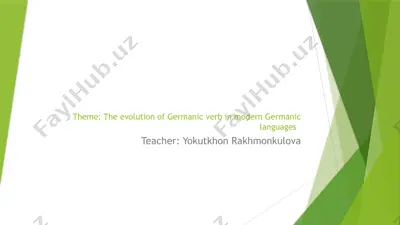
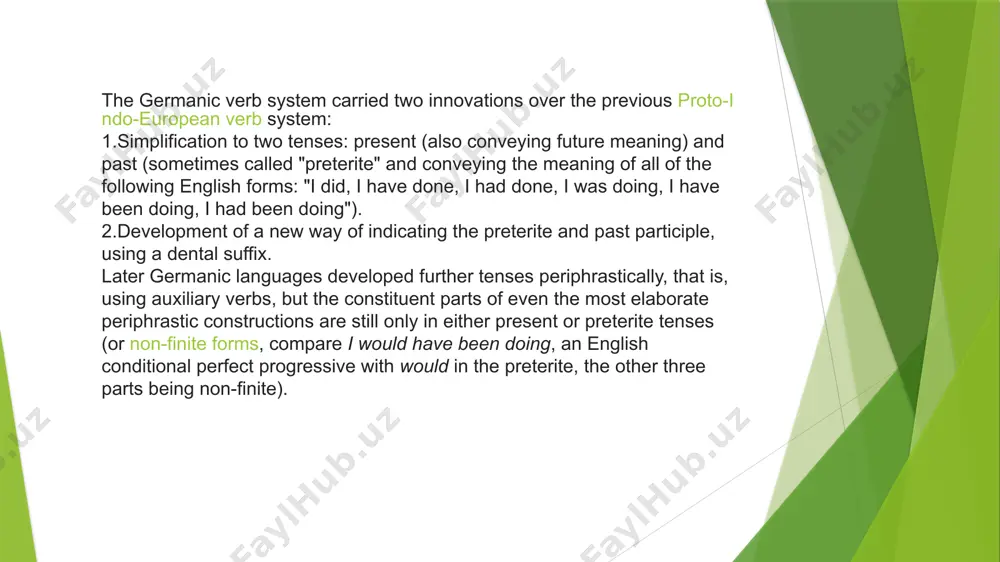
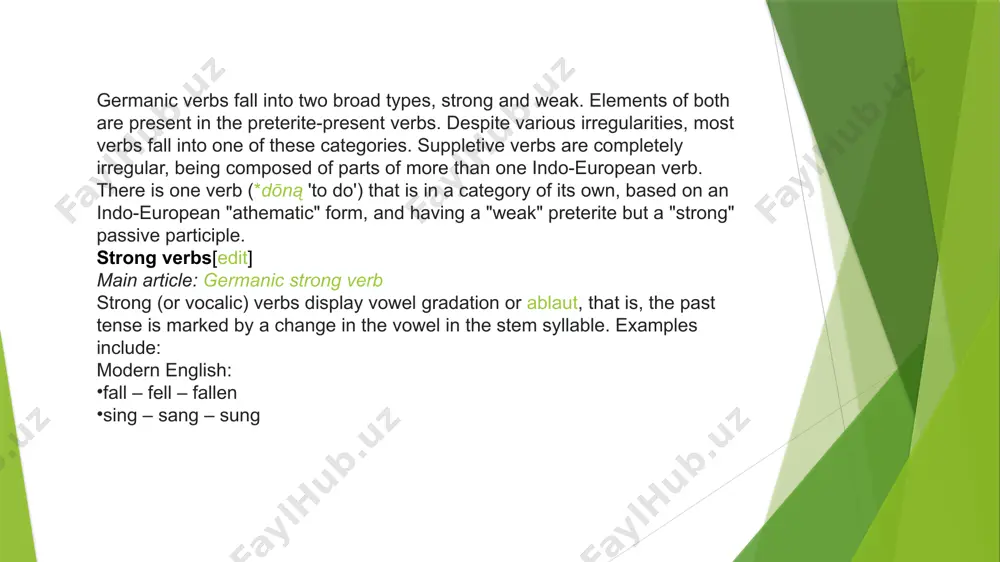
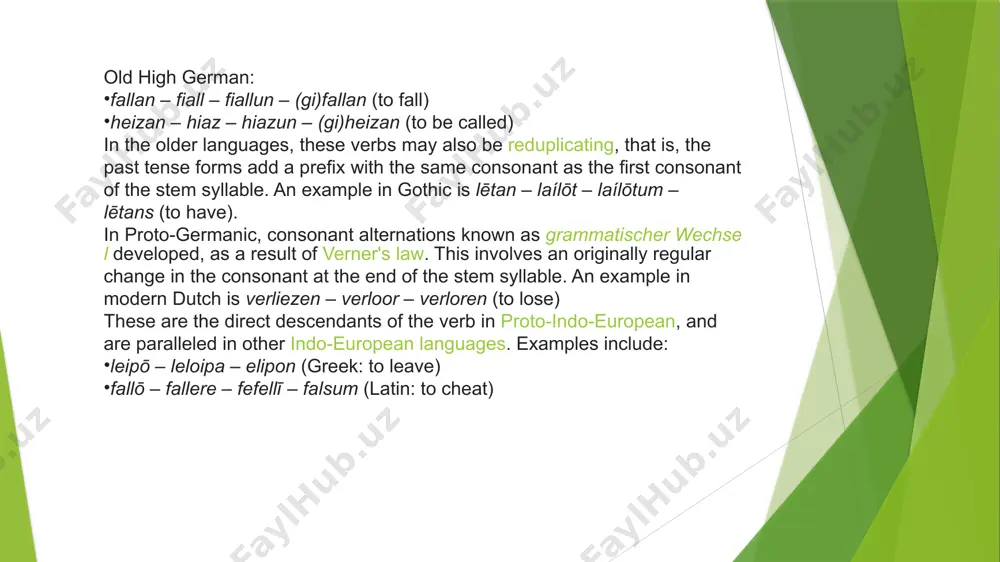
![ą 'to do') that is in a category of its own, based on an indo-european "athematic" form, and having a "weak" preterite but a "strong" passive participle. strong verbs[edit] main article: germanic strong verb strong (or vocalic) verbs display vowel gradation or ablaut, that is, the past tense is marked by a change in the vowel in the stem syllable. examples include: modern english: fall – fell – fallen sing – sang – sung old high german: fallan – fiall – fiallun – (gi)fallan (to fall) heizan – hiaz – hiazun – (gi)heizan (to be called) in the older languages, these verbs may also be reduplicating, that is, the past tense forms add a prefix with the same consonant as the first consonant of the stem syllable. an example in gothic is lētan – laílōt – laílōtum – lētans (to have). in proto-germanic, consonant alternations known as grammatischer wechsel developed, …](/media/previews/pages/preview_ir9V7JX.webp "the evolution of germanic verb in modern germanic languages - 2-sahifa")
Ko'proq o'qimoqchimisiz?
Barcha 6 sahifani Telegram orqali bepul yuklab oling.
To'liq faylni yuklab olish"the evolution of germanic verb in modern germanic languages" haqida
theme: theme: the evolution of germanic verb in modern germanic languages teacher: yokutkhon rakhmonkulova the germanic language family is one of the language groups that resulted from the breakup of proto-indo-european (pie). it in turn divided into north, west and east germanic groups, and ultimately produced a large group of mediaeval and modern languages, most importantly: danish, norwegian, and swedish (north); english, dutch and german (west); and gothic (east, extinct). the germanic verb system lends itself to both descriptive (synchronic) and historical (diachronic) comparative analysis. this overview article is intended to lead into a series of specialist articles discussing historical aspects of these verbs, showing how they developed out of pie, and how they came to have their p...
Bu fayl PPTX formatida 6 sahifadan iborat (54,8 KB). "the evolution of germanic verb in modern germanic languages"ni yuklab olish uchun chap tomondagi Telegram tugmasini bosing.
 PPTX
PPTX
 PPTX
PPTX
 PPTX
PPTX
 PPTX
PPTX
 PPTX
PPTX
 DOC
DOC
 DOC
DOC
 PPTX
PPTX
 PPTX
PPTX
 DOCX
DOCX
 PPT
PPT