theoretical and methodological approaches to translation: models, techniques, and challenges

DOCX 38 стр. 57,4 КБ Бесплатная загрузка

Предварительный просмотр (5 стр.)

Прокрутите вниз 👇
1 / 38
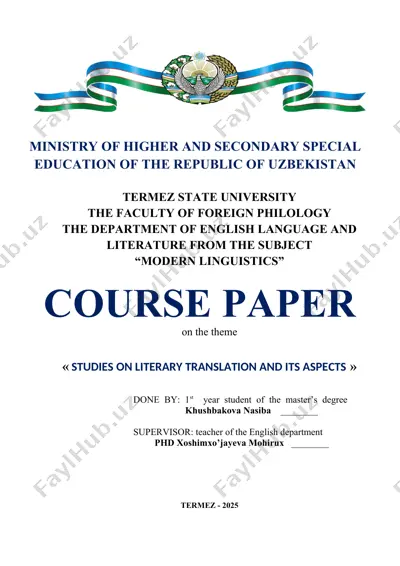
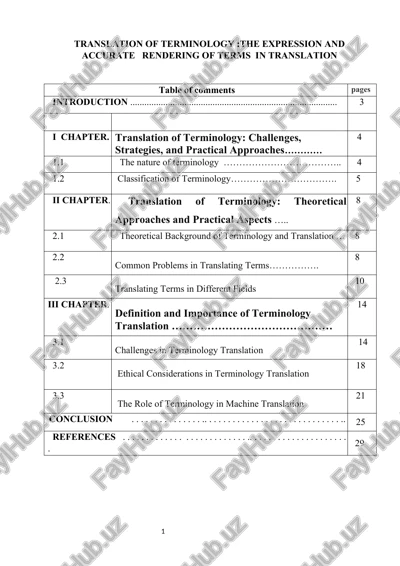
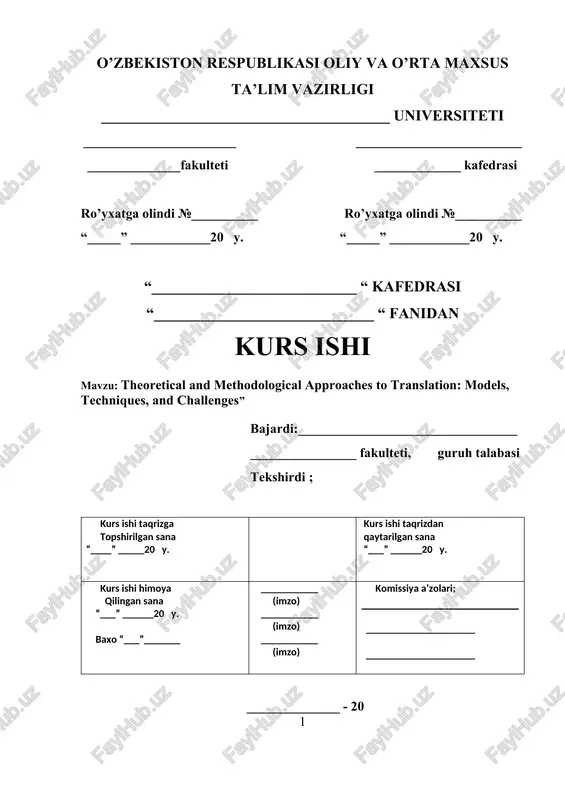
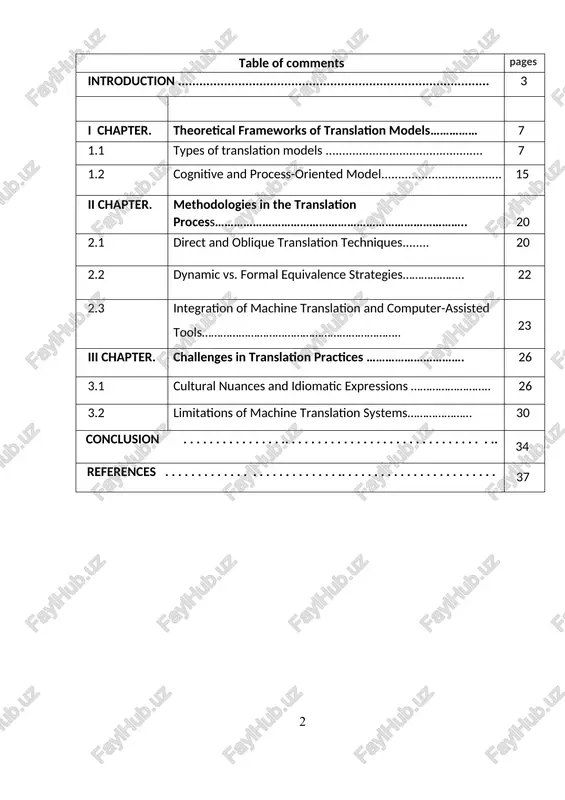
o’zbekiston respublikasi oliy va o’rta maxsus ta’lim vazirligi ______________________________________ universiteti _______________________ _________________________ ______________fakulteti _____________ kafedrasi ro’yxatga olindi №__________ ro’yxatga olindi №__________ “_____” ____________20 y. “_____” ____________20 y. “___________________________ “ kafedrasi “_____________________________ “ fanidan kurs ishi mavzu: theoretical and methodological approaches to translation: models, techniques, and challenges” bajardi:_________________________________ ________________ fakulteti, guruh talabasi tekshirdi ; kurs ishi taqrizga topshirilgan sana “____” _____20 y. kurs ishi taqrizdan qaytarilgan sana “___” ______20 y. kurs ishi himoya qilingan sana “___” ______20 y. baxo “___”_______ ___________ (imzo) ___________ (imzo) ___________ (imzo) komissiya a’zolari; _____________________ _____________________ ______________ - 20 table of comments pages introduction ........................................................................................ 3 i chapter. theoretical frameworks of translation models…………… 7 1.1 types of translation models ............................................... 7 1.2 cognitive and process-oriented model.................................... 15 ii chapter. methodologies in the translation process…………………………………………………………………….. 20 2.1 direct and oblique translation techniques........ 20 2.2 dynamic vs. formal equivalence strategies……………….. 22 2.3 integration of machine translation and computer-assisted tools……………………………………………………….. …
2 / 38
e overview: translation models represent organized frameworks that help explain, analyze, and guide the translation process. as the field of translation studies has developed, the need for theoretical foundations has become increasingly important—not only for academic research but also for practical application in professional settings. translation is no longer seen as a simple linguistic transfer from one language to another; rather, it is understood as a complex act of communication shaped by linguistic, cultural, cognitive, and technological factors. translation models aim to address these complexities by offering systematic approaches to decision-making during the translation process. the earliest models of translation were grounded in the linguistic tradition, focusing primarily on word-for-word and sense-for-sense translation. these equivalence-based models emphasized the importance of finding corresponding linguistic units across languages, ensuring that the meaning and structure of the source text were maintained in the target text. however, critics of this approach argued that strict …
3 / 38
translation offer valuable insights into the mental activities of the translator. these models investigate how translators perceive, analyze, and reconstruct meaning during translation. they draw on theories from psycholinguistics and cognitive science to explore aspects such as memory, attention, problem-solving, and decision-making. cognitive models highlight that translation is not just about linguistic knowledge but also about the ability to interpret context, resolve ambiguity, and make strategic choices in real time. with the rapid development of technology, computational and machine translation models have gained prominence in both academic and industrial translation practices. early rule-based systems relied on linguistic rules, while statistical models used large bilingual corpora to calculate probabilities of word pairings. the latest advancement, neural machine translation (nmt), uses deep learning to produce more fluent and natural-sounding translations. while these models offer speed and scalability, they often struggle with nuances, idiomatic expressions, and culturally sensitive content. therefore, human oversight remains …
4 / 38
of human judgment and creativity. translation models are indispensable tools in both theoretical and practical domains. they provide a structured understanding of the translation process and help translators navigate complex linguistic and cultural terrain. by studying these models, translators and researchers gain deeper insights into how meaning is created, transferred, and received across languages. as global communication continues to grow in scale and complexity, the need for effective and adaptive translation models becomes even more critical. learning objectives: 1. define and explain key concepts related to translation and translation models within the broader field of translation studies. 2. identify and distinguish between major translation models, including linguistic, functionalist, cognitive, and technological approaches. 3. analyze the application of different translation methods and strategies in accordance with the type, purpose, and audience of the source text. 4. evaluate the strengths and limitations of various translation models when applied to different translation contexts, …
5 / 38
roaches. - to demonstrate the practical application of translation theories and develop real-world translation competence. - to promote collaborative learning and communication skills while reinforcing theoretical knowledge. - to evaluate overall understanding of translation models, methods, challenges, and their application in diverse contexts. i chapter. theoretical frameworks of translation models 1.1. types of translation models translation models are theoretical frameworks that guide how texts are converted from one language to another. they help translators make informed decisions based on the purpose, audience, and context of the translation. three influential models in translation studies are equivalence-based models, skopos theory, and text typology models. translation is a complex and multifaceted process that involves not just the conversion of text from one language to another, but also the interpretation of meaning, context, and cultural nuances. over the years, various models have been developed to understand and guide the translation process. among these, equivalence-based …

Хотите читать дальше?

Скачайте все 38 страниц бесплатно через Telegram.

Скачать полный файл

О "theoretical and methodological approaches to translation: models, techniques, and challenges"

o’zbekiston respublikasi oliy va o’rta maxsus ta’lim vazirligi ______________________________________ universiteti _______________________ _________________________ ______________fakulteti _____________ kafedrasi ro’yxatga olindi №__________ ro’yxatga olindi №__________ “_____” ____________20 y. “_____” ____________20 y. “___________________________ “ kafedrasi “_____________________________ “ fanidan kurs ishi mavzu: theoretical and methodological approaches to translation: models, techniques, and challenges” bajardi:_________________________________ ________________ fakulteti, guruh talabasi tekshirdi ; kurs ishi taqrizga topshirilgan sana “____” _____20 y. kurs ishi taqrizdan qaytarilgan sana “___” ______20 y. kurs ishi himoya qilingan sana “___” ______20 y. baxo “___”_______ __________...

Этот файл содержит 38 стр. в формате DOCX (57,4 КБ). Чтобы скачать "theoretical and methodological approaches to translation: models, techniques, and challenges", нажмите кнопку Telegram слева.

Теги: theoretical and methodological … DOCX 38 стр. Бесплатная загрузка Telegram