methodology of assessing students’ learning

PPTX 21 стр. 89,0 КБ Бесплатная загрузка

Предварительный просмотр (5 стр.)

Прокрутите вниз 👇

1 / 21
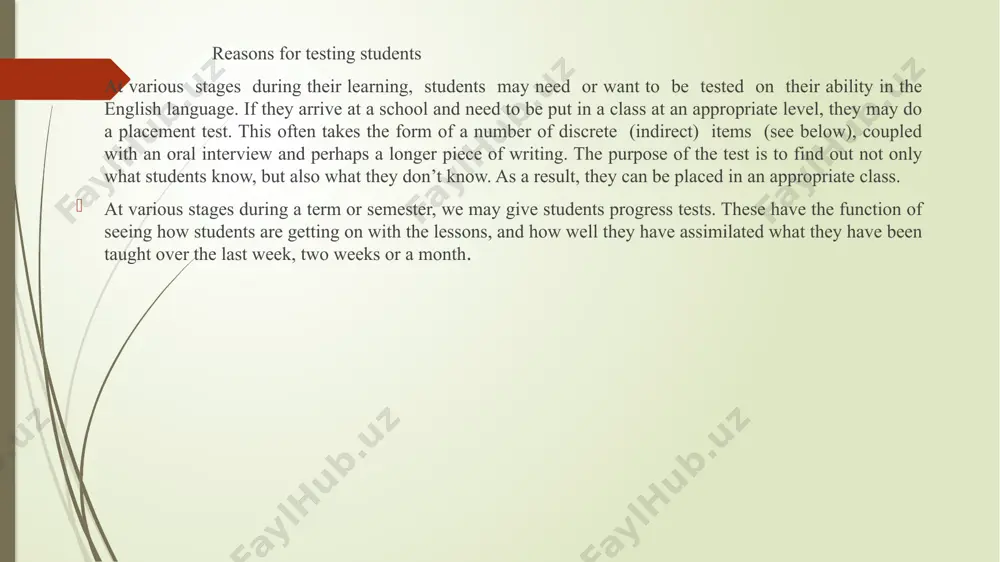
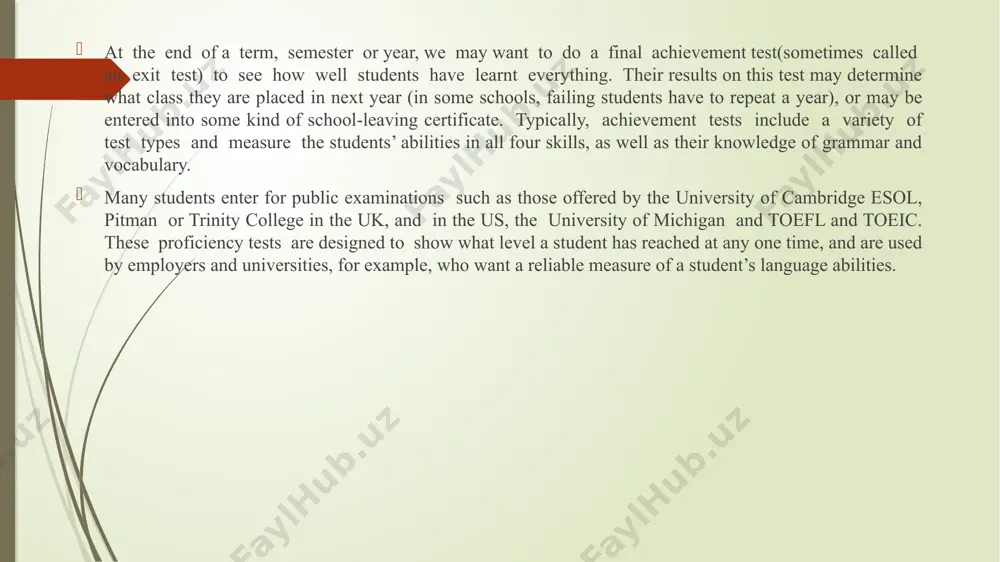
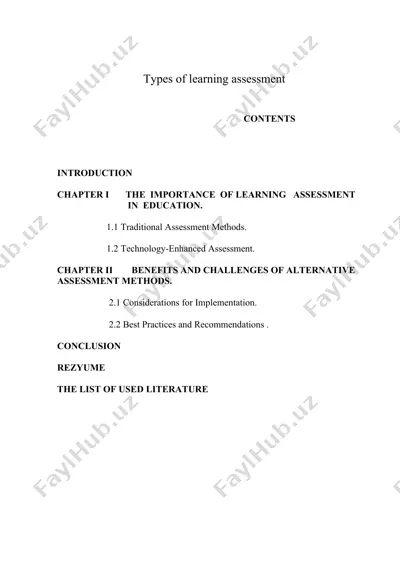
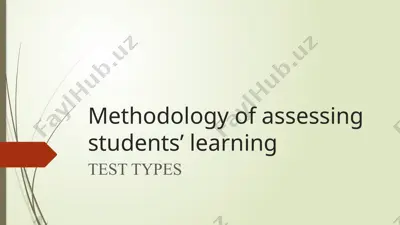
презентация powerpoint methodology of assessing students’ learning test types contents: 1.reasons for testing students 2.good tests 3.test types 4.marking tests 5.designing tests reasons for testing students at various stages during their learning, students may need or want to be tested on their ability in the english language. if they arrive at a school and need to be put in a class at an appropriate level, they may do a placement test. this often takes the form of a number of discrete (indirect) items (see below), coupled with an oral interview and perhaps a longer piece of writing. the purpose of the test is to find out not only what students know, but also what they don’t know. as a result, they can be placed in an appropriate class. at various stages during a term or semester, we may give students progress tests. these have the function of seeing how students …
2 / 21
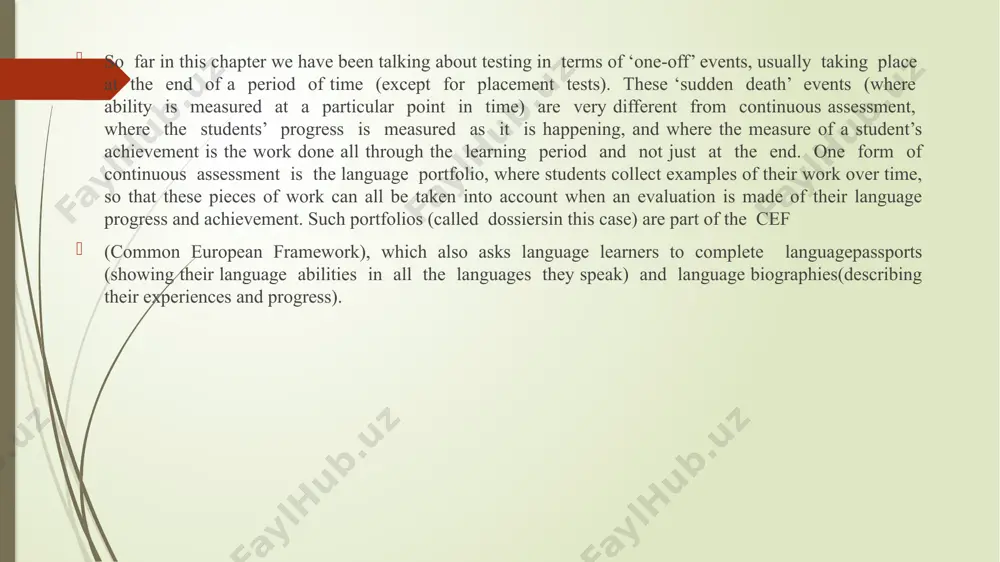
been talking about testing in terms of ‘one-off’ events, usually taking place at the end of a period of time (except for placement tests). these ‘sudden death’ events (where ability is measured at a particular point in time) are very different from continuous assessment, where the students’ progress is measured as it is happening, and where the measure of a student’s achievement is the work done all through the learning period and not just at the end. one form of continuous assessment is the language portfolio, where students collect examples of their work over time, so that these pieces of work can all be taken into account when an evaluation is made of their language progress and achievement. such portfolios (called dossiersin this case) are part of the cef (common european framework), which also asks language learners to complete languagepassports (showing their language abilities in all the languages they speak) …
3 / 21
n other words, if we say that a certain test is a good measure of a student’s reading ability, then we need to be able to show that this is the case. there is another kind of validity, too, in that when students and teachers see the test, they should think it looks like the real thing - that it has face validity. as they sit in front of their test paper or in front of the screen, the students need to have confidence that this test will work (even if they are nervous about their own abilities). however reliable the test is (see below) face validity demands that the students think it is reliable and valid. a good test should have marking reliability. not only should it be fairly easy to mark, but anyone marking it should come up with the same result as someone else. however, since different …
4 / 21
entrate on teaching the techniques for answering certain types of question rather than thinking in terms of what language students need to learn in general. this is completely understandable since teachers want as many of their students as possible to pass the test. indeed, teachers would be careless if they did not introduce their students to the kinds of test item they are likely to encounter in the exam. but this does not mean that teachers should allow such test preparation to dominate their lessons and deflect from their main teaching aims and procedures. the washback effect has a negative effect on teaching if the test fails to mirrorour teaching because then we will be tempted to make our teaching fit the test, rather than the other way round. many modern public examinations have improved greatly from their more traditional versions, so that they often do reflect contemporary teaching practice. …
5 / 21
ents fail unnecessarily - and are consequently demotivated by the experience. test types when designing tests, we can either write discrete items, or ask students to become involved in more integrative language use. discrete-item testing means only testing one thing at a time (e.g. testing a verb tense or a word), whereas integrative testing means asking students to use a variety of language and skills to complete a task successfully. a further distinction needs to be made between direct and indirect test items. a direct test item is one that asks students to do something with language (e.g. write a letter, read and reply to a newspaper article or take part in a conversation). direct test items are almost always integrative. indirect test items are those which test the students’ knowledge of language rather than getting them to use it. indirect test items might focus on, say, word collocations or …

Хотите читать дальше?

Скачайте все 21 страниц бесплатно через Telegram.

Скачать полный файл

О "methodology of assessing students’ learning"

презентация powerpoint methodology of assessing students’ learning test types contents: 1.reasons for testing students 2.good tests 3.test types 4.marking tests 5.designing tests reasons for testing students at various stages during their learning, students may need or want to be tested on their ability in the english language. if they arrive at a school and need to be put in a class at an appropriate level, they may do a placement test. this often takes the form of a number of discrete (indirect) items (see below), coupled with an oral interview and perhaps a longer piece of writing. the purpose of the test is to find out not only what students know, but also what they don’t know. as a result, …

Этот файл содержит 21 стр. в формате PPTX (89,0 КБ). Чтобы скачать "methodology of assessing students’ learning", нажмите кнопку Telegram слева.
Теги: methodology of assessing studen… PPTX 21 стр. Бесплатная загрузка Telegram