description writing guide

DOCX 6 sahifa 27,6 KB Bepul yuklash

Sahifa ko'rinishi (5 sahifa)

Pastga aylantiring 👇
1 / 6
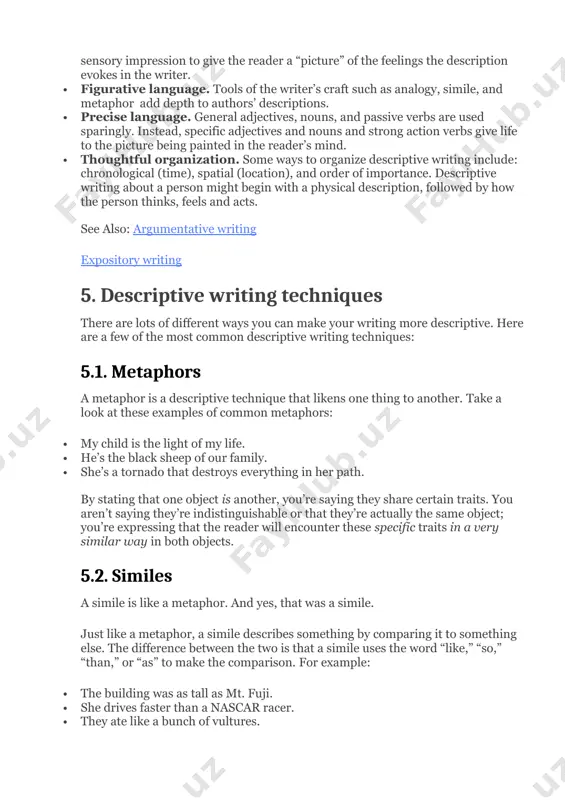
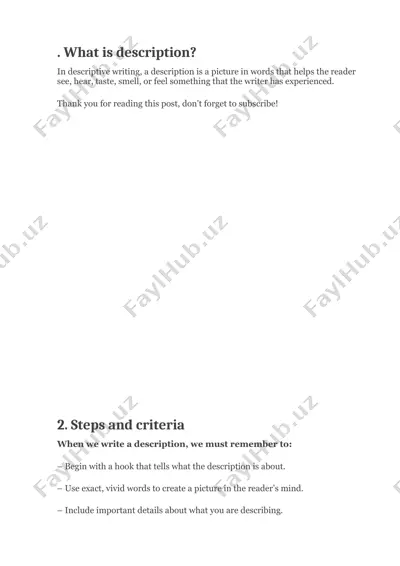
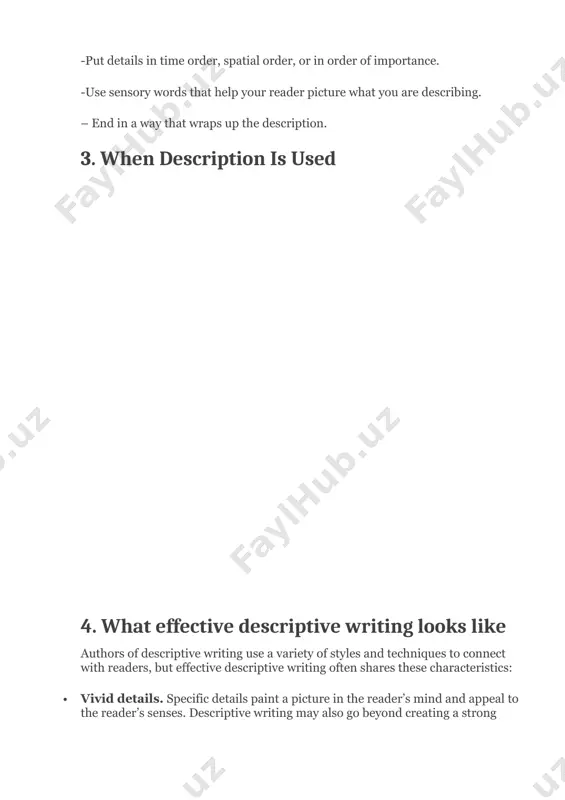
. what is description? in descriptive writing, a description is a picture in words that helps the reader see, hear, taste, smell, or feel something that the writer has experienced. thank you for reading this post, don't forget to subscribe! 2. steps and criteria when we write a description, we must remember to: – begin with a hook that tells what the description is about. – use exact, vivid words to create a picture in the reader’s mind. – include important details about what you are describing. -put details in time order, spatial order, or in order of importance. -use sensory words that help your reader picture what you are describing. – end in a way that wraps up the description. 3. when description is used 4. what effective descriptive writing looks like authors of descriptive writing use a variety of styles and techniques to connect with readers, but effective …
2 / 6
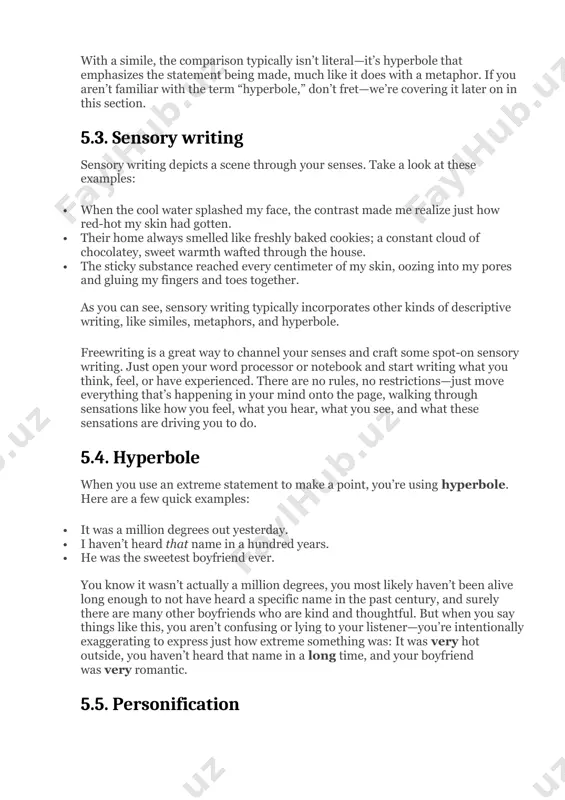
n descriptive writing techniques: 5.1. metaphors a metaphor is a descriptive technique that likens one thing to another. take a look at these examples of common metaphors: · my child is the light of my life. · he’s the black sheep of our family. · she’s a tornado that destroys everything in her path. by stating that one object is another, you’re saying they share certain traits. you aren’t saying they’re indistinguishable or that they’re actually the same object; you’re expressing that the reader will encounter these specific traits in a very similar way in both objects. 5.2. similes a simile is like a metaphor. and yes, that was a simile. just like a metaphor, a simile describes something by comparing it to something else. the difference between the two is that a simile uses the word “like,” “so,” “than,” or “as” to make the comparison. for example: · the …
3 / 6
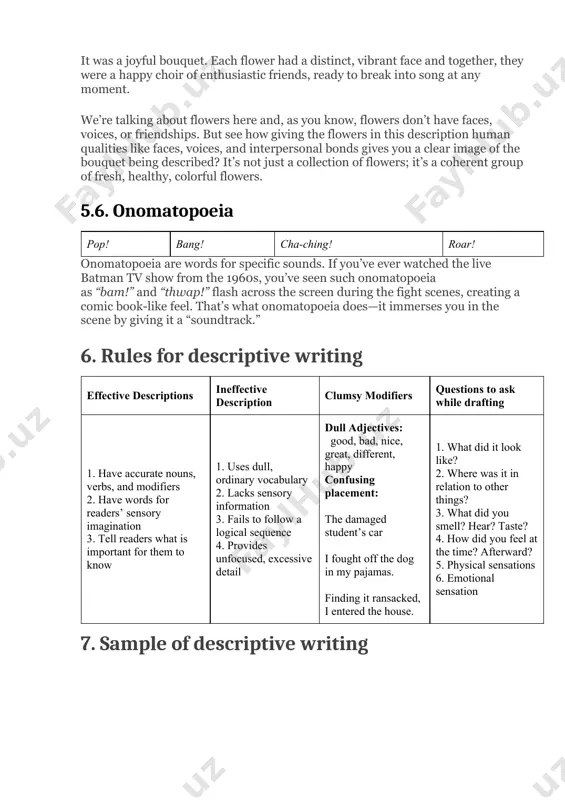
ve experienced. there are no rules, no restrictions—just move everything that’s happening in your mind onto the page, walking through sensations like how you feel, what you hear, what you see, and what these sensations are driving you to do. 5.4. hyperbole when you use an extreme statement to make a point, you’re using hyperbole. here are a few quick examples: · it was a million degrees out yesterday. · i haven’t heard that name in a hundred years. · he was the sweetest boyfriend ever. you know it wasn’t actually a million degrees, you most likely haven’t been alive long enough to not have heard a specific name in the past century, and surely there are many other boyfriends who are kind and thoughtful. but when you say things like this, you aren’t confusing or lying to your listener—you’re intentionally exaggerating to express just how extreme something was: it …
4 / 6
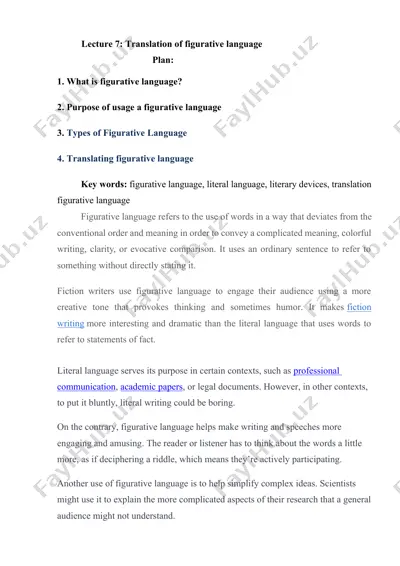
ifiers questions to ask while drafting 1. have accurate nouns, verbs, and modifiers 2. have words for readers’ sensory imagination 3. tell readers what is important for them to know 1. uses dull, ordinary vocabulary 2. lacks sensory information 3. fails to follow a logical sequence 4. provides unfocused, excessive detail dull adjectives: good, bad, nice, great, different, happy confusing placement: the damaged student’s car i fought off the dog in my pajamas. finding it ransacked, i entered the house. 1. what did it look like? 2. where was it in relation to other things? 3. what did you smell? hear? taste? 4. how did you feel at the time? afterward? 5. physical sensations 6. emotional sensation 7. sample of descriptive writing
5 / 6
description writing guide - Page 5

Ko'proq o'qimoqchimisiz?

Barcha 6 sahifani Telegram orqali bepul yuklab oling.

To'liq faylni yuklab olish

"description writing guide" haqida

. what is description? in descriptive writing, a description is a picture in words that helps the reader see, hear, taste, smell, or feel something that the writer has experienced. thank you for reading this post, don't forget to subscribe! 2. steps and criteria when we write a description, we must remember to: – begin with a hook that tells what the description is about. – use exact, vivid words to create a picture in the reader’s mind. – include important details about what you are describing. -put details in time order, spatial order, or in order of importance. -use sensory words that help your reader picture what you are describing. – end in a way that wraps up the …

Bu fayl DOCX formatida 6 sahifadan iborat (27,6 KB). "description writing guide"ni yuklab olish uchun chap tomondagi Telegram tugmasini bosing.

Teglar: description writing guide DOCX 6 sahifa Bepul yuklash Telegram