teaching reading skills

PDF 28 стр. 561,1 КБ Бесплатная загрузка

Предварительный просмотр (5 стр.)

Прокрутите вниз 👇
1 / 28
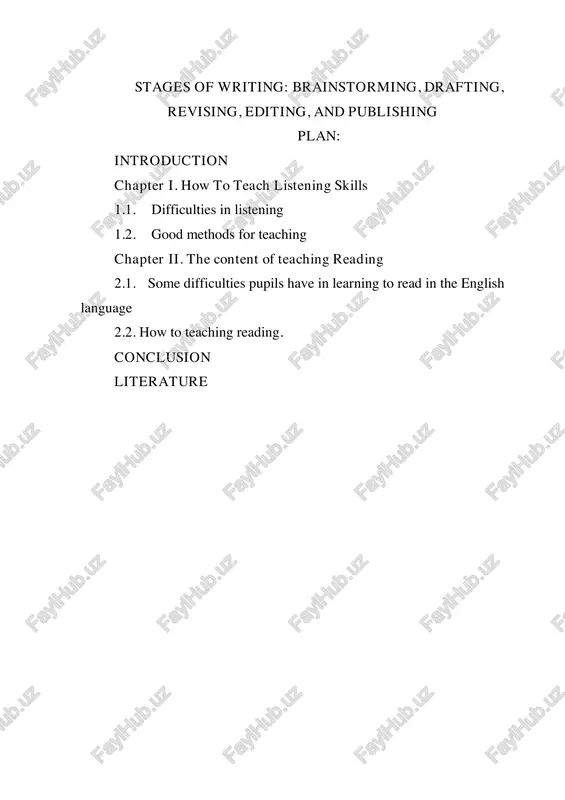
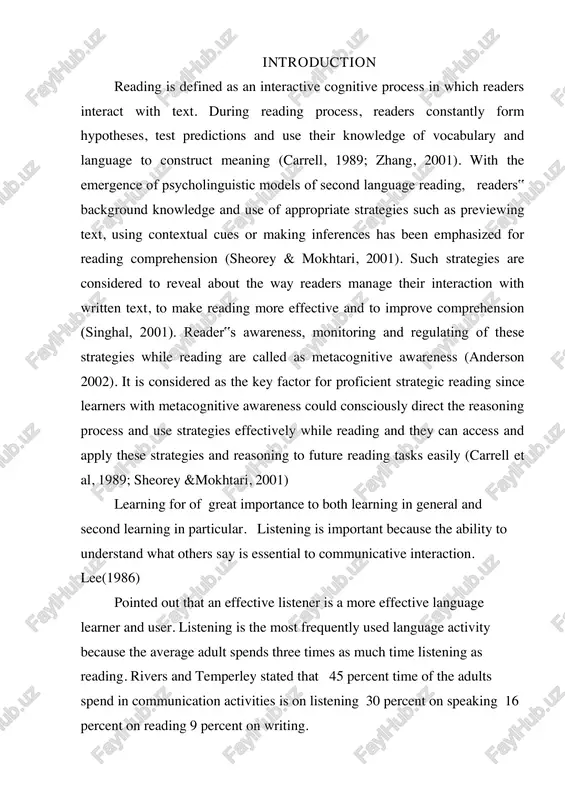
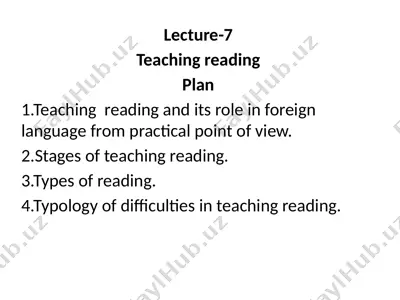
teaching readingof foreign language stages of writing: brainstorming, drafting, revising, editing, and publishing plan: introduction chapter i. how to teach listening skills 1.1. difficulties in listening 1.2. good methods for teaching chapter ii. the content of teaching reading 2.1. some difficulties pupils have in learning to read in the english language 2.2. how to teaching reading. conclusion literature introduction reading is defined as an interactive cognitive process in which readers interact with text. during reading process, readers constantly form hypotheses, test predictions and use their knowledge of vocabulary and language to construct meaning (carrell, 1989; zhang, 2001). with the emergence of psycholinguistic models of second language reading, readers‟ background knowledge and use of appropriate strategies such as previewing text, using contextual cues or making inferences has been emphasized for reading comprehension (sheorey & mokhtari, 2001). such strategies are considered to reveal about the way readers manage their interaction with written …
2 / 28
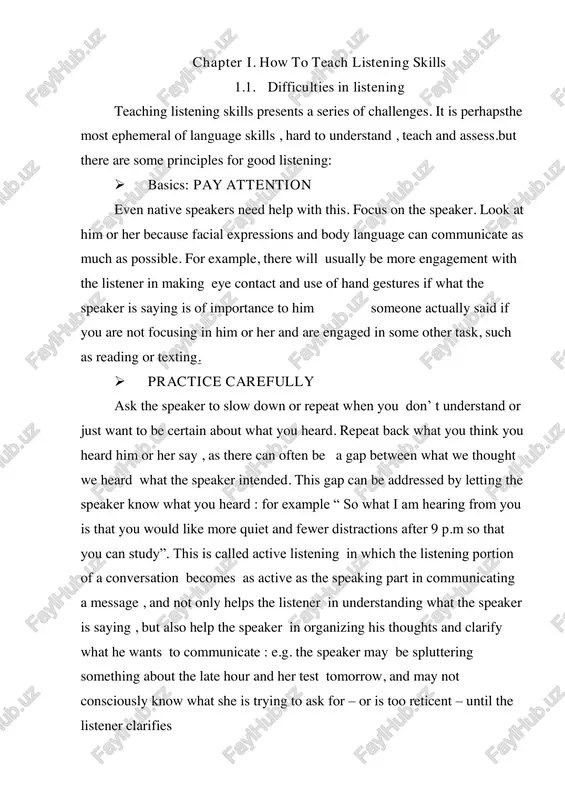
because the average adult spends three times as much time listening as reading. rivers and temperley stated that 45 percent time of the adults spend in communication activities is on listening 30 percent on speaking 16 percent on reading 9 percent on writing. listening skills are vital for the learners. of the four skills listening is the by far the most frequently used. listening is a complex process in which many things happen simutanously inside the mind . inspite of being diffucult , it is one of the most important skill. chapter i. how to teach listening skills 1.1. difficulties in listening teaching listening skills presents a series of challenges. it is perhapsthe most ephemeral of language skills , hard to understand , teach and assess.but there are some principles for good listening:  basics: pay attention even native speakers need help with this. focus on the speaker. look at …
3 / 28
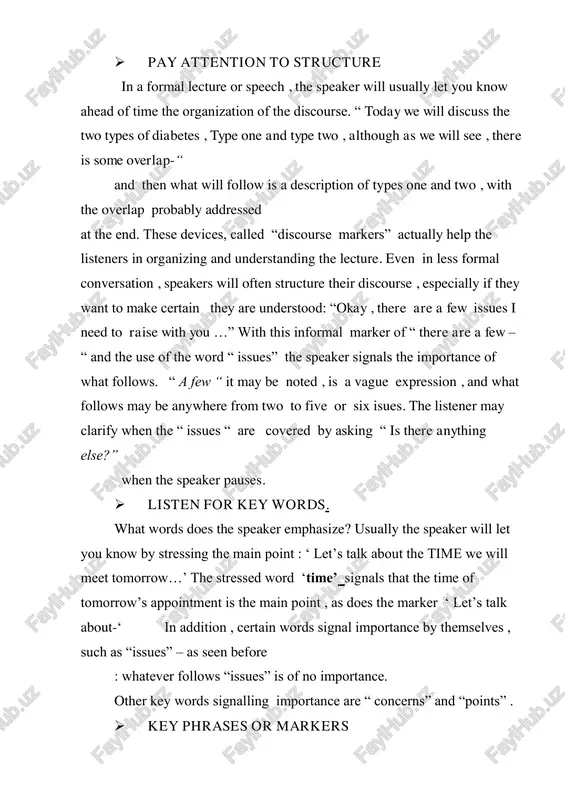
but also help the speaker in organizing his thoughts and clarify what he wants to communicate : e.g. the speaker may be spluttering something about the late hour and her test tomorrow, and may not consciously know what she is trying to ask for – or is too reticent – until the listener clarifies  pay attention to structure in a formal lecture or speech , the speaker will usually let you know ahead of time the organization of the discourse. “ today we will discuss the two types of diabetes , type one and type two , although as we will see , there is some overlap-“ and then what will follow is a description of types one and two , with the overlap probably addressed at the end. these devices, called “discourse markers” actually help the listeners in organizing and understanding the lecture. even in less formal conversation …
4 / 28
ey phrases: “ the main point is..” or “ on the other hand , some people take an opposing viewpoint….” but even in everyday conversation the speaker often uses less formal markers; for example “ i guess what i am trying to say is - …” is often used before a main point. 2 problems of listening some problems in listening are related to the speed of delivery and the language used by the speaker. since they are beyond the learner’ s control , the learner is unable to keep up with the speaker. hence he fails to grasp the main meaning of the text . being unfamiliar with the sounds , stress , intonation and rhythm of naturally spoken english , the learner also faces difficulties especially if the speaker has a different accent . other problems are due to a lack of concentration , distractions inside and outside …
5 / 28
ntic speech instead of artificial dialogue or written speech which is read the listener is usually helped by visual information which facilitates understanding. we can see the speaker and his expressions. listeners would have ‘expectations’ about how a conversation might go, what they are going to hear and what their interlocutor is going to say. the implication is that there should be pre listening activities for what they will hear. 1.2.good methods for teaching this following ideas will help make your listening activities successful  noise reduce distractions and noise during the listening segment. you may need to close doors or windows or ask children in the room to be quiet for a few minutes  equipment if you are using a cassette player, make sure it produces acceptable sound quality. bring extra batteries or an extension cord with you  repetition read or play the text a total of …

Хотите читать дальше?

Скачайте все 28 страниц бесплатно через Telegram.

Скачать полный файл

О "teaching reading skills"

teaching readingof foreign language stages of writing: brainstorming, drafting, revising, editing, and publishing plan: introduction chapter i. how to teach listening skills 1.1. difficulties in listening 1.2. good methods for teaching chapter ii. the content of teaching reading 2.1. some difficulties pupils have in learning to read in the english language 2.2. how to teaching reading. conclusion literature introduction reading is defined as an interactive cognitive process in which readers interact with text. during reading process, readers constantly form hypotheses, test predictions and use their knowledge of vocabulary and language to construct meaning (carrell, 1989; zhang, 2001). with the emergence of psycholinguistic models of second language reading, readers‟ background knowledge a...

Этот файл содержит 28 стр. в формате PDF (561,1 КБ). Чтобы скачать "teaching reading skills", нажмите кнопку Telegram слева.
Теги: teaching reading skills PDF 28 стр. Бесплатная загрузка Telegram