theeye

PPT 25 стр. 3,8 МБ Бесплатная загрузка

Предварительный просмотр (5 стр.)

Прокрутите вниз 👇
1 / 25
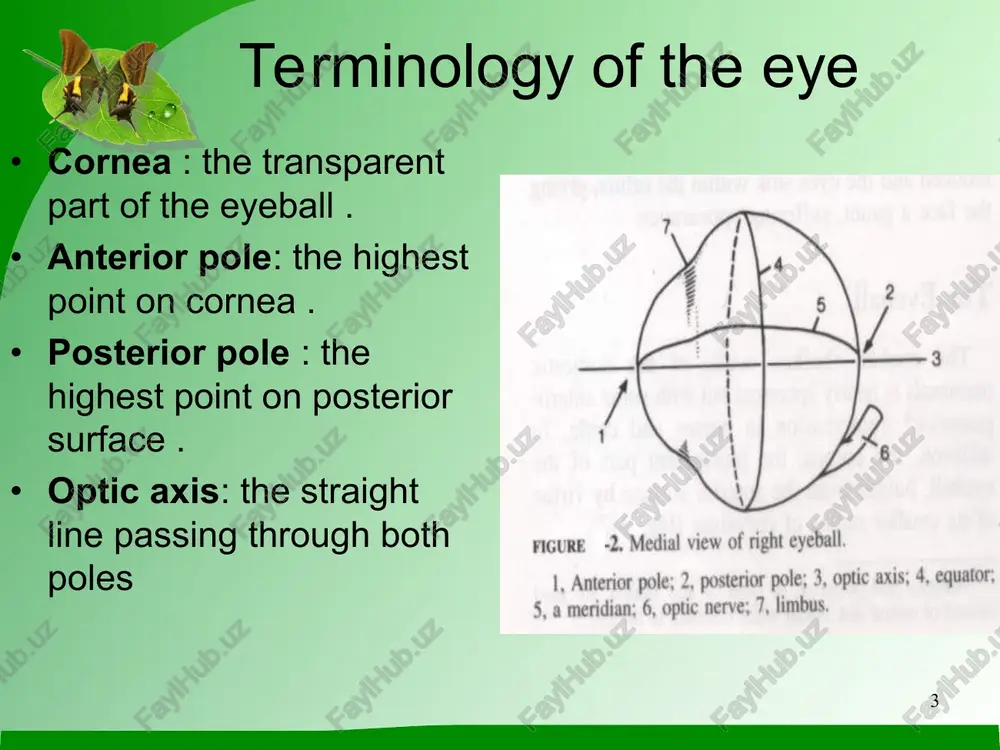
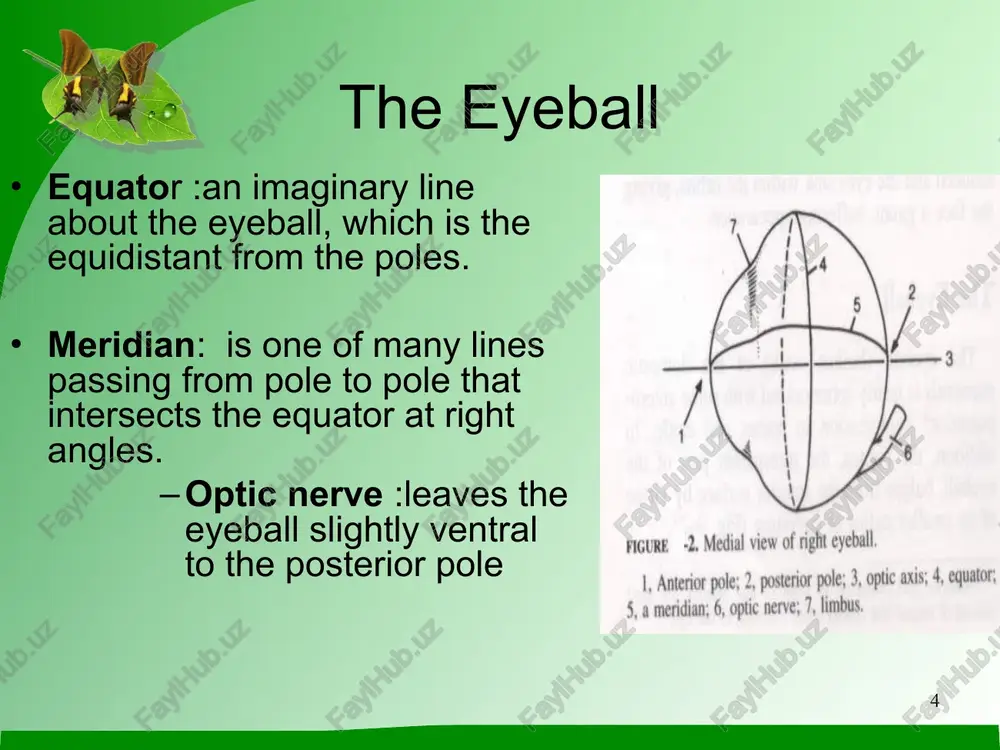
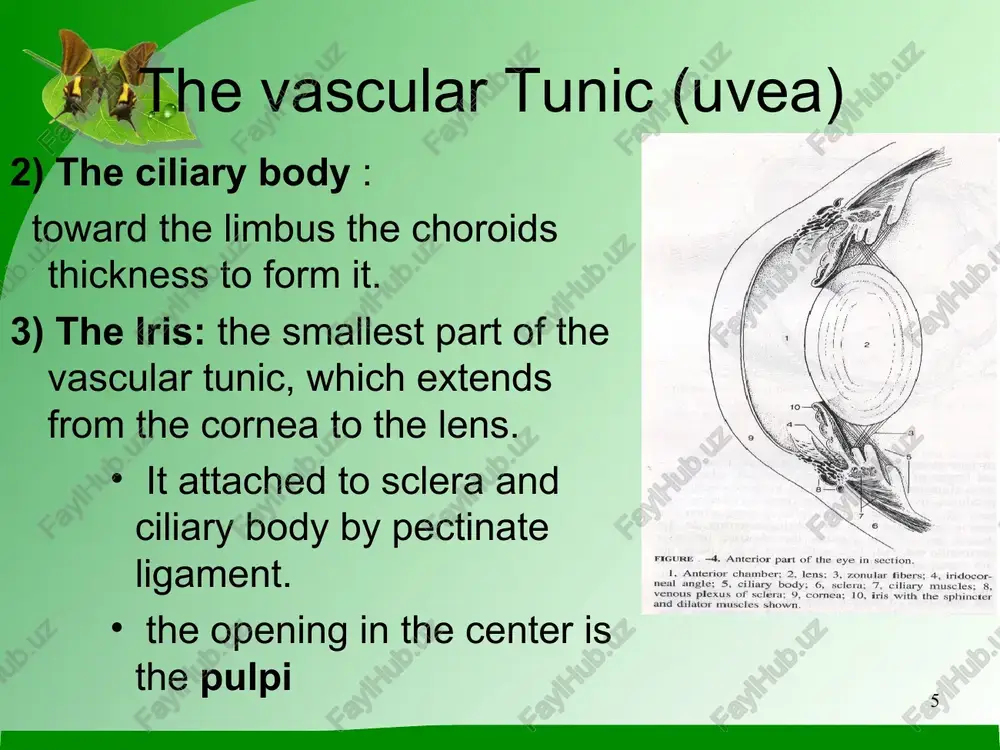
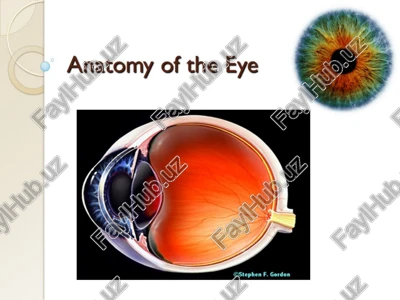
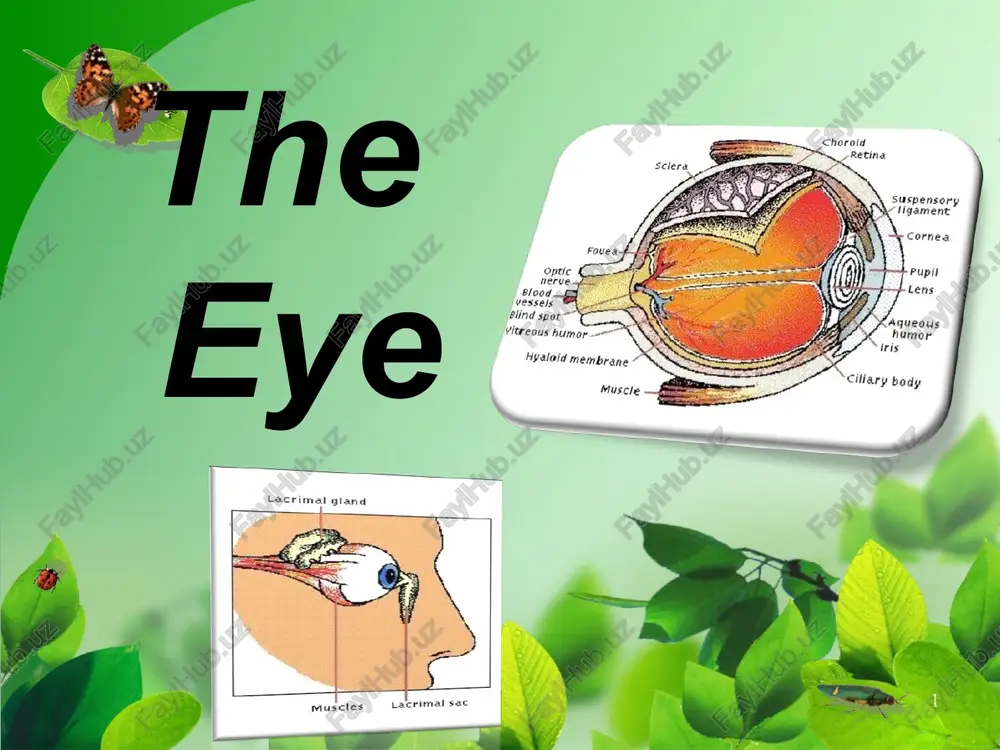
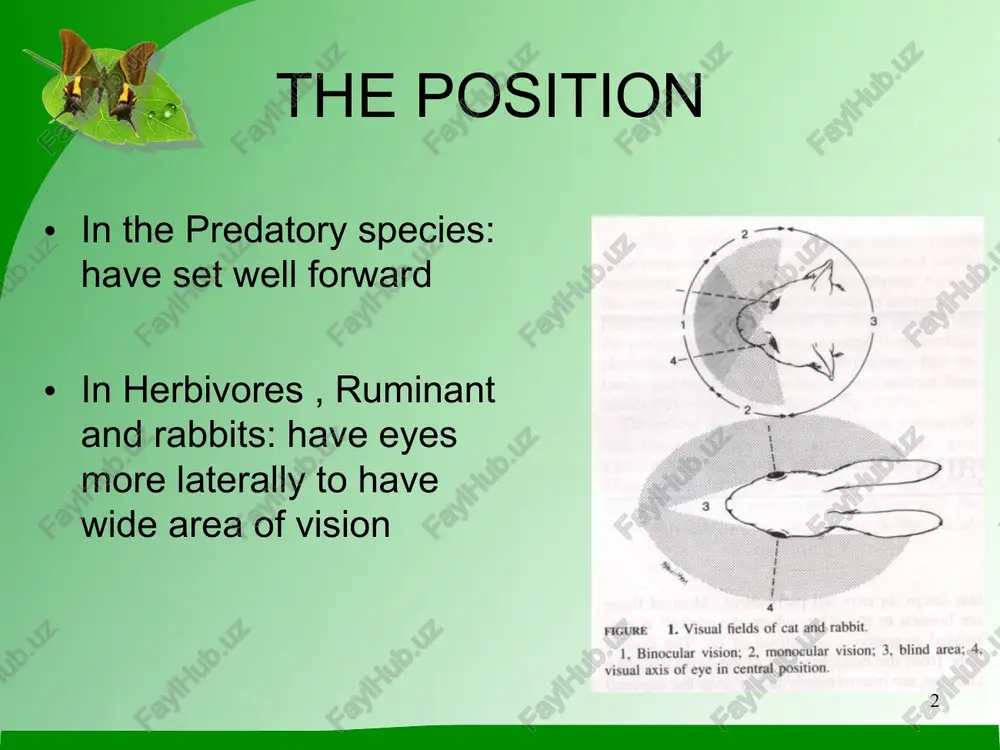
anatomy of the eye the eye * the position in the predatory species: have set well forward in herbivores , ruminant and rabbits: have eyes more laterally to have wide area of vision * terminology of the eye cornea : the transparent part of the eyeball . anterior pole: the highest point on cornea . posterior pole : the highest point on posterior surface . optic axis: the straight line passing through both poles * the eyeball equator :an imaginary line about the eyeball, which is the equidistant from the poles. meridian: is one of many lines passing from pole to pole that intersects the equator at right angles. optic nerve :leaves the eyeball slightly ventral to the posterior pole * the vascular tunic (uvea) 2) the ciliary body : toward the limbus the choroids thickness to form it. 3) the iris: the smallest part of the vascular tunic, which …
2 / 25
re is no receptor cell. * v the adnexa of the eye the orbital fasciae : a. the periorbital: is attached near the optic foramen at the apex of the cone . b. the superficial muscular fascia: lies within the periorbital. it’s loose and fatty. and envelops in the levator palpebrae superioris and the lacrimal gland. c. the deep muscular fascia: is more fibrous and arises from the eyelids and from the limbus of the eyeball. * v the adnexa of the eye 2. the muscles of the eyeball: the rectus muscles: dorsal, ventral, medial and lateral are inserted anterior to the equator by wide but very thin tendons. the ventral and dorsal oblique muscles: attach to the eyeball near the equator. * * v the adnexa of the eye 2. the muscles of the eyeball: the retractor bulbi arises from the vicinity of the eyeball and inserted on the …
3 / 25
surrounded by lacrimal gland (the gland of the third eyelid). * v the adnexa of the eye the lacrimal apparatus: this consists of lacrimal gland proper the lacrimal gland is flat and lies between the eyeball and the dorsolateral wall of orbit. the glands associated with the third eyelids several small accessory glands duct system that conveys the lacrimal fluid after it has washed over the eye into the nasal cavity for evaporation. * v the blood supply of the eye: the arteries can be divided into three groups: those supply eyebll supply oculr muscles those laeving the orbit to supply adjcent strctures. the external ophthalmic artery carries the principle supply of the blood to the eye, which is a branch of the maxillary artery. * v the blood supply of the eye: 1) the branches of the external ophthalmic for the eyeball penetrate the sclera to reach the vascular …
4 / 25
uired during its development. * v the nerve supply of the eye: the oculomoter nerve iii: control the movement of the eyeball. it enters the orbit through the orbital fissure. supply: dorsal, medial, ventral rectus muscle ventral oblique muscle part of retractor muscle the abducent nerve vi: enters through the orbital foramen and innervates most of retractor bulbi and lateral rectus muscles. * v the nerve supply of the eye: the trochlear nerve iv: innervate dorsal oblique muscle the trigeminal nerve v: send branches to the eye. opthalmic division give sensory branches to: 1- long ciliary nerve of the eye, lacrimal and supraorbital nerves. maxillary division zygomatic branch supply ventrolateral segment of the eyelids and conjunctiva * v the nerve supply of the eye: the facial nerve vii: passes between the eye and the ear gives auriculopalpebral branch innervates the orbicularis oculi * references ^ "movie the eye - box …
5 / 25
iris with the sphincter and dilator muscles shown. figure 7, outer pigmented layer (a) and inner neuroepithe- lial layer (b) of retina. 1, pigmented cells; 2, receptor cells (rods and cones); 3, bipolar ganglion cells; 4, multipolar ganglion cells; 5, incoming light (arrows). figure 10, schematic representation of the orbital fascia transection of orbital structures at the level of the eyeball. part of the deep fascia (6) forms the vagina bulbi (7). 1, eyeball; 2, periorbita; 3, superficial muscular fascia; 4, levator palpebrae; 5, lacrimal gland; 6, deep muscular fascia; 7, vagina bulbi; 8 episcleral space; 9, ventral rectus muscle; 10, lateral rectus muscle. figure 12. ocular muscles. 1, dorsal oblique m.; 2, dorsal rectus m.; 3, retractor bulbi; 4, medial rectus m.; 5, optic nerve; 6, ventral rectus m.; 7, ventral oblique m. figure -13. stumps of ocular muscles viewed from behind the left eyeball. 1, dorsal rectus m.; …

Хотите читать дальше?

Скачайте все 25 страниц бесплатно через Telegram.

Скачать полный файл

О "theeye"

anatomy of the eye the eye * the position in the predatory species: have set well forward in herbivores , ruminant and rabbits: have eyes more laterally to have wide area of vision * terminology of the eye cornea : the transparent part of the eyeball . anterior pole: the highest point on cornea . posterior pole : the highest point on posterior surface . optic axis: the straight line passing through both poles * the eyeball equator :an imaginary line about the eyeball, which is the equidistant from the poles. meridian: is one of many lines passing from pole to pole that intersects the equator at right angles. optic nerve :leaves the eyeball slightly ventral to the posterior pole …

Этот файл содержит 25 стр. в формате PPT (3,8 МБ). Чтобы скачать "theeye", нажмите кнопку Telegram слева.

Теги: theeye PPT 25 стр. Бесплатная загрузка Telegram