linguistic translation studies

PPTX 10 стр. 443,3 КБ Бесплатная загрузка

Предварительный просмотр (5 стр.)

Прокрутите вниз 👇

1 / 10
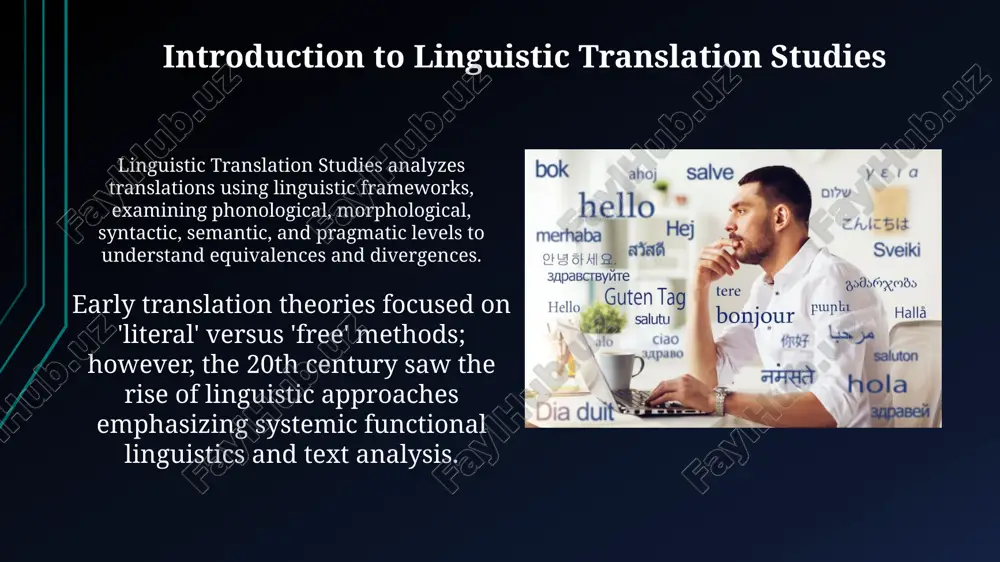
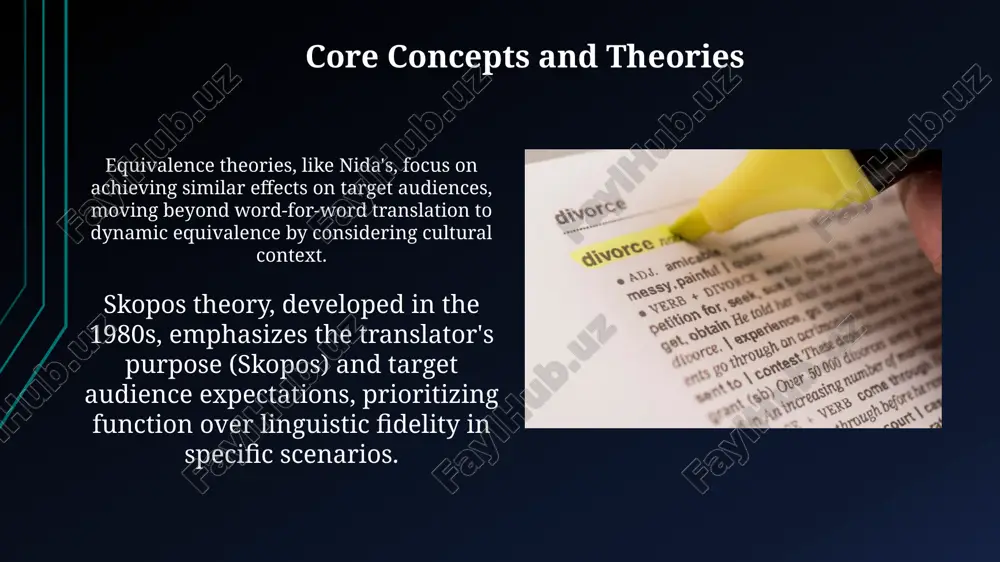
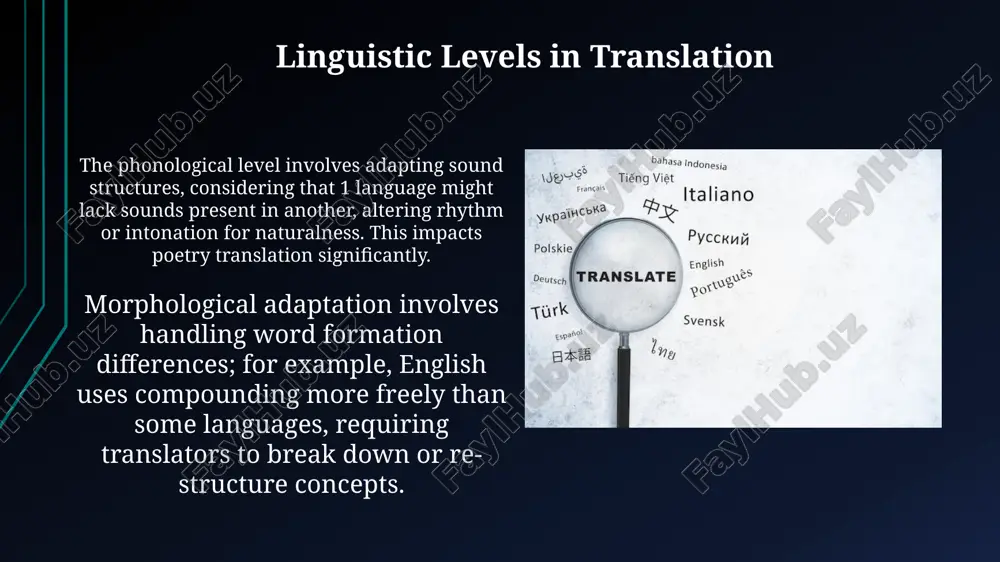
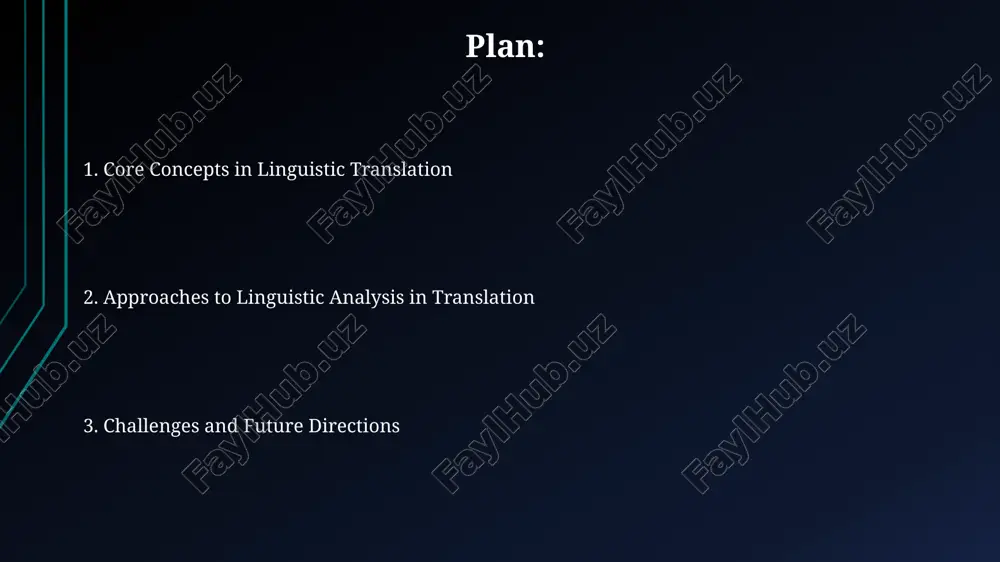
powerpoint presentation linguistic tarjimashunoslik 1. core concepts in linguistic translation 2. approaches to linguistic analysis in translation 3. challenges and future directions plan: introduction to linguistic translation studies linguistic translation studies analyzes translations using linguistic frameworks, examining phonological, morphological, syntactic, semantic, and pragmatic levels to understand equivalences and divergences. early translation theories focused on 'literal' versus 'free' methods; however, the 20th century saw the rise of linguistic approaches emphasizing systemic functional linguistics and text analysis. core concepts and theories equivalence theories, like nida's, focus on achieving similar effects on target audiences, moving beyond word-for-word translation to dynamic equivalence by considering cultural context. skopos theory, developed in the 1980s, emphasizes the translator's purpose (skopos) and target audience expectations, prioritizing function over linguistic fidelity in specific scenarios. linguistic levels in translation the phonological level involves adapting sound structures, considering that 1 language might lack sounds present in another, altering rhythm or intonation …
2 / 10
like politeness markers, require careful adaptation. translating "please" necessitates understanding 5 distinct levels of formality in japanese, impacting communication. idioms, like "raining cats and dogs", present translation challenges. substituting a culturally equivalent idiom maintains the intended meaning, considering cultural relevance above literal 1-to-1 transfers. advances and current research current research explores neural machine translation (nmt) architectures like transformers, achieving state-of-the-art results with attention mechanisms and parallel processing, boosting translation quality scores above 90%. researchers investigate low-resource language translation using techniques like transfer learning and multilingual models, enabling accurate translation for languages with limited parallel data, utilizing fewer than 10,000 sentence pairs. future directions and implications integration of ai, especially neural machine translation (nmt), will reshape the field, demanding nuanced studies on 1) ethical use, 2) bias mitigation, and 3) enhanced human-ai collaboration. the growing importance of multimodal translation, encompassing images and audio, requires linguistic models and approaches. focus on 3d …
3 / 10
linguistic translation studies - Page 3
4 / 10
linguistic translation studies - Page 4
5 / 10
linguistic translation studies - Page 5

Хотите читать дальше?

Скачайте все 10 страниц бесплатно через Telegram.

Скачать полный файл

О "linguistic translation studies"

powerpoint presentation linguistic tarjimashunoslik 1. core concepts in linguistic translation 2. approaches to linguistic analysis in translation 3. challenges and future directions plan: introduction to linguistic translation studies linguistic translation studies analyzes translations using linguistic frameworks, examining phonological, morphological, syntactic, semantic, and pragmatic levels to understand equivalences and divergences. early translation theories focused on 'literal' versus 'free' methods; however, the 20th century saw the rise of linguistic approaches emphasizing systemic functional linguistics and text analysis. core concepts and theories equivalence theories, like nida's, focus on achieving similar effects on target audiences, moving beyond word-for-word translation t...

Этот файл содержит 10 стр. в формате PPTX (443,3 КБ). Чтобы скачать "linguistic translation studies", нажмите кнопку Telegram слева.

Теги: linguistic translation studies PPTX 10 стр. Бесплатная загрузка Telegram