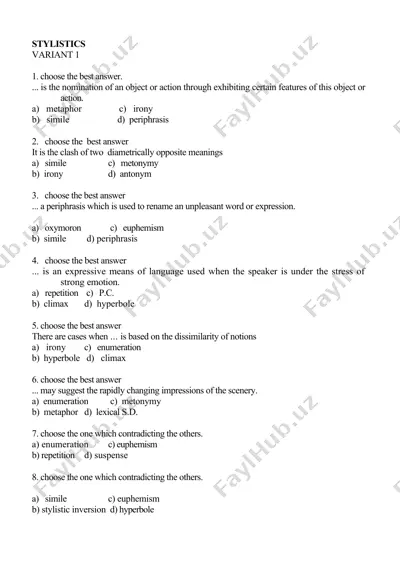
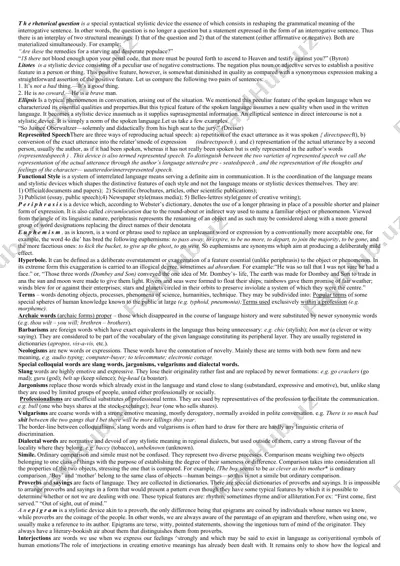
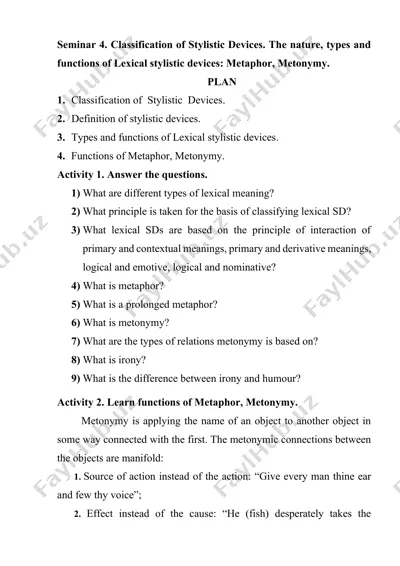
lexical expressive means and stylistic devices

PPTX 12 sahifa 67,2 KB Bepul yuklash

Sahifa ko'rinishi (5 sahifa)

Pastga aylantiring 👇
1 / 12
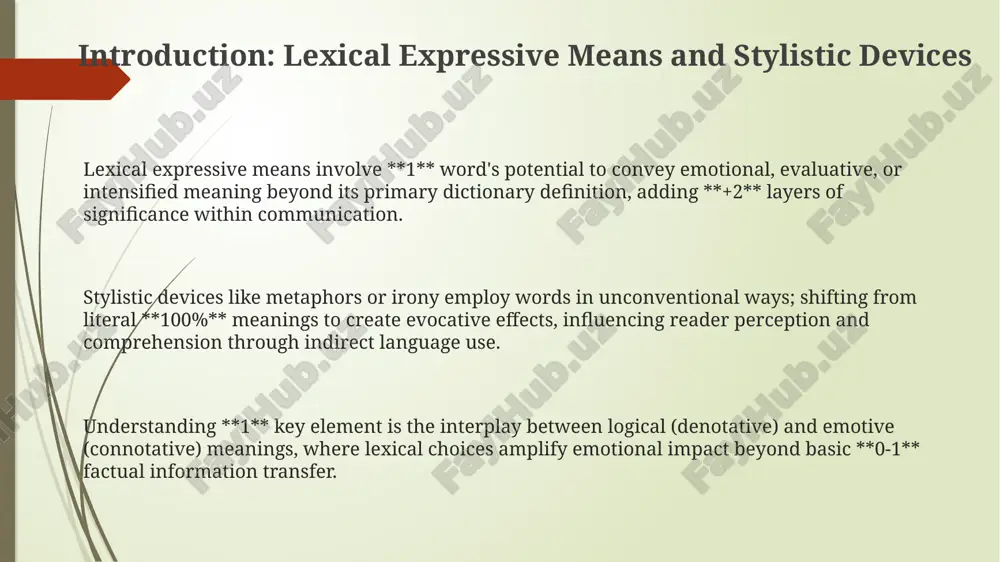
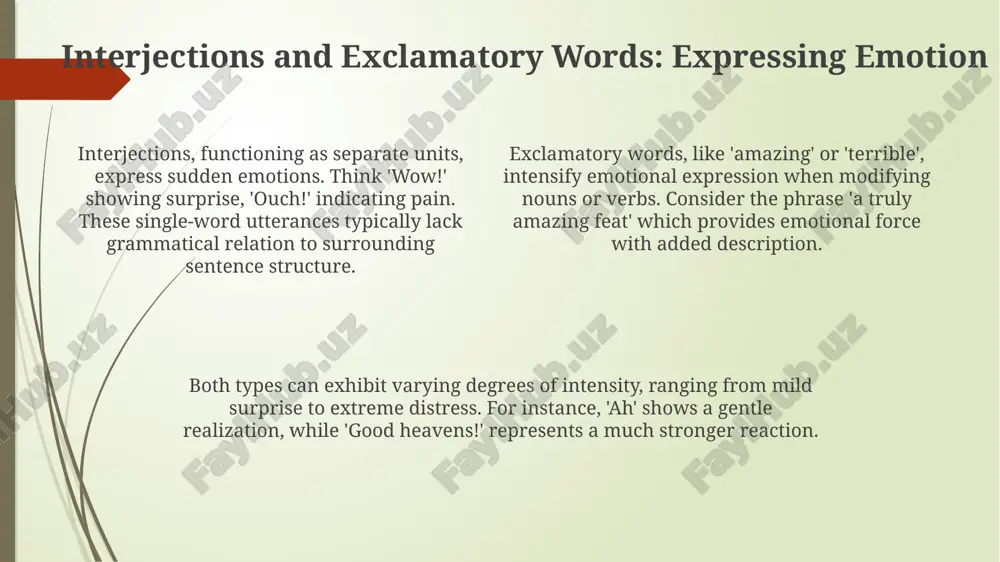
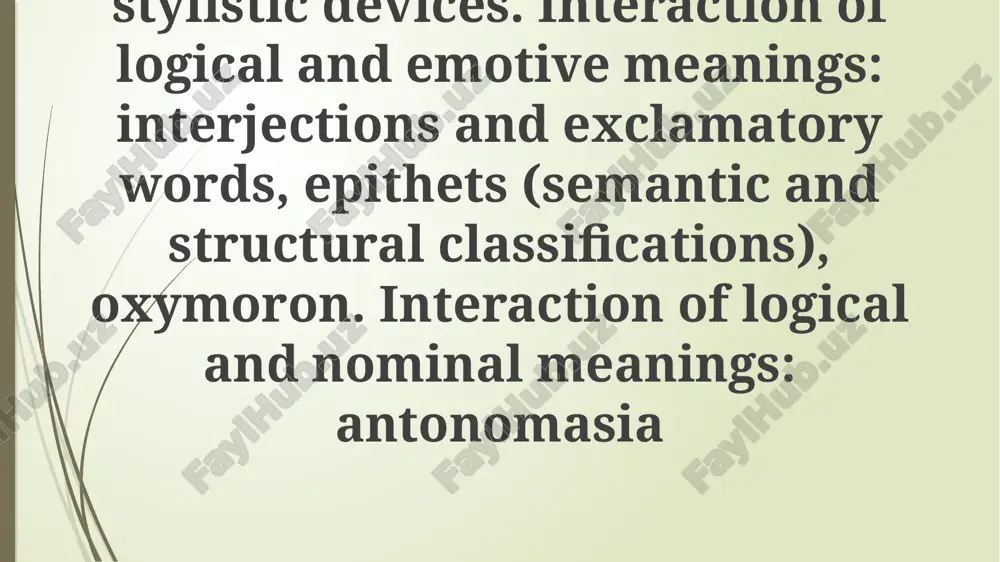
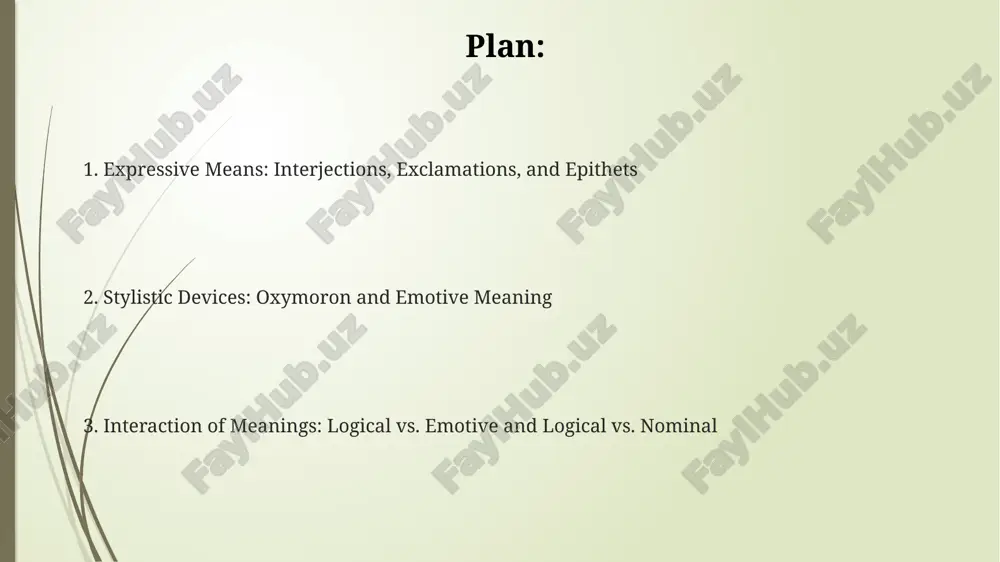
powerpoint presentation lexical expressive means and stylistic devices. interaction of logical and emotive meanings: interjections and exclamatory words, epithets (semantic and structural classifications), oxymoron. interaction of logical and nominal meanings: antonomasia 1. expressive means: interjections, exclamations, and epithets 2. stylistic devices: oxymoron and emotive meaning 3. interaction of meanings: logical vs. emotive and logical vs. nominal plan: introduction: lexical expressive means and stylistic devices lexical expressive means involve **1** word's potential to convey emotional, evaluative, or intensified meaning beyond its primary dictionary definition, adding **+2** layers of significance within communication. stylistic devices like metaphors or irony employ words in unconventional ways; shifting from literal **100%** meanings to create evocative effects, influencing reader perception and comprehension through indirect language use. understanding **1** key element is the interplay between logical (denotative) and emotive (connotative) meanings, where lexical choices amplify emotional impact beyond basic **0-1** factual information transfer. interjections and exclamatory words: expressing …
2 / 12
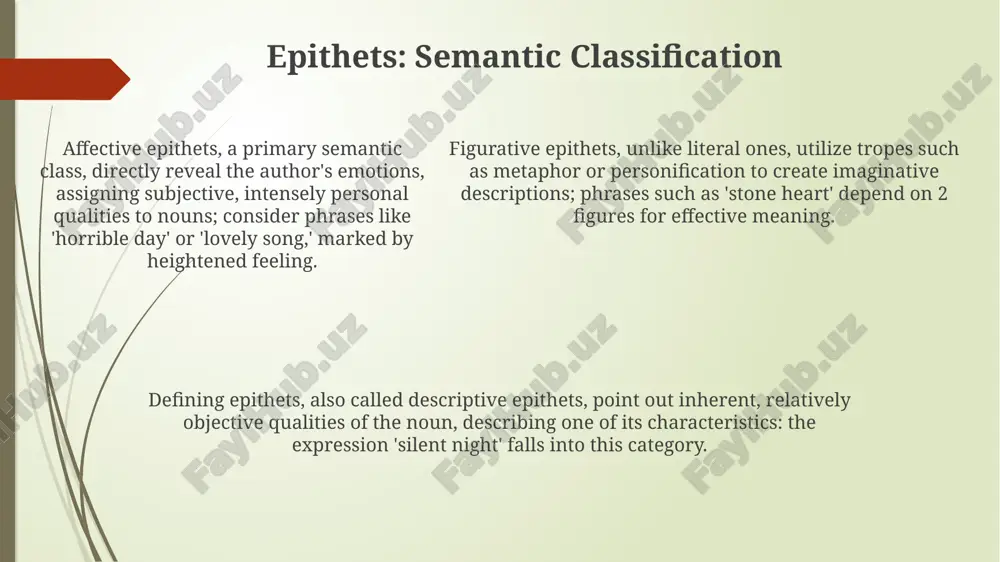
tive qualities of the noun, describing one of its characteristics: the expression 'silent night' falls into this category. affective epithets, a primary semantic class, directly reveal the author's emotions, assigning subjective, intensely personal qualities to nouns; consider phrases like 'horrible day' or 'lovely song,' marked by heightened feeling. figurative epithets, unlike literal ones, utilize tropes such as metaphor or personification to create imaginative descriptions; phrases such as 'stone heart' depend on 2 figures for effective meaning. epithets: structural classification simple epithets consist of only 1 word, such as 'golden' in 'golden hair', directly modifying the noun without additional elements or structural complexity, offering a clear, concise descriptor. compound epithets are formed from 2 or more words combined, for example, 'lily-white' skin, showcasing a more nuanced description by merging qualities into a single, impactful adjective phrase. phrase epithets feature a whole phrase, like 'fair as a rose', functioning as an extended …
3 / 12
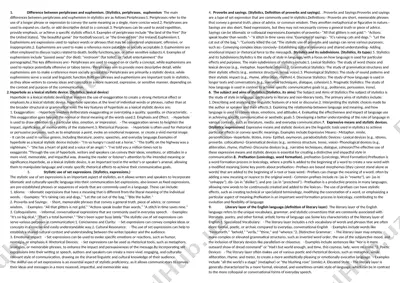
mation transfer, aiming for clarity (about 85% efficiency). emotive meaning prioritizes persuasion or expression; using hyperboles can engage the audience by 60% when done correctly. logical meaning, or denotation, relies on objective, dictionary-defined content (e.g., 'red' signifies a specific color). emotive meaning, connotation, adds subjective feelings; 'red' evokes passion, anger, or warmth, illustrating the difference. emotive meanings exhibit context-dependent variability, unlike logical meanings. an interjection like "wow!" communicates surprise (a 9/10 on the excitement scale), with intensity fluctuating based on situation and the speaker's personality. antonomasia: interaction of logical and nominal meanings antonomasia, a trope, replaces a proper name with a descriptive phrase, shifting from nominal (name-based) to logical meaning. consider calling shakespeare "the bard", altering the focus to his poetic skill. in antonomasia, the logical meaning, representing qualities or actions, overshadows the original nominal identifier. for example, referring to a traitor as "judas" evokes betrayal above any specific individual. …
4 / 12
xpressiveness achieving lexical mastery requires conscious application of 3 key elements: precise word choice, understanding nuances of figurative language, and analyzing the context influencing word meaning at levels 1 and 2. effective communication relies on skillful deployment of tools like epithets and oxymorons, where 80% of impact is due to intended emotive meaning, demonstrating an understanding of logical and emotive interaction. the pinnacle of lexical expressiveness is reached when speakers leverage antonomasia, transforming nominal meanings to logical, achieving a nuanced, powerful effect, impacting audience response by approximately 75%. thank you for your attention
5 / 12
lexical expressive means and stylistic devices - Page 5

Ko'proq o'qimoqchimisiz?

Barcha 12 sahifani Telegram orqali bepul yuklab oling.

To'liq faylni yuklab olish

"lexical expressive means and stylistic devices" haqida

powerpoint presentation lexical expressive means and stylistic devices. interaction of logical and emotive meanings: interjections and exclamatory words, epithets (semantic and structural classifications), oxymoron. interaction of logical and nominal meanings: antonomasia 1. expressive means: interjections, exclamations, and epithets 2. stylistic devices: oxymoron and emotive meaning 3. interaction of meanings: logical vs. emotive and logical vs. nominal plan: introduction: lexical expressive means and stylistic devices lexical expressive means involve **1** word's potential to convey emotional, evaluative, or intensified meaning beyond its primary dictionary definition, adding **+2** layers of significance within communication. stylistic devices like metaphors or irony employ words in unc...

Bu fayl PPTX formatida 12 sahifadan iborat (67,2 KB). "lexical expressive means and stylistic devices"ni yuklab olish uchun chap tomondagi Telegram tugmasini bosing.
Teglar: lexical expressive means and st… PPTX 12 sahifa Bepul yuklash Telegram