integrating technology into lesson planning

DOCX 4 pages 38.4 KB Free download

Page preview (4 pages)

Scroll down 👇

1 / 4
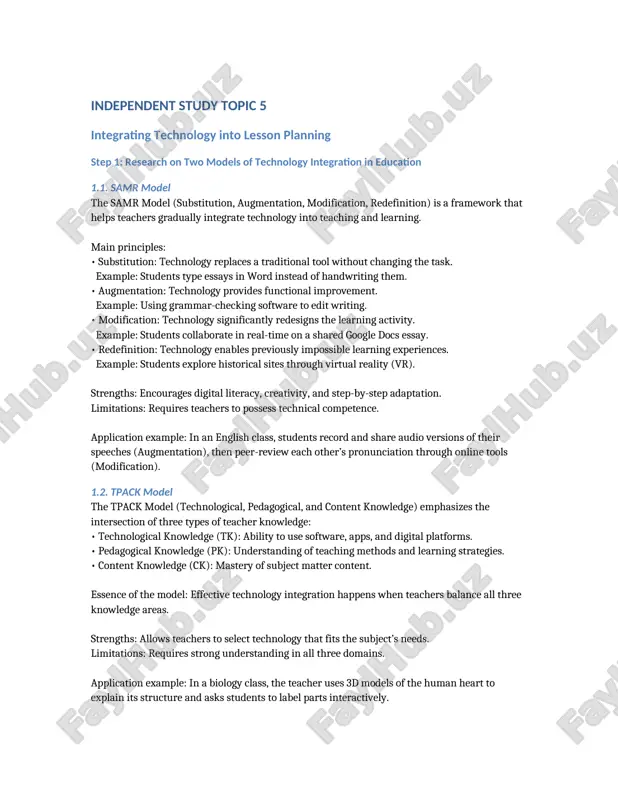
independent study topic 5 integrating technology into lesson planning step 1: research on two models of technology integration in education 1.1. samr model the samr model (substitution, augmentation, modification, redefinition) is a framework that helps teachers gradually integrate technology into teaching and learning. main principles: • substitution: technology replaces a traditional tool without changing the task. example: students type essays in word instead of handwriting them. • augmentation: technology provides functional improvement. example: using grammar-checking software to edit writing. • modification: technology significantly redesigns the learning activity. example: students collaborate in real-time on a shared google docs essay. • redefinition: technology enables previously impossible learning experiences. example: students explore historical sites through virtual reality (vr). strengths: encourages digital literacy, creativity, and step-by-step adaptation. limitations: requires teachers to possess technical competence. application example: in an english class, students record and share audio versions of their speeches (augmentation), then peer-review each other’s …
2 / 4
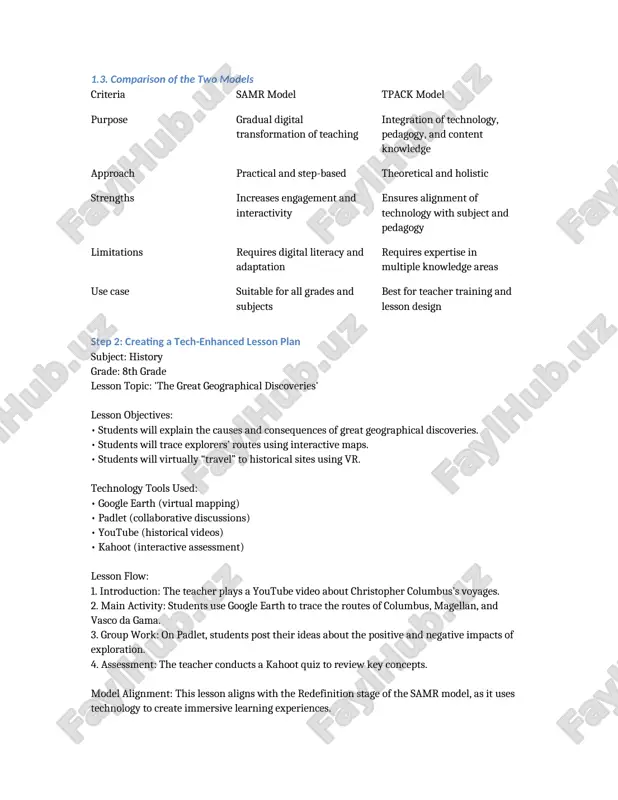
re and asks students to label parts interactively. 1.3. comparison of the two models criteria samr model tpack model purpose gradual digital transformation of teaching integration of technology, pedagogy, and content knowledge approach practical and step-based theoretical and holistic strengths increases engagement and interactivity ensures alignment of technology with subject and pedagogy limitations requires digital literacy and adaptation requires expertise in multiple knowledge areas use case suitable for all grades and subjects best for teacher training and lesson design step 2: creating a tech-enhanced lesson plan subject: history grade: 8th grade lesson topic: 'the great geographical discoveries' lesson objectives: • students will explain the causes and consequences of great geographical discoveries. • students will trace explorers’ routes using interactive maps. • students will virtually “travel” to historical sites using vr. technology tools used: • google earth (virtual mapping) • padlet (collaborative discussions) • youtube (historical videos) • kahoot (interactive assessment) …
3 / 4
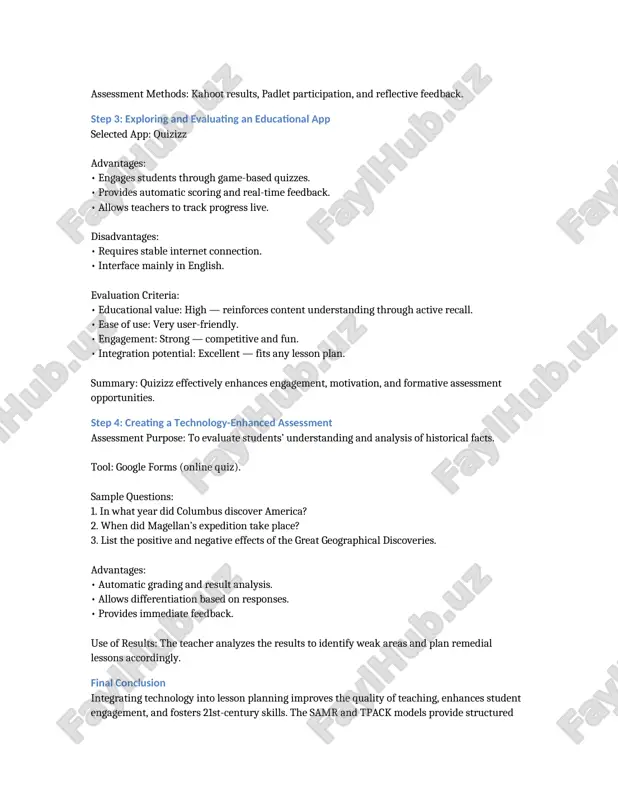
ction. • interface mainly in english. evaluation criteria: • educational value: high — reinforces content understanding through active recall. • ease of use: very user-friendly. • engagement: strong — competitive and fun. • integration potential: excellent — fits any lesson plan. summary: quizizz effectively enhances engagement, motivation, and formative assessment opportunities. step 4: creating a technology-enhanced assessment assessment purpose: to evaluate students’ understanding and analysis of historical facts. tool: google forms (online quiz). sample questions: 1. in what year did columbus discover america? 2. when did magellan’s expedition take place? 3. list the positive and negative effects of the great geographical discoveries. advantages: • automatic grading and result analysis. • allows differentiation based on responses. • provides immediate feedback. use of results: the teacher analyzes the results to identify weak areas and plan remedial lessons accordingly. final conclusion integrating technology into lesson planning improves the quality of teaching, enhances student …
4 / 4
integrating technology into lesson planning - Page 4

Want to read more?

Download all 4 pages for free via Telegram.

Download full file

About "integrating technology into lesson planning"

independent study topic 5 integrating technology into lesson planning step 1: research on two models of technology integration in education 1.1. samr model the samr model (substitution, augmentation, modification, redefinition) is a framework that helps teachers gradually integrate technology into teaching and learning. main principles: • substitution: technology replaces a traditional tool without changing the task. example: students type essays in word instead of handwriting them. • augmentation: technology provides functional improvement. example: using grammar-checking software to edit writing. • modification: technology significantly redesigns the learning activity. example: students collaborate in real-time on a shared google docs essay. • redefinition: technology enables previously ...

This file contains 4 pages in DOCX format (38.4 KB). To download "integrating technology into lesson planning", click the Telegram button on the left.

Tags: integrating technology into les… DOCX 4 pages Free download Telegram