homonims ingliz tilida omonimlar
Page preview (5 pages)
Scroll down 👇
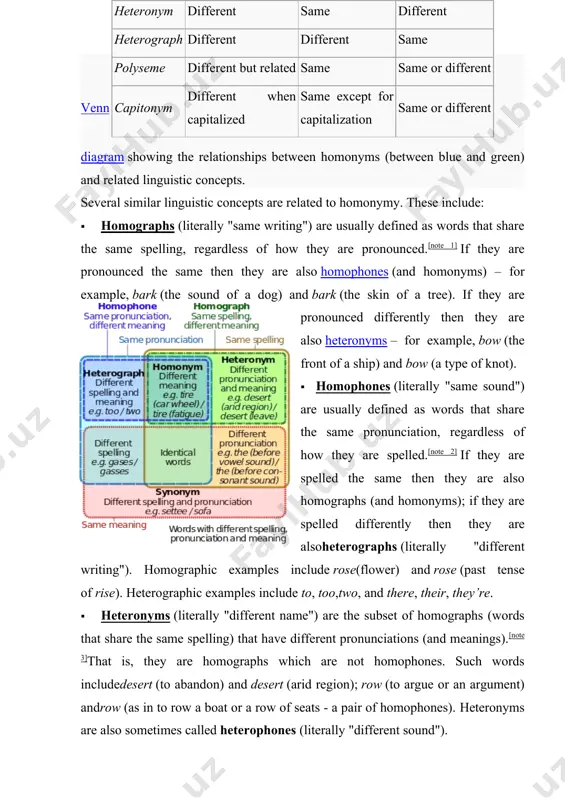
![ing the relationships between homonyms (between blue and green) and related linguistic concepts. several similar linguistic concepts are related to homonymy. these include: · homographs (literally "same writing") are usually defined as words that share the same spelling, regardless of how they are pronounced.[note 1] if they are pronounced the same then they are also homophones (and homonyms) – for example, bark (the sound of a dog) and bark (the skin of a tree). if they are pronounced differently then they are also heteronyms – for example, bow (the front of a ship) and bow (a type of knot). · homophones (literally "same sound") are usually defined as words that share the same pronunciation, regardless of how they are spelled.[note 2] if they are spelled the same then they are also homographs (and homonyms); if they are spelled differently then they are alsoheterographs (literally "different writing"). homographic examples include rose(flower) …](/media/previews/pages/preview_vGml9uZ.webp "homonims ingliz tilida omonimlar - Page 2")
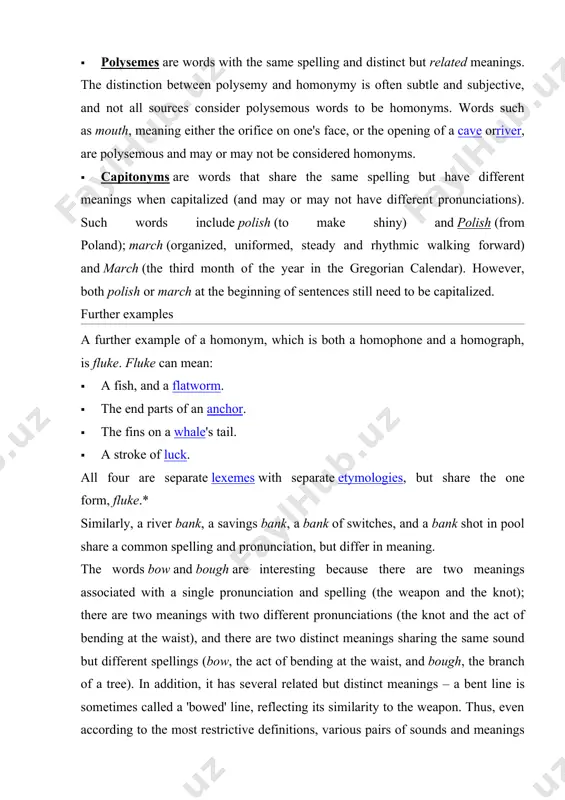
![studies in english 100], new haven: yale university press, grzega, joachim (2004), bezeichnungswandel: wie, warum, wozu? ein beitrag zur englischen und allgemeinen onomasiologie, heidelberg: winter, p. 216ff., and grzega, joachim (2001d), “über homonymenkonflikt als auslöser von wortuntergang”, in: grzega, joachim (2001c), sprachwissenschaft ohne fachchinesisch: 7 aktuelle studien für alle sprachinteressierten, aachen: shaker, p. 81-98.](/media/previews/pages/preview_s3qtySE.webp "homonims ingliz tilida omonimlar - Page 5")
About "homonims ingliz tilida omonimlar"
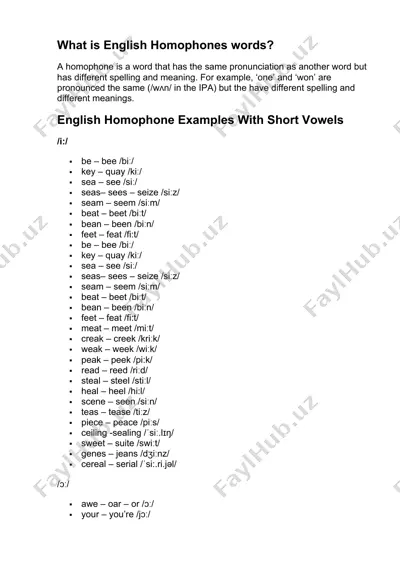
1411365337_59215.doc homonims plan: 1 etymology 2 related terms 3 further examples 4 homonymy in historical linguistics in linguistics, a homonym is, in the strict sense, one of a group of words that share the same spelling and the same pronunciation but have different meanings.homographs thus homonyms are simultaneously (words that share the same spelling, irrespective of their pronunciation) and homophones (words that share the same pronunciation, irrespective of their spelling). the state of being a homonym is called homonymy. examples of homonyms are the pair stalk (part of a plant) and stalk (follow/harass a person) and the pair left (past tense of leave) and left (opposite of right). a distinction is sometimes made between "true" homonyms, which are unrelated in …
DOC format, 140.0 KB. To download "homonims ingliz tilida omonimlar", click the Telegram button on the left.
 DOCX
DOCX
 DOCX
DOCX
 DOCX
DOCX
 PPTX
PPTX
 DOCX
DOCX
 DOCX
DOCX
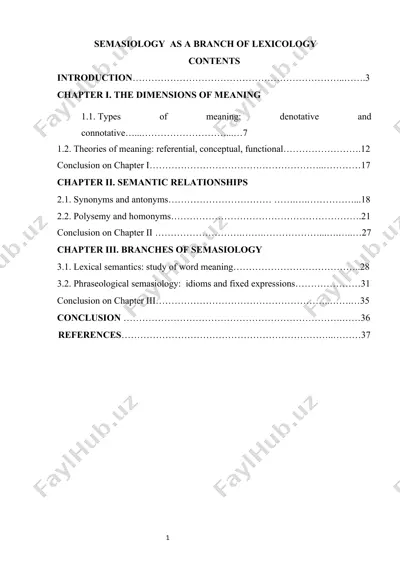 DOCX
DOCX
 DOC
DOC
 PPTX
PPTX
 DOC
DOC
 DOC
DOC
 DOCX
DOCX