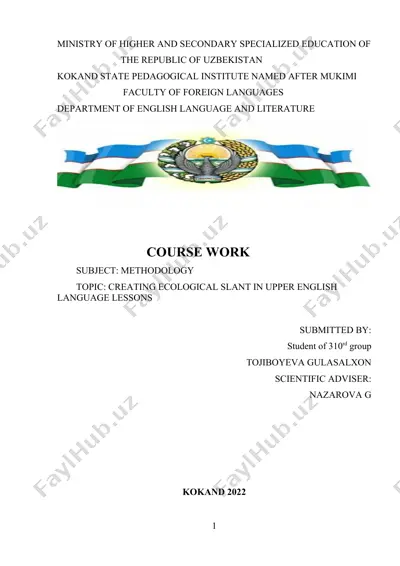
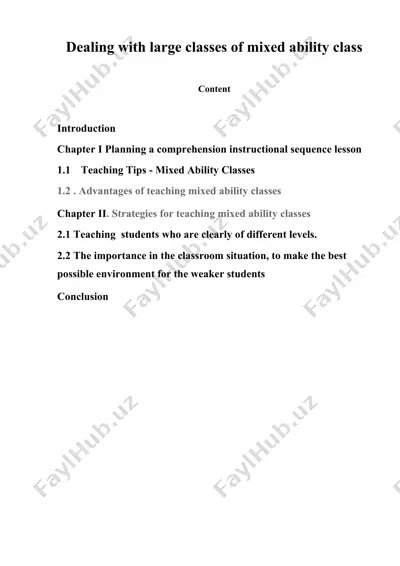
forms of organizing foreign language lessons

PPT 47 sahifa 6,8 MB Bepul yuklash

Sahifa ko'rinishi (5 sahifa)

Pastga aylantiring 👇
1 / 47
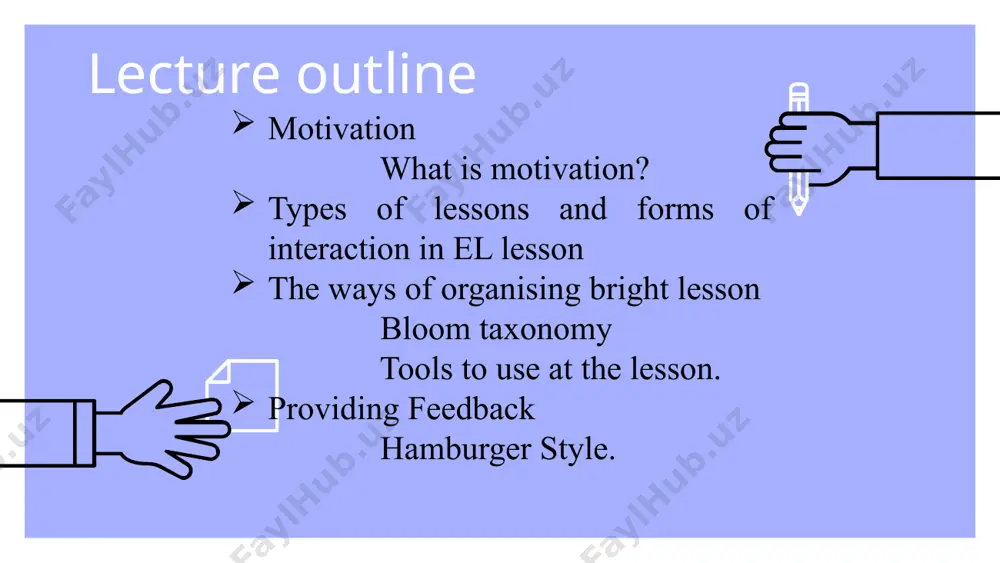
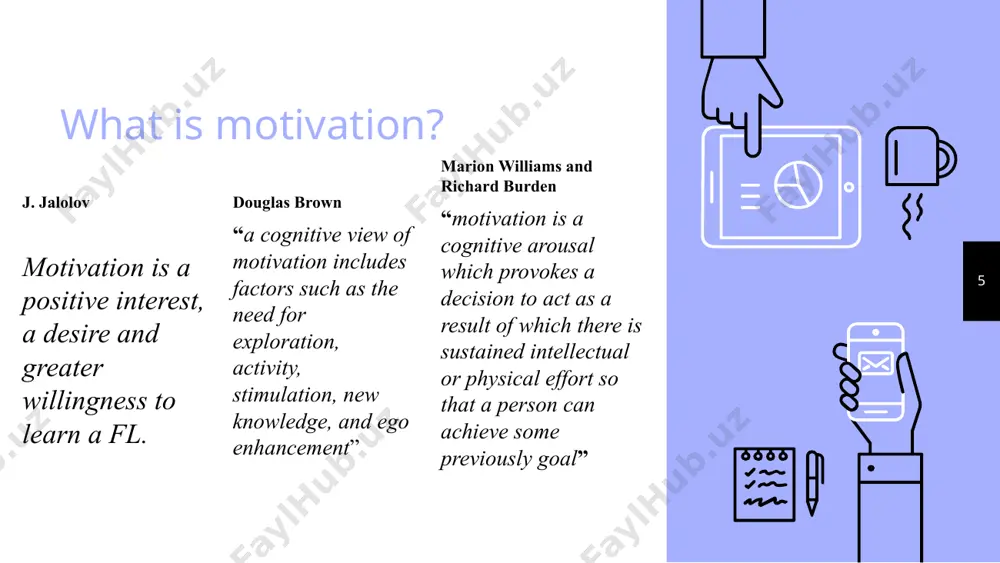
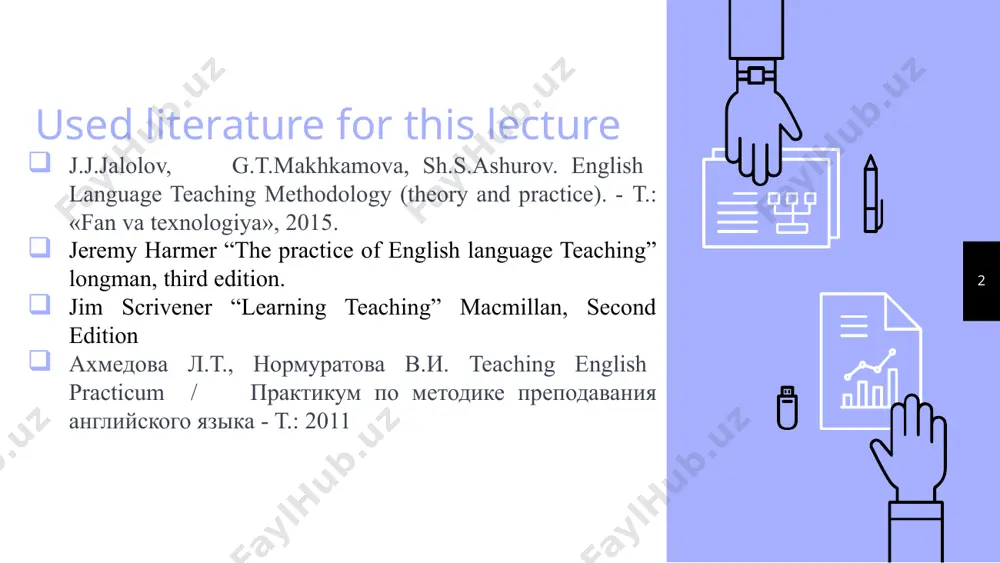
motivation and designing bright lesson forms of organizing foreign language lessons used literature for this lecture j.j.jalolov, g.t.makhkamova, sh.s.ashurov. english language teaching methodology (theory and practice). - т.: «fan va texnologiya», 2015. jeremy harmer “the practice of english language teaching” longman, third edition. jim scrivener “learning teaching” macmillan, second edition ахмедова л.т., нормуратова в.и. teaching english practicum / практикум по методике преподавания английского языка - т.: 2011 * lecture outline motivation what is motivation? types of lessons and forms of interaction in el lesson the ways of organising bright lesson bloom taxonomy tools to use at the lesson. providing feedback hamburger style. “ one child, one teacher, one book, one pen can change the world. * what is motivation? j. jalolov motivation is a positive interest, a desire and greater willingness to learn a fl. douglas brown “a cognitive view of motivation includes factors such as the need for exploration, …
2 / 47
that teachers have been using for more than sixty years that was designed to help the teacher gauge the difficulty level of the students while setting educational goals. it is called bloom’s taxonomy. those are the same questions teachers have been asking for a very long time * * what is bloom’s taxonomy? simply stated, it is a framework that classifies levels of cognition. it was designed so teachers would be able to reach educational goals. it was created in 1956 by benjamin bloom and revised in 2001 by lorin anderson and david krathwohl. we will focus on the revised taxonomy. what is important to consider is the word cognition. we can carefully develop students’ cognition by gauging the questions we ask. how? let’s take a look at bloom’s taxonomy * * * * remember. can students recall information? the learner is able to recall, restate and remember learned information …
3 / 47
different learning potentials: whole-class teaching, individual work, group work, and pair work . a lesson may begin with a whole-class activity and then move to pair, group, or individual work. possible patterns of interaction in the classroom: teacher to students (t- ss) ;students to teacher (ss- t); half class to half class (ss-ss); student to class (s- ss) * requirements to the el lesson * the structure of the el lesson there is no general scheme of the lesson structure which can be obligatory for all lessons. some of the stages of a lesson are constant, others can be varied. a constant stage of a lesson is an involving into language atmosphere. this stage includes various tasks or activities. the atmosphere of communication created at the beginning of the lesson lasts during the whole lesson. the dominant place is given to the teacher’s communicative action related to motivation, instructions, control …
4 / 47
ook, ‘how to teach english’. * in the engage stage, a teacher motivate learners and arise their interest by involving their emotion through using games, music, discussions, stimulating pictures, dramatic stories, anecdotes, etc. other ways of encouraging the learners are: asking them what they think about a topic (predicting, guessing) before reading the text. if learners are engaged they learn better. in the study stage a teacher focuses on vocabulary and constructions or information. successful language teaching/learning depends on the degree of quality language acquisition (getting language knowledge or skills through listening and reading), for example, and study activities organized by a teacher. activate is the stage where learners use the language knowledge and skills in given situations. these three stages can be varied, they are not constant. variation is even recommended for effective teaching/learning el. * test -teach – test (ttt) the first test phase- learners are more or …
5 / 47
ompletion of a central task involving a particular language aspect; 3) reporting, analysis and feedback to be performed by the teacher concerning how the learners accomplished the central task; and 4) practice sessions to hone learner proficiencies in the language area. * * the structure of a lesson is determined by how a teacher deals with three essential stages of a lesson: * sequencing opening closing there are the following components of the lesson plan: goal (s) - the definition of lesson objectives; tasks - setting goals of a lesson; draws attention to the need for clear language; materials and equipment - used materials and equipment of the lesson; procedures - planning lesson course that is used by the sequence of exercises and communicative tasks, and planning mode, in which the jobs will be executed; evaluation - control of the acquired material, the evaluation conducted by the lesson and setting …

Ko'proq o'qimoqchimisiz?

Barcha 47 sahifani Telegram orqali bepul yuklab oling.

To'liq faylni yuklab olish

"forms of organizing foreign language lessons" haqida

motivation and designing bright lesson forms of organizing foreign language lessons used literature for this lecture j.j.jalolov, g.t.makhkamova, sh.s.ashurov. english language teaching methodology (theory and practice). - т.: «fan va texnologiya», 2015. jeremy harmer “the practice of english language teaching” longman, third edition. jim scrivener “learning teaching” macmillan, second edition ахмедова л.т., нормуратова в.и. teaching english practicum / практикум по методике преподавания английского языка - т.: 2011 * lecture outline motivation what is motivation? types of lessons and forms of interaction in el lesson the ways of organising bright lesson bloom taxonomy tools to use at the lesson. providing feedback hamburger style. “ one child, one teacher, one book, one pen can change the...

Bu fayl PPT formatida 47 sahifadan iborat (6,8 MB). "forms of organizing foreign language lessons"ni yuklab olish uchun chap tomondagi Telegram tugmasini bosing.
Teglar: forms of organizing foreign lan… PPT 47 sahifa Bepul yuklash Telegram