course work: the ways of identifying student’s strengths and weaknesses in vocabulary

DOCX 41 sahifa 59,9 KB Bepul yuklash

Sahifa ko'rinishi (5 sahifa)

Pastga aylantiring 👇
1 / 41
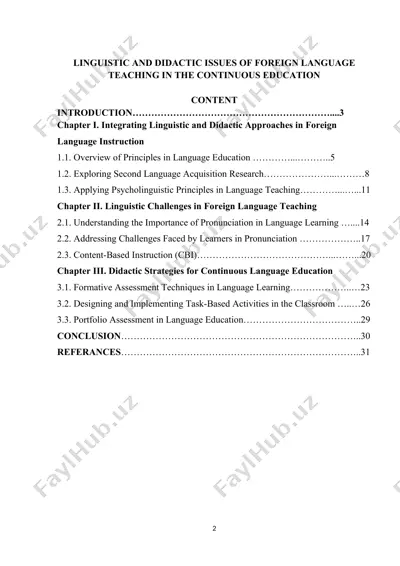
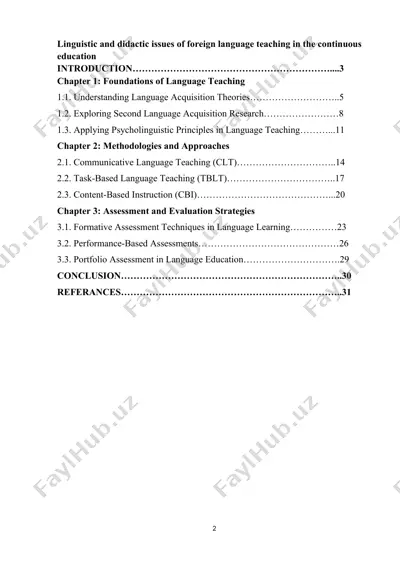
ministry of higher education, science and innovations of the republic of uzbekistan, jizzakh state pedagogical universit faculty foreign language practical english course subject:the integration of speech skills course work theme:the ways of identifying student's strengths and weaknesses in vocabulary . student: faculty of foreign languages bachelor's degree in "foreign language and literature" 740-23-group eshqulova ruxshona supervisor: ganiyeva gulnoza jizzakh-2025 content i.introduction………………………………………………..…..……3 ii.main part 1.theoretical foundations of vocabulary assessment………………………….6 2.advanced techniques for identifying vocabulary proficiency…………..….18 3.practical assessment techniques for vocabulary evaluation………………..30 iii. conclusion………………….……………………………………...38 iv. used literature………………………………………….………………40 introduction presidential decree of the republic of uzbekistan no. pp-1234 (march 15, 2020) content: modernizing the system of teaching foreign languages—especially the english language—in schools and higher education institutions.implementing new curricula and methodologies, along with measures for training qualified teachers.organizing the educational process effectively based on digital technologies[footnoteref:1]. [1: on, under the chairmanship of president shavkat mirziyoyev, the system of teaching foreign language she spoke …
2 / 41
y requires a combination of diagnostic tools, observation techniques, and tailored feedback strategies. these methods provide valuable insights into both the breadth and depth of a student’s vocabulary knowledge and help educators support learners more effectively. one of the most direct ways to identify a student’s vocabulary strengths and weaknesses is through vocabulary tests that assess both receptive and productive knowledge. receptive vocabulary refers to the words a student understands when they hear or read them, while productive vocabulary includes the words they can use correctly in speech or writing. standardized vocabulary tests, such as multiple-choice questions or gap-fill exercises, provide an initial overview of a student’s vocabulary range. these tests can pinpoint gaps in word knowledge, particularly with regard to frequency-based vocabulary or words commonly encountered in academic contexts. however, these tests typically focus on recognition rather than production, so they may not fully reflect a student’s ability to …
3 / 41
particularly valuable for identifying weaknesses in vocabulary usage. these can include tasks such as reading comprehension exercises, in which students are asked to infer the meaning of unknown words from context. these tasks help teachers identify how well students can deduce word meanings based on surrounding information. for instance, a student who is unable to guess the meaning of a word from context might have a weakness in making inferences, which could be addressed by targeted exercises on contextual word use. the aim the theme:identifying a student’s strengths and weaknesses in vocabulary is a critical component of effective language learning and teaching. the aim of identifying these strengths and weaknesses is to provide a clear picture of a learner’s lexical knowledge and guide instruction to help them improve and expand their vocabulary. vocabulary is not just about knowing a list of words, but also about understanding how to use them …
4 / 41
aches that enable educators to not only assess vocabulary knowledge but also tailor instructional strategies to help students develop a broader and deeper vocabulary base. understanding where a student excels and where they face challenges in vocabulary acquisition is fundamental to promoting effective learning. this process is valuable both from a theoretical perspective—offering insights into how vocabulary is acquired and processed—and from a practical standpoint, providing tangible ways to intervene and guide learners toward improved language outcomes. ii.main part 1.theoretical foundations of vocabulary assessment. vocabulary assessment is a crucial aspect of language evaluation, playing a significant role in measuring linguistic proficiency and communicative competence. the theoretical foundations of vocabulary assessment are rooted in multiple disciplines, including psycholinguistics, applied linguistics, and educational measurement. understanding vocabulary as a construct requires insights into its nature, the cognitive processes involved in lexical acquisition, and the methods used to evaluate it. vocabulary knowledge is often …
5 / 41
olves the ability to use words correctly in speaking or writing. the distinction between these two forms of knowledge informs the design of tests, with some assessments focusing on recognition-based tasks and others on the ability to generate and use words accurately. additionally, vocabulary knowledge exists along a continuum from passive recognition to active production, and assessments must account for varying levels of familiarity with lexical items. another key theoretical aspect is the relationship between vocabulary knowledge and language proficiency. vocabulary is considered a strong predictor of overall language competence, influencing reading comprehension, listening skills, and spoken and written expression. consequently, vocabulary assessment is integral to proficiency tests, such as the toefl, ielts, and other standardized examinations. these tests incorporate vocabulary measurement through direct and indirect tasks, including cloze tests, multiple-choice questions, matching exercises, and free production tasks. the selection of assessment formats is guided by theoretical perspectives on how …

Ko'proq o'qimoqchimisiz?

Barcha 41 sahifani Telegram orqali bepul yuklab oling.

To'liq faylni yuklab olish

"course work: the ways of identifying student’s strengths and weaknesses in vocabulary" haqida

ministry of higher education, science and innovations of the republic of uzbekistan, jizzakh state pedagogical universit faculty foreign language practical english course subject:the integration of speech skills course work theme:the ways of identifying student's strengths and weaknesses in vocabulary . student: faculty of foreign languages bachelor's degree in "foreign language and literature" 740-23-group eshqulova ruxshona supervisor: ganiyeva gulnoza jizzakh-2025 content i.introduction………………………………………………..…..……3 ii.main part 1.theoretical foundations of vocabulary assessment………………………….6 2.advanced techniques for identifying vocabulary proficiency…………..….18 3.practical assessment techniques for vocabulary evaluation………………..30 iii. conclusion………………….……………………………………...38 iv. used literature...

Bu fayl DOCX formatida 41 sahifadan iborat (59,9 KB). "course work: the ways of identifying student’s strengths and weaknesses in vocabulary"ni yuklab olish uchun chap tomondagi Telegram tugmasini bosing.
Teglar: course work: the ways of identi… DOCX 41 sahifa Bepul yuklash Telegram