simple present tense

PPTX 12 sahifa 1,0 MB Bepul yuklash

Sahifa ko'rinishi (5 sahifa)

Pastga aylantiring 👇
1 / 12
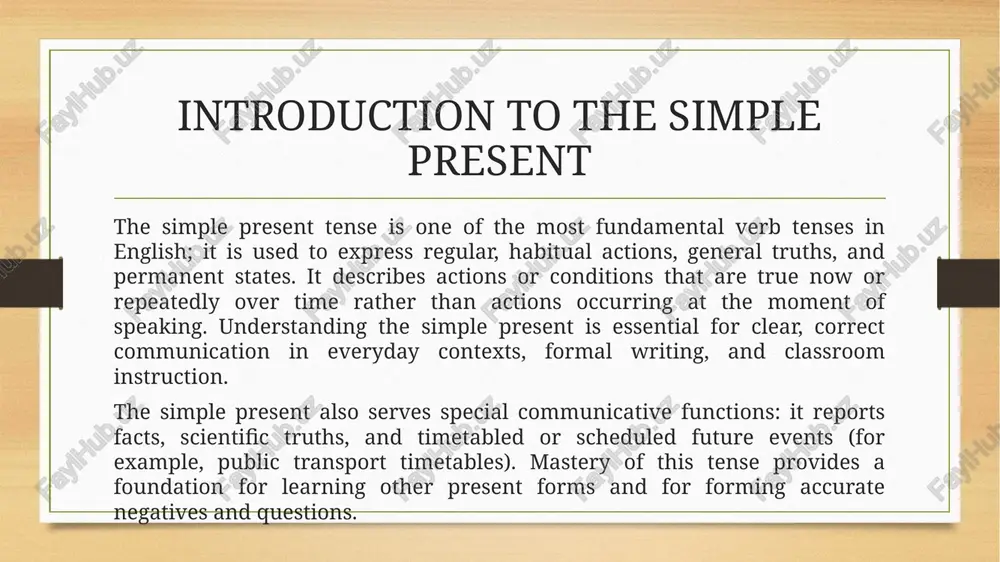
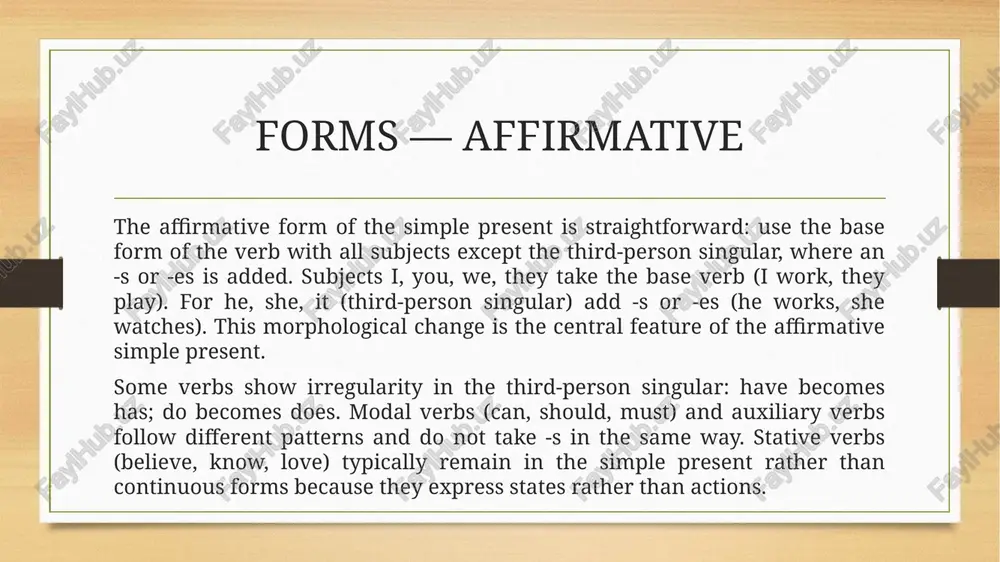
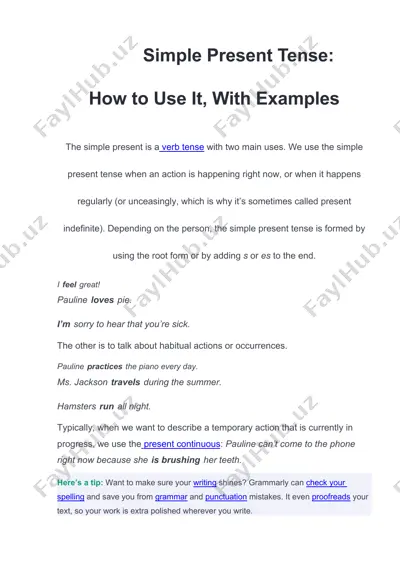
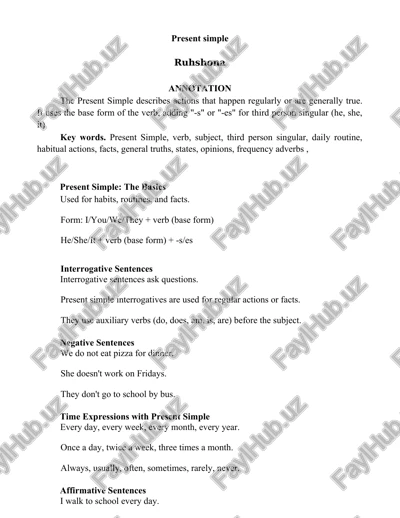
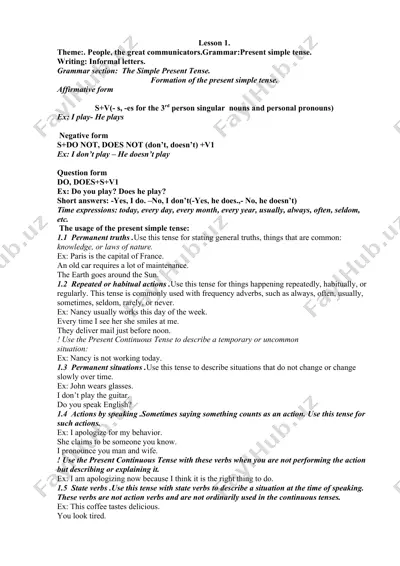
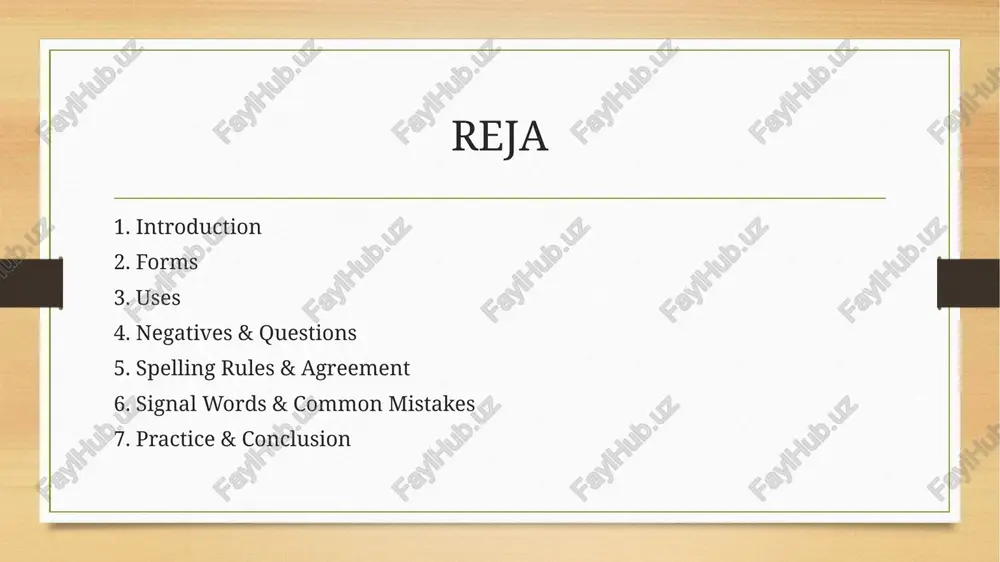
simple present tense simple present tense reja 1. introduction 2. forms 3. uses 4. negatives & questions 5. spelling rules & agreement 6. signal words & common mistakes 7. practice & conclusion introduction to the simple present the simple present tense is one of the most fundamental verb tenses in english; it is used to express regular, habitual actions, general truths, and permanent states. it describes actions or conditions that are true now or repeatedly over time rather than actions occurring at the moment of speaking. understanding the simple present is essential for clear, correct communication in everyday contexts, formal writing, and classroom instruction. the simple present also serves special communicative functions: it reports facts, scientific truths, and timetabled or scheduled future events (for example, public transport timetables). mastery of this tense provides a foundation for learning other present forms and for forming accurate negatives and questions. forms — affirmative …
2 / 12
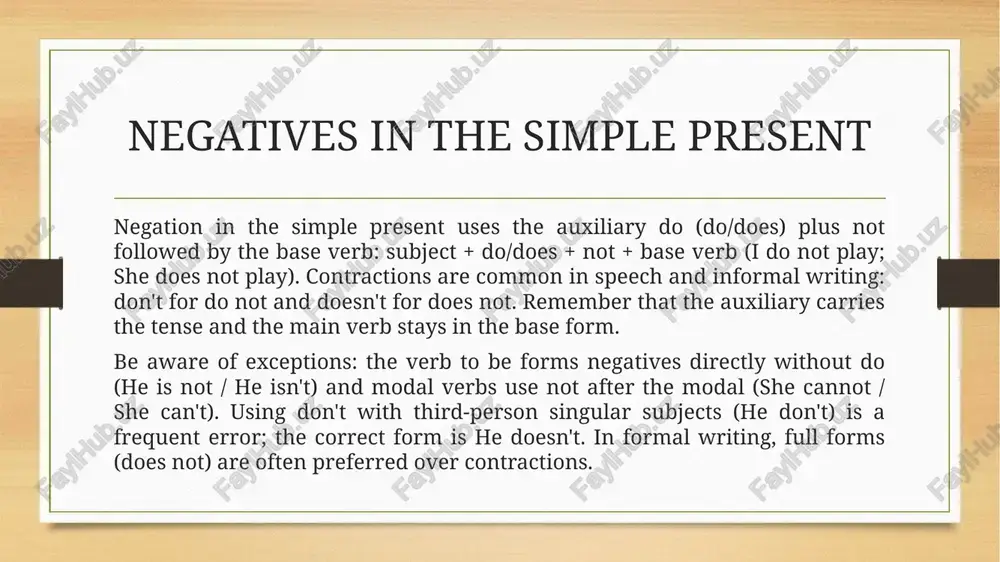
n speech and informal writing: don't for do not and doesn't for does not. remember that the auxiliary carries the tense and the main verb stays in the base form. be aware of exceptions: the verb to be forms negatives directly without do (he is not / he isn't) and modal verbs use not after the modal (she cannot / she can't). using don't with third-person singular subjects (he don't) is a frequent error; the correct form is he doesn't. in formal writing, full forms (does not) are often preferred over contractions. questions and short answers yes/no questions in the simple present are formed by placing do/does before the subject: do you study every day? does he work here? for wh-questions, the question word (what, where, when, why, how) precedes do/does + subject + base verb (where do they live?). the auxiliary do/does is necessary because the main verb stays …
3 / 12
rfect. recognizing the context (habit, fact, schedule) guides correct tense selection. spelling rules and subject-verb agreement forming the third-person singular requires attention to spelling rules. for most verbs add -s (work → works). add -es to verbs ending in -o, -ch, -sh, -ss, -x, or -z (go → goes, watch → watches, fix → fixes). for verbs ending in a consonant + y, change y to -i and add -es (study → studies); if a vowel precedes the y, simply add -s (play → plays). irregular forms include have → has and do → does. subject-verb agreement is essential: singular third-person subjects (he, she, it, or singular nouns) require the -s/-es form, while i, you, we, they take the base verb. collective nouns and indefinite pronouns require attention to meaning for agreement (the team plays well vs. the team are arguing — variety depends on dialect and intended emphasis). consistent …
4 / 12
es not come) also occurs. recognizing the auxiliary's role and keeping the main verb in base form will prevent many errors. practical tips include practicing subject-verb pairs aloud, memorizing common third-person irregulars (have → has, do → does), and using signal words to choose the tense. writing short daily habit descriptions or keeping a simple diary using the simple present reinforces correct forms and agreement. regular corrective feedback accelerates improvement. practice and conclusion to consolidate learning, practice transforming and producing sentences: 1) affirmative to negative: "he speaks spanish" → "he does not speak spanish." 2) affirmative to question: "they work on monday" → "do they work on monday?" 3) add third-person -s: "she (to go) to school every day" → "she goes to school every day." 4) correct mistake: "he don't like cheese" → "he doesn't like cheese." 5) timetable usage: "the plane (depart) at 6 p.m." → "the plane …
5 / 12
simple present tense - Page 5

Ko'proq o'qimoqchimisiz?

Barcha 12 sahifani Telegram orqali bepul yuklab oling.

To'liq faylni yuklab olish

"simple present tense" haqida

simple present tense simple present tense reja 1. introduction 2. forms 3. uses 4. negatives & questions 5. spelling rules & agreement 6. signal words & common mistakes 7. practice & conclusion introduction to the simple present the simple present tense is one of the most fundamental verb tenses in english; it is used to express regular, habitual actions, general truths, and permanent states. it describes actions or conditions that are true now or repeatedly over time rather than actions occurring at the moment of speaking. understanding the simple present is essential for clear, correct communication in everyday contexts, formal writing, and classroom instruction. the simple present also serves special communicative functions: it reports facts, scientific truths, and timetabled or …

Bu fayl PPTX formatida 12 sahifadan iborat (1,0 MB). "simple present tense"ni yuklab olish uchun chap tomondagi Telegram tugmasini bosing.
Teglar: simple present tense PPTX 12 sahifa Bepul yuklash Telegram