circulatory system

DOCX 4 pages 19.6 KB Free download

Page preview (4 pages)

Scroll down 👇
1 / 4
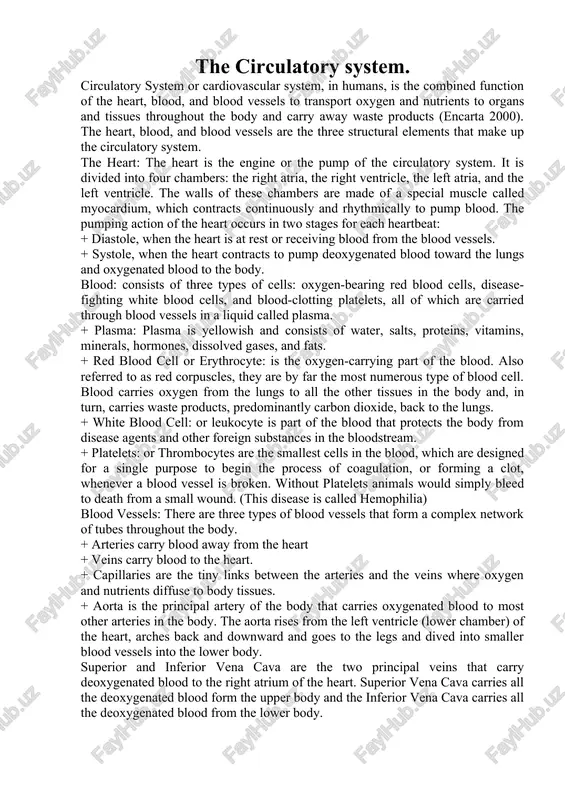
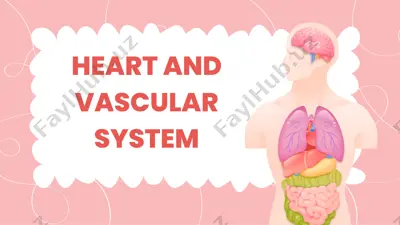
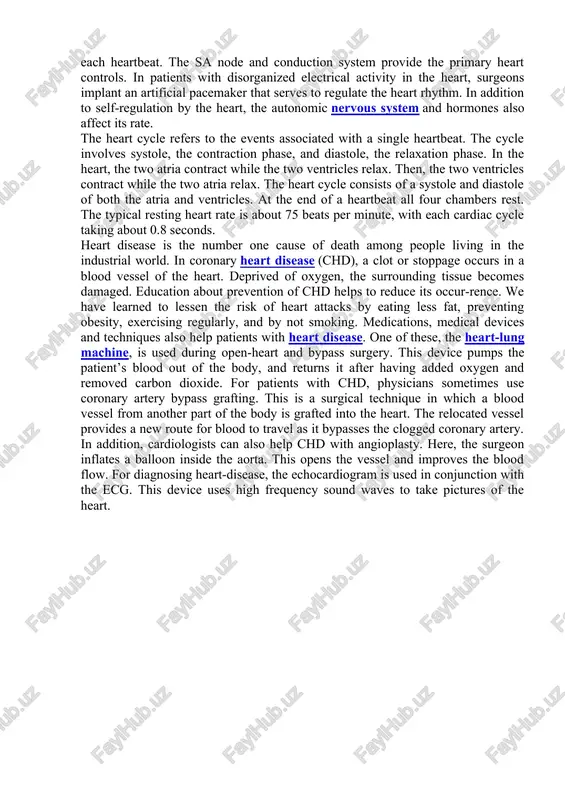
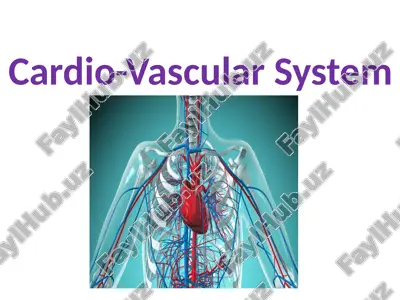
the circulatory system. circulatory system or cardiovascular system, in humans, is the combined function of the heart, blood, and blood vessels to transport oxygen and nutrients to organs and tissues throughout the body and carry away waste products (encarta 2000). the heart, blood, and blood vessels are the three structural elements that make up the circulatory system. the heart: the heart is the engine or the pump of the circulatory system. it is divided into four chambers: the right atria, the right ventricle, the left atria, and the left ventricle. the walls of these chambers are made of a special muscle called myocardium, which contracts continuously and rhythmically to pump blood. the pumping action of the heart occurs in two stages for each heartbeat: + diastole, when the heart is at rest or receiving blood from the blood vessels. + systole, when the heart contracts to pump deoxygenated blood toward …
2 / 4
uld simply bleed to death from a small wound. (this disease is called hemophilia) blood vessels: there are three types of blood vessels that form a complex network of tubes throughout the body. + arteries carry blood away from the heart + veins carry blood to the heart. + capillaries are the tiny links between the arteries and the veins where oxygen and nutrients diffuse to body tissues. + aorta is the principal artery of the body that carries oxygenated blood to most other arteries in the body. the aorta rises from the left ventricle (lower chamber) of the heart, arches back and downward and goes to the legs and dived into smaller blood vessels into the lower body. superior and inferior vena cava are the two principal veins that carry deoxygenated blood to the right atrium of the heart. superior vena cava carries all the deoxygenated blood form the …
3 / 4
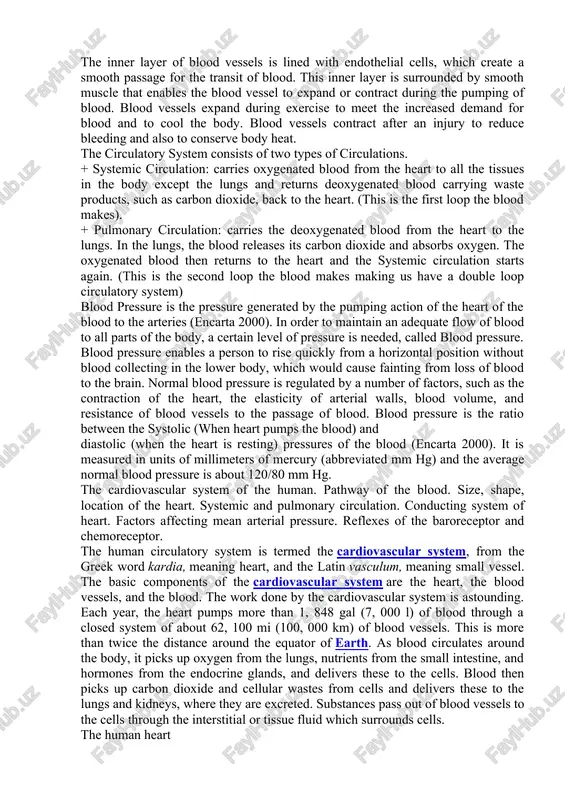
king us have a double loop circulatory system) blood pressure is the pressure generated by the pumping action of the heart of the blood to the arteries (encarta 2000). in order to maintain an adequate flow of blood to all parts of the body, a certain level of pressure is needed, called blood pressure. blood pressure enables a person to rise quickly from a horizontal position without blood collecting in the lower body, which would cause fainting from loss of blood to the brain. normal blood pressure is regulated by a number of factors, such as the contraction of the heart, the elasticity of arterial walls, blood volume, and resistance of blood vessels to the passage of blood. blood pressure is the ratio between the systolic (when heart pumps the blood) and diastolic (when the heart is resting) pressures of the blood (encarta 2000). it is measured in units of …
4 / 4
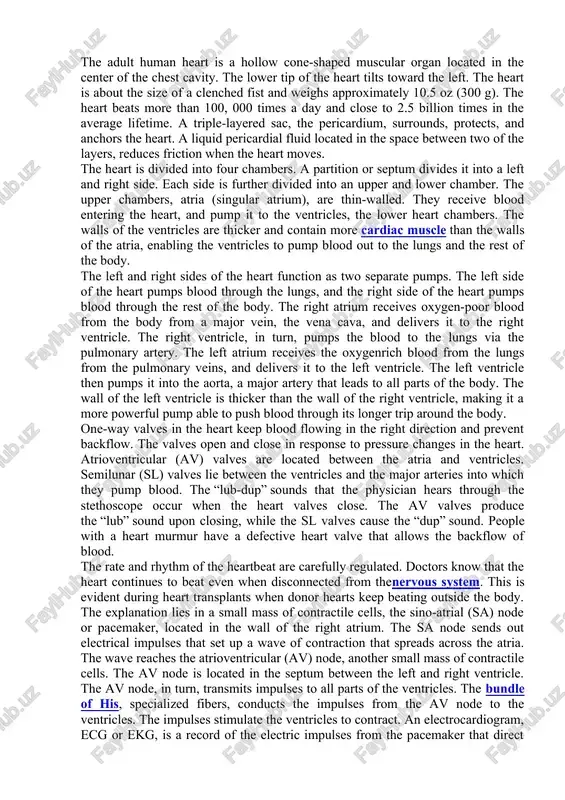
elivers these to the lungs and kidneys, where they are excreted. substances pass out of blood vessels to the cells through the interstitial or tissue fluid which surrounds cells. the human heart the adult human heart is a hollow cone-shaped muscular organ located in the center of the chest cavity. the lower tip of the heart tilts toward the left. the heart is about the size of a clenched fist and weighs approximately 10.5 oz (300 g). the heart beats more than 100, 000 times a day and close to 2.5 billion times in the average lifetime. a triple-layered sac, the pericardium, surrounds, protects, and anchors the heart. a liquid pericardial fluid located in the space between two of the layers, reduces friction when the heart moves. the heart is divided into four chambers. a partition or septum divides it into a left and right side. each side is further …

Want to read more?

Download all 4 pages for free via Telegram.

Download full file

About "circulatory system"

the circulatory system. circulatory system or cardiovascular system, in humans, is the combined function of the heart, blood, and blood vessels to transport oxygen and nutrients to organs and tissues throughout the body and carry away waste products (encarta 2000). the heart, blood, and blood vessels are the three structural elements that make up the circulatory system. the heart: the heart is the engine or the pump of the circulatory system. it is divided into four chambers: the right atria, the right ventricle, the left atria, and the left ventricle. the walls of these chambers are made of a special muscle called myocardium, which contracts continuously and rhythmically to pump blood. the pumping action of the heart occurs in two …

This file contains 4 pages in DOCX format (19.6 KB). To download "circulatory system", click the Telegram button on the left.
Tags: circulatory system DOCX 4 pages Free download Telegram