software development life cycle

PPTX 22 sahifa 1021,3 KB Bepul yuklash

Sahifa ko'rinishi (5 sahifa)

Pastga aylantiring 👇
1 / 22
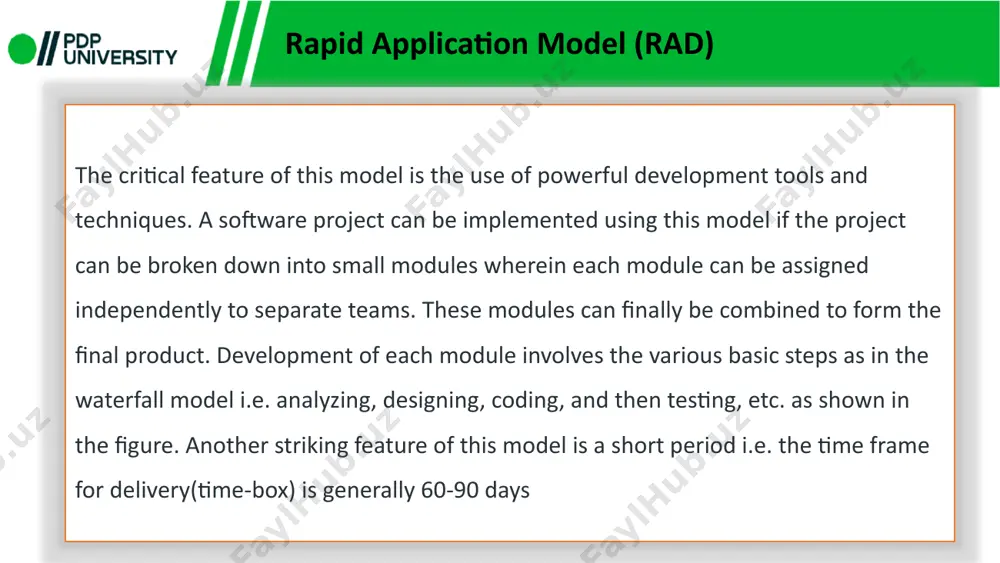
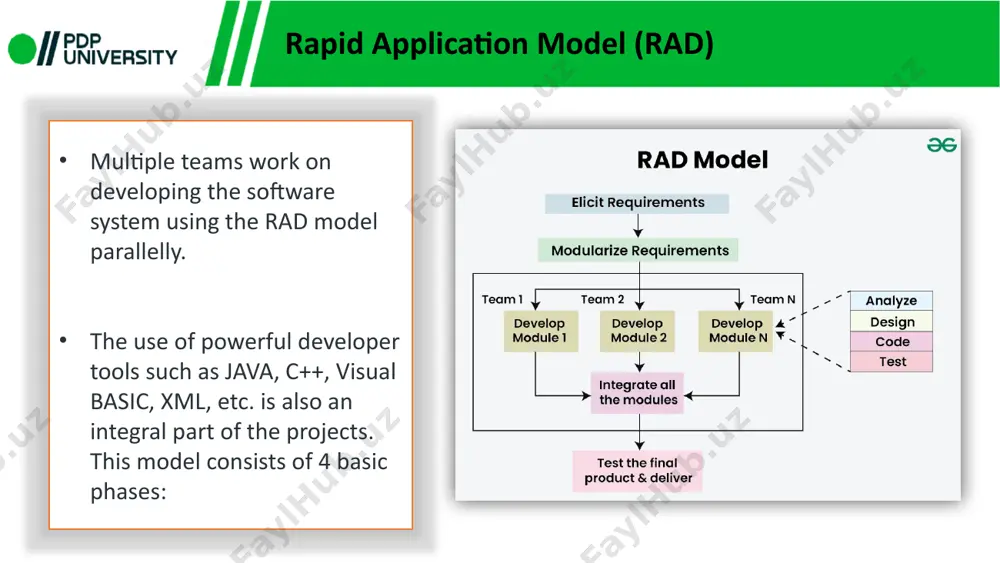
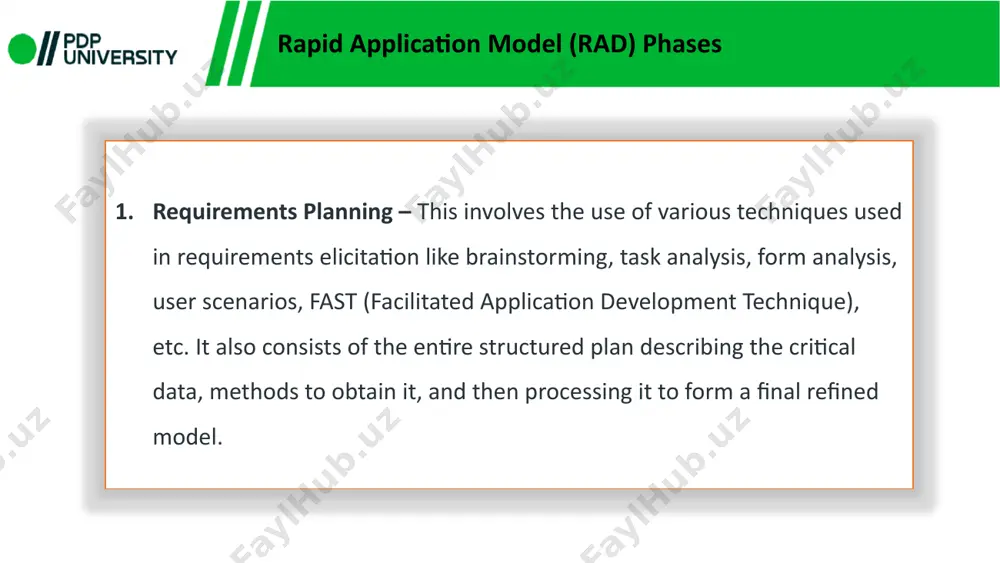
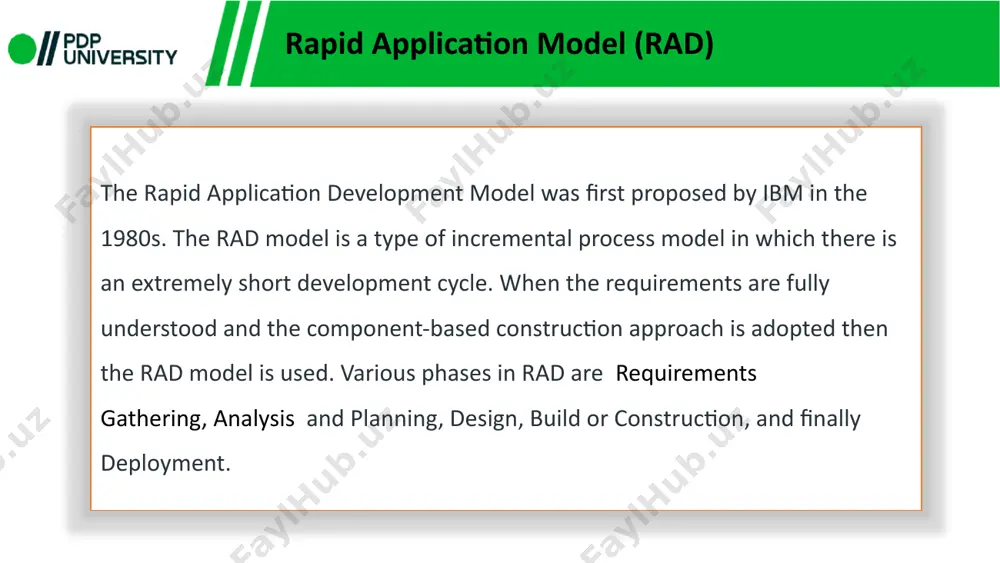
презентация powerpoint software development life cycle rapid application model (rad) rapid application model (rad) the rapid application development model was first proposed by ibm in the 1980s. the rad model is a type of incremental process model in which there is an extremely short development cycle. when the requirements are fully understood and the component-based construction approach is adopted then the rad model is used. various phases in rad are requirements gathering, analysis and planning, design, build or construction, and finally deployment. rapid application model (rad) the critical feature of this model is the use of powerful development tools and techniques. a software project can be implemented using this model if the project can be broken down into small modules wherein each module can be assigned independently to separate teams. these modules can finally be combined to form the final product. development of each module involves the various basic steps …
2 / 22
eedback and building the prototype using developer tools. in other words, it includes re-examination and validation of the data collected in the first phase. the dataset attributes are also identified and elucidated in this phase. rapid application model (rad) phases construction – in this phase, refinement of the prototype and delivery takes place. it includes the actual use of powerful automated tools to transform processes and data models into the final working product. all the required modifications and enhancements are to be done in this phase. rapid application model (rad) phases cutover – all the interfaces between the independent modules developed by separate teams have to be tested properly. the use of powerfully automated tools and subparts makes testing easier. this is followed by acceptance testing by the user. the process involves building a rapid prototype, delivering it to the customer, and taking feedback. after validation by the customer, the …
3 / 22
ototyping and iterations to produce a working system as soon as possible. this is especially helpful for projects when deadlines must be met. adaptability and flexibility rad places a strong emphasis on adapting quickly to changing needs. due to the model’s flexibility, stakeholders can modify and improve the system in response to changing requirements and user input. objectives of rapid application development model (rad) stakeholder participation throughout the development cycle, rad promotes end users and stakeholders’ active participation. collaboration and frequent feedback make it possible to make sure that the changing system satisfies both user and corporate needs. improved interaction development teams and stakeholders may collaborate and communicate more effectively thanks to rad. frequent communication and feedback loops guarantee that all project participants are in agreement, which lowers the possibility of misunderstandings. objectives of rapid application development model (rad) improved quality via prototyping prototypes enable early system component testing and …
4 / 22
on development model (rad) the progress and development of the project can be measured through the various stages. it is easier to accommodate changing requirements due to the short iteration time spans. productivity may be quickly boosted with a lower number of employees. disadvantages of rapid application development model (rad) the use of powerful and efficient tools requires highly skilled professionals. the absence of reusable components can lead to the failure of the project. the team leader must work closely with the developers and customers to close the project on time. the systems which cannot be modularized suitably cannot use this model. disadvantages of rapid application development model (rad) customer involvement is required throughout the life cycle. it is not meant for small-scale projects as in such cases, the cost of using automated tools and techniques may exceed the entire budget of the project. not every application can be used …
5 / 22
ire heavy resources. drawbacks of rapid application development if there is no appropriate modularization then rad projects fail. performance can be a problem for such projects. the projects using the rad model find it difficult to adopt new technologies. this is because rad focuses on quickly building and refining prototypes using existing tools. changing to new technologies can disrupt this process, making it harder to keep up with the fast pace of development. even with skilled developers and advanced tools, the rapid nature of rad leaves little time to learn and integrate new technologies smoothly. thank you !!! image1.png image2.png

Ko'proq o'qimoqchimisiz?

Barcha 22 sahifani Telegram orqali bepul yuklab oling.

To'liq faylni yuklab olish

"software development life cycle" haqida

презентация powerpoint software development life cycle rapid application model (rad) rapid application model (rad) the rapid application development model was first proposed by ibm in the 1980s. the rad model is a type of incremental process model in which there is an extremely short development cycle. when the requirements are fully understood and the component-based construction approach is adopted then the rad model is used. various phases in rad are requirements gathering, analysis and planning, design, build or construction, and finally deployment. rapid application model (rad) the critical feature of this model is the use of powerful development tools and techniques. a software project can be implemented using this model if the project can be broken down into small modules …

Bu fayl PPTX formatida 22 sahifadan iborat (1021,3 KB). "software development life cycle"ni yuklab olish uchun chap tomondagi Telegram tugmasini bosing.
Teglar: software development life cycle PPTX 22 sahifa Bepul yuklash Telegram