comparative-historical method

PPTX 25 pages 391.7 KB Free download

Page preview (5 pages)

Scroll down 👇
1 / 25
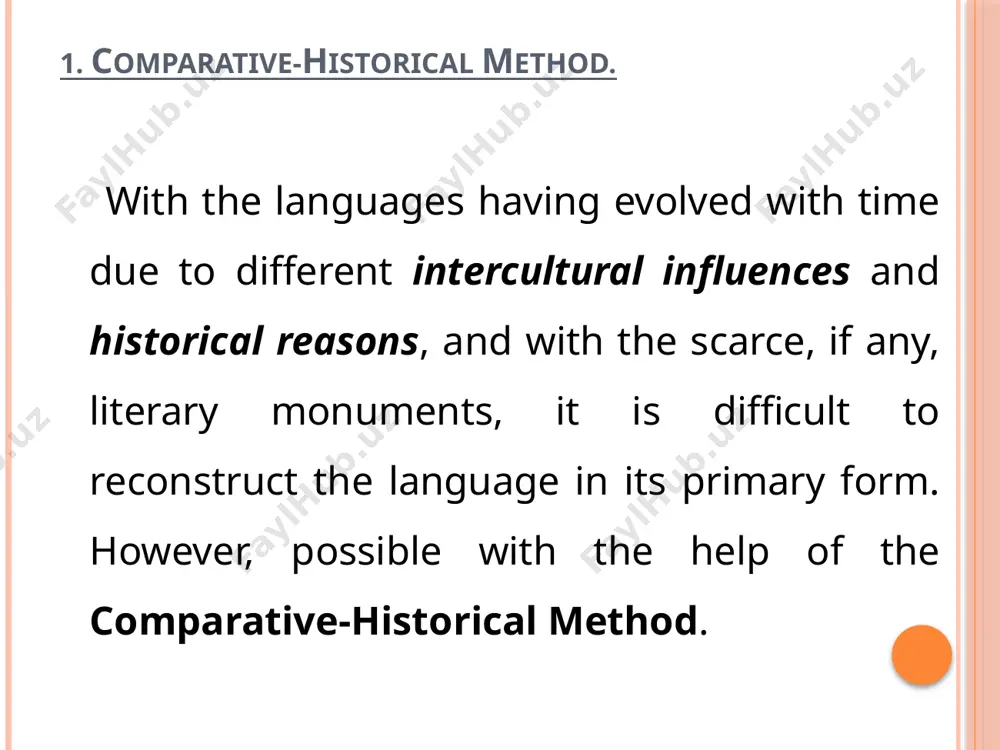
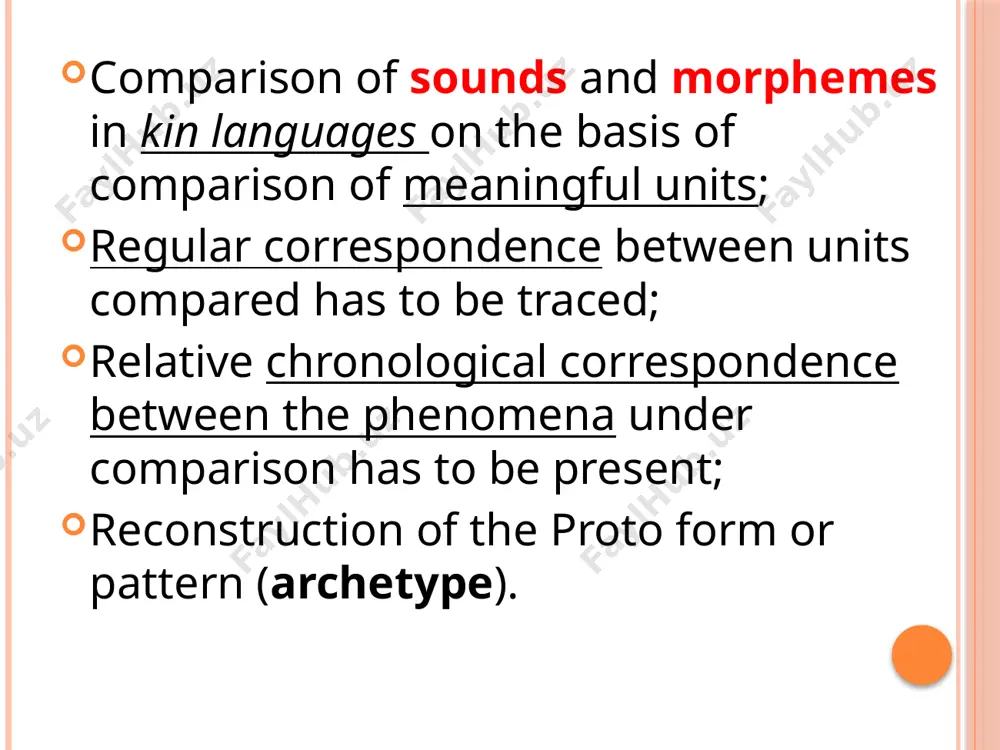
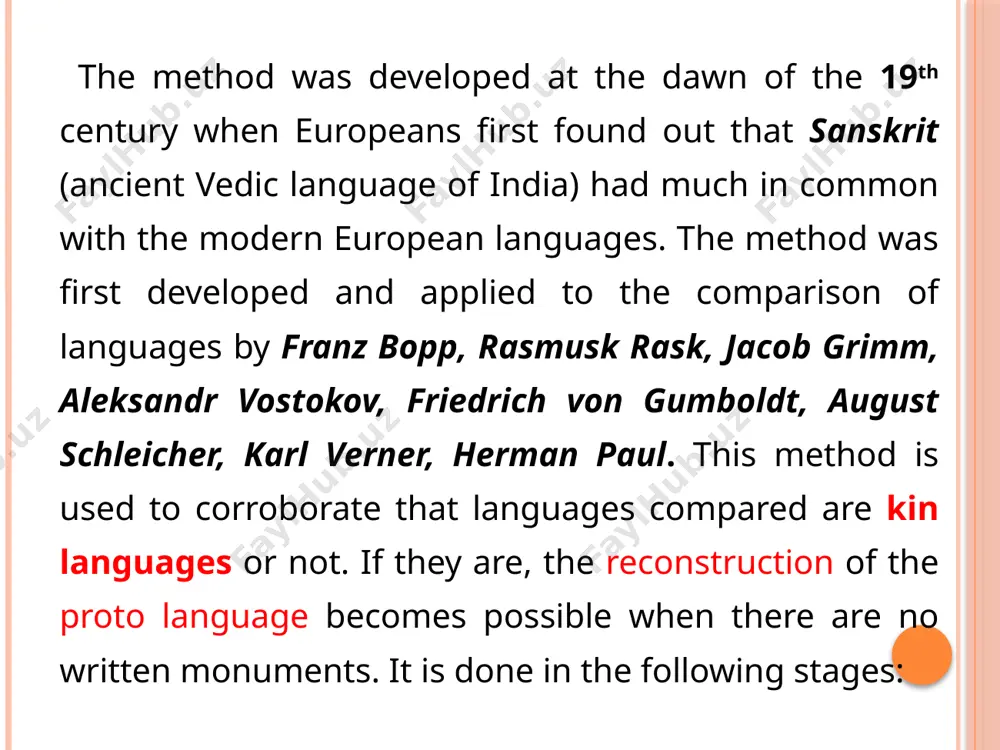
lecture 2. lecture 2. principal features of germanic languages 1. comparative-historical method. with the languages having evolved with time due to different intercultural influences and historical reasons, and with the scarce, if any, literary monuments, it is difficult to reconstruct the language in its primary form. however, possible with the help of the comparative-historical method. the method was developed at the dawn of the 19th century when europeans first found out that sanskrit (ancient vedic language of india) had much in common with the modern european languages. the method was first developed and applied to the comparison of languages by franz bopp, rasmusk rask, jacob grimm, aleksandr vostokov, friedrich von gumboldt, august schleicher, karl verner, herman paul. this method is used to corroborate that languages compared are kin languages or not. if they are, the reconstruction of the proto language becomes possible when there are no written monuments. it is …
2 / 25
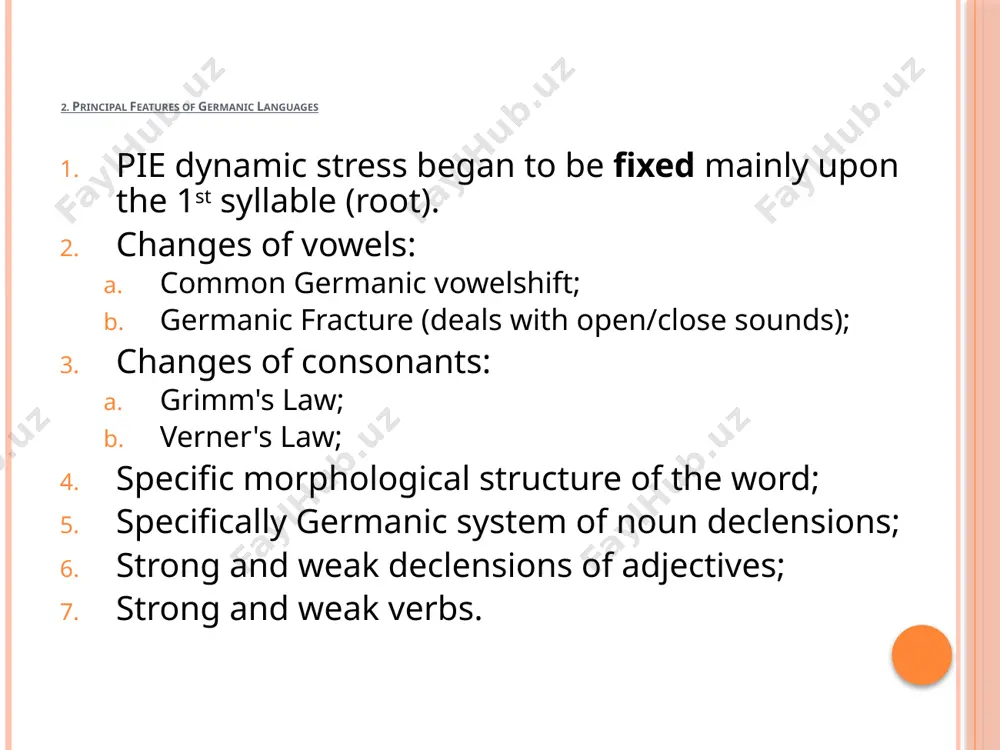
change (shift) of type of articulation by stops in germanic languages. it was the simultaneous shift of 3 groups of stops: voiced, voiceless and aspirated. this shift was completed by 5th-beginning of 6th century a.d. voiced voiceless aspirated 1. ie voiced aspirated plosives (stops) > cg voiced plosives (stops) bh > b sanskr bhrātar > gt broƀar, me brother dh > d sanskr medhu, r мёд > oe medu gh > g pie *ghostis > gt gasts, oe giest 2. ie voiced plosives (stops) > cg voiceless plosives (stops) b > p r слабый > gt slepan d > t r два > me two g > k r иго > me yoke 3. ie voiceless plosives (stops) > cg voiceless fricatives p > f sanskr pitar, lat pater > gt fadar, oe fæder t > ƀ sanskr trayas, r три > gt ƀreis, oe ƀrie k > h lat …
3 / 25
estern germanic and nothern germanic languages. this latter change z >r is termed rhotacism. common germanic vowelshift germanic languages have some peculiarities in the sphere of vowel sounds, which distinguish them from other ie languages. their main characteristic in the sphere is the treatment of the ie o, ā, which is called germanic vowel shift o ie ˃ pg a a o̅ ie ˃ pg o̅ a̅ lat noctem rus ночь˃ gt nahts lat octo > gt ahtau rus яблоко > germ apfel lat frāter > gt brōƀar oe brōƀor lat flōs > oe blōma lat māter > oe mōdor thus, there was neither a short o nor a long ā in germanic languages. germanic fracture fracture concerns two pairs of vowels e/i and u/o. an ie e in the root syllable finds its counterpart in germanic i, if it is followed by i, j or the cluster ‘nasal + …
4 / 25
the vowel shift o>a) - i - a gt genum – gam; itan - at quantitative ablaut: e ø bindan - bndans i a - ø can - cnawan a - ā (ō) faran - fōr image2.png image3.png /docprops/thumbnail.jpeg
5 / 25
comparative-historical method - Page 5

Want to read more?

Download all 25 pages for free via Telegram.

Download full file

About "comparative-historical method"

lecture 2. lecture 2. principal features of germanic languages 1. comparative-historical method. with the languages having evolved with time due to different intercultural influences and historical reasons, and with the scarce, if any, literary monuments, it is difficult to reconstruct the language in its primary form. however, possible with the help of the comparative-historical method. the method was developed at the dawn of the 19th century when europeans first found out that sanskrit (ancient vedic language of india) had much in common with the modern european languages. the method was first developed and applied to the comparison of languages by franz bopp, rasmusk rask, jacob grimm, aleksandr vostokov, friedrich von gumboldt, august schleicher, karl verner, herman paul. this method i...

This file contains 25 pages in PPTX format (391.7 KB). To download "comparative-historical method", click the Telegram button on the left.
Tags: comparative-historical method PPTX 25 pages Free download Telegram