modal verbs

PPT 19 sahifa 248,5 KB Bepul yuklash

Sahifa ko'rinishi (5 sahifa)

Pastga aylantiring 👇
1 / 19
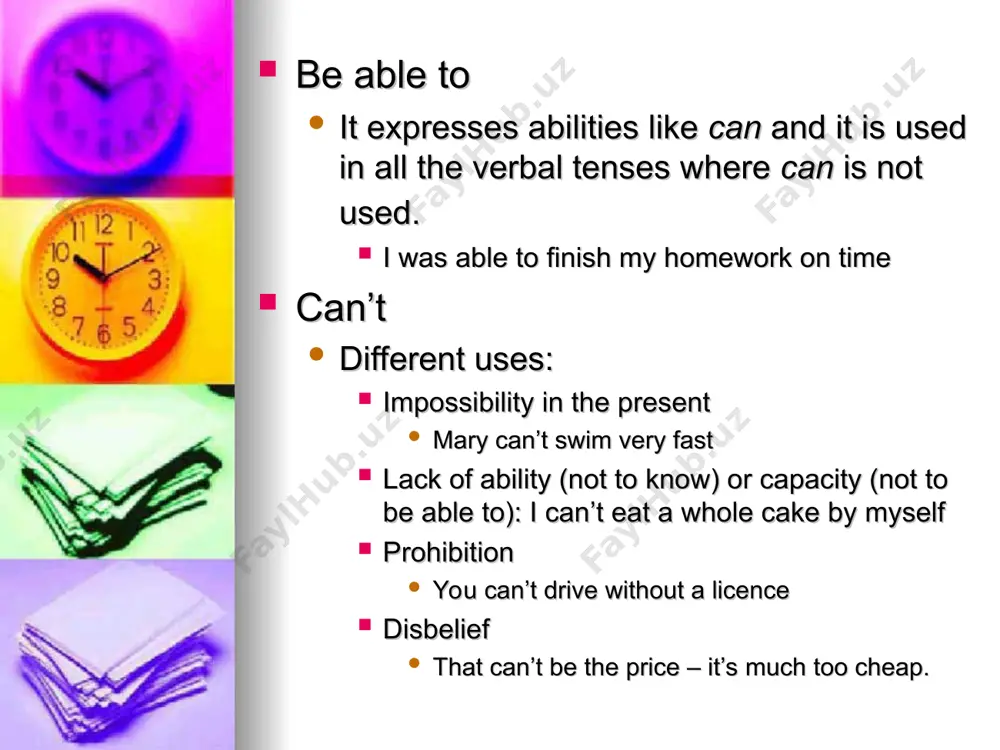
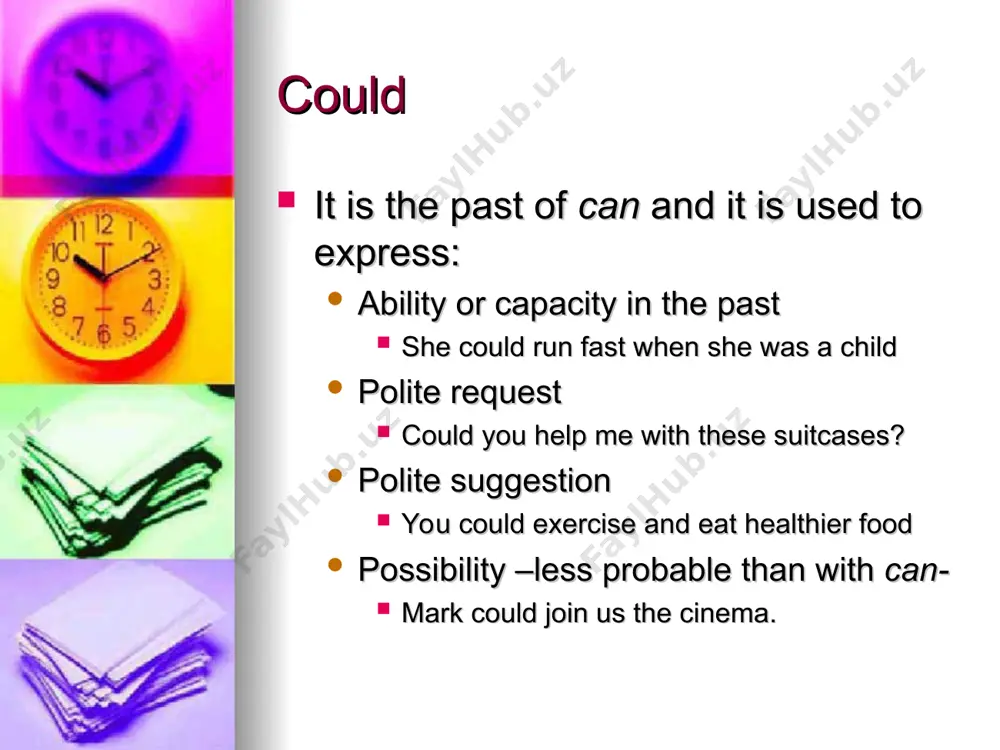
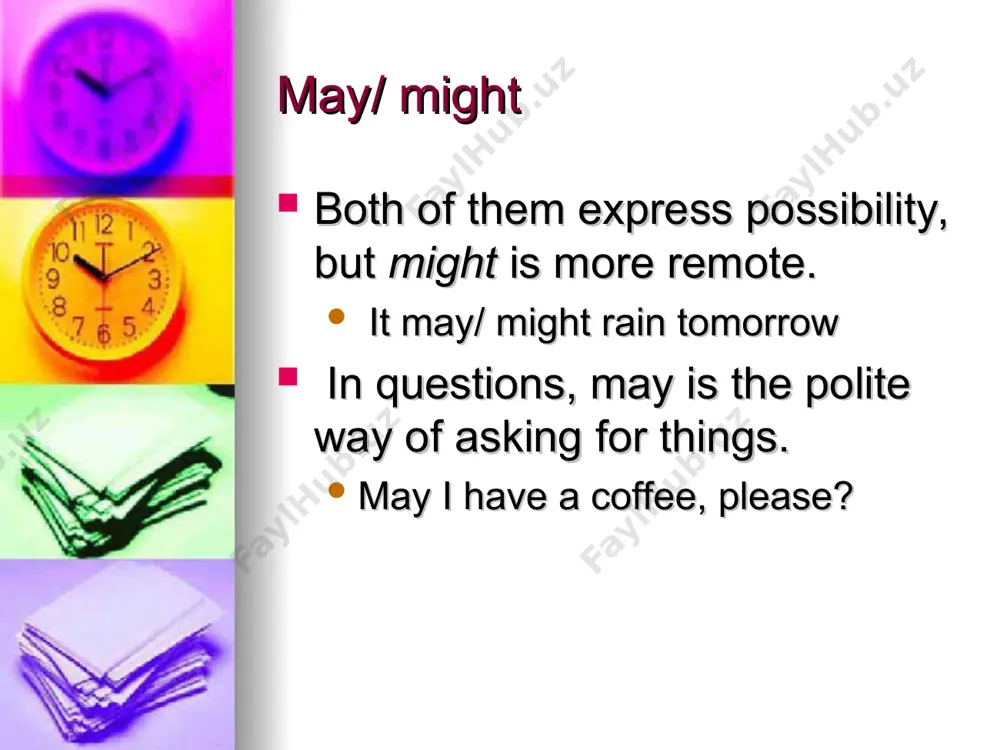
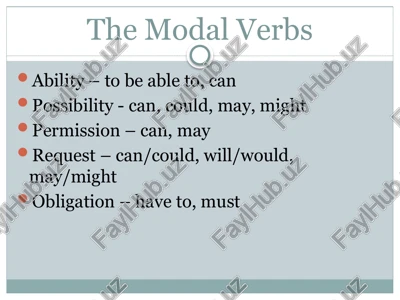
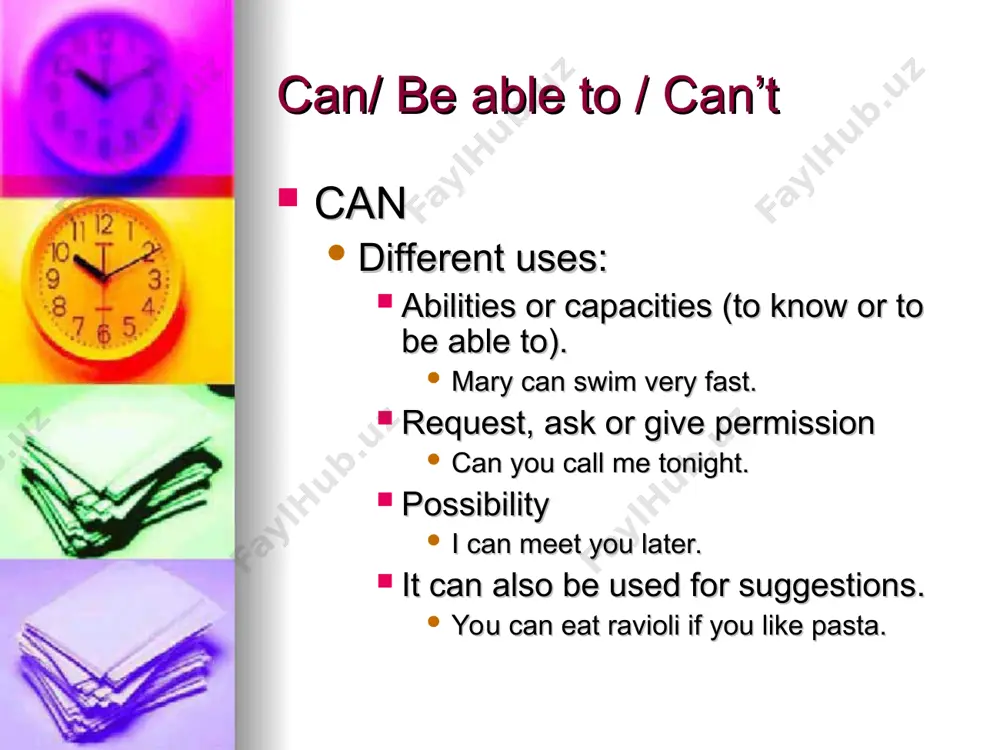
modal verbs modal verbs can/ be able to / can’t can different uses: abilities or capacities (to know or to be able to). mary can swim very fast. request, ask or give permission can you call me tonight. possibility i can meet you later. it can also be used for suggestions. you can eat ravioli if you like pasta. be able to it expresses abilities like can and it is used in all the verbal tenses where can is not used. i was able to finish my homework on time can’t different uses: impossibility in the present mary can’t swim very fast lack of ability (not to know) or capacity (not to be able to): i can’t eat a whole cake by myself prohibition you can’t drive without a licence disbelief that can’t be the price – it’s much too cheap. could it is the past of can and it …
2 / 19
es lack of oblication and necessity, like don’t have to you needn’t bring anything to the party. musn’t / don’t have to musn’t shows prohibition. you musn’t exceed the speed limit don’t have to means not have to, i.e., lack of obligation and necessity, like needn’t i don’t have to get up early tomorrow should /ought to both of them express advise or opinion, but should is used more frequently, since ought to is quite strange in negative and interrogative. you should/ought to improve your pronunciation shall it is used in the interrogative to offer oneself to do something and to make a suggestion. shall i help you with your luggage? ability request possibility inability can mary can swim very fast can you call me tonight? i can meet you later be able to i was able to finish my homework on time can't i can't eat a whole cake …
3 / 19
needn't don't have to mustn't should /ought to shall modal perfects must have + participle it expresses a logical conclusion about a past fact. rob has arrived late. he must have been in a traffic jam. may/might have + participle we use it to make a supposition about something in the past. she may/might have taken the wrong bus. could have + participle ability to do something in the past which in the end was not done you could have asked the doctor before taking the medicine. couldn’t have + participle certainty that something did not happen he couldn’t have gone to the concert because he was doing the test. would have + participle desire to do something in the past which in fact could not be done. i would have gone to the party, but i was too busy. should/ought to + participle criticism or regret after an event …
4 / 19
modal verbs - Page 4
5 / 19
modal verbs - Page 5

Ko'proq o'qimoqchimisiz?

Barcha 19 sahifani Telegram orqali bepul yuklab oling.

To'liq faylni yuklab olish

"modal verbs" haqida

modal verbs modal verbs can/ be able to / can’t can different uses: abilities or capacities (to know or to be able to). mary can swim very fast. request, ask or give permission can you call me tonight. possibility i can meet you later. it can also be used for suggestions. you can eat ravioli if you like pasta. be able to it expresses abilities like can and it is used in all the verbal tenses where can is not used. i was able to finish my homework on time can’t different uses: impossibility in the present mary can’t swim very fast lack of ability (not to know) or capacity (not to be able to): i can’t eat a whole …

Bu fayl PPT formatida 19 sahifadan iborat (248,5 KB). "modal verbs"ni yuklab olish uchun chap tomondagi Telegram tugmasini bosing.
Teglar: modal verbs PPT 19 sahifa Bepul yuklash Telegram