integrating modern technology into young learners’ language classes

DOCX 42 pages 68.0 KB Free download

Page preview (5 pages)

Scroll down 👇
1 / 42
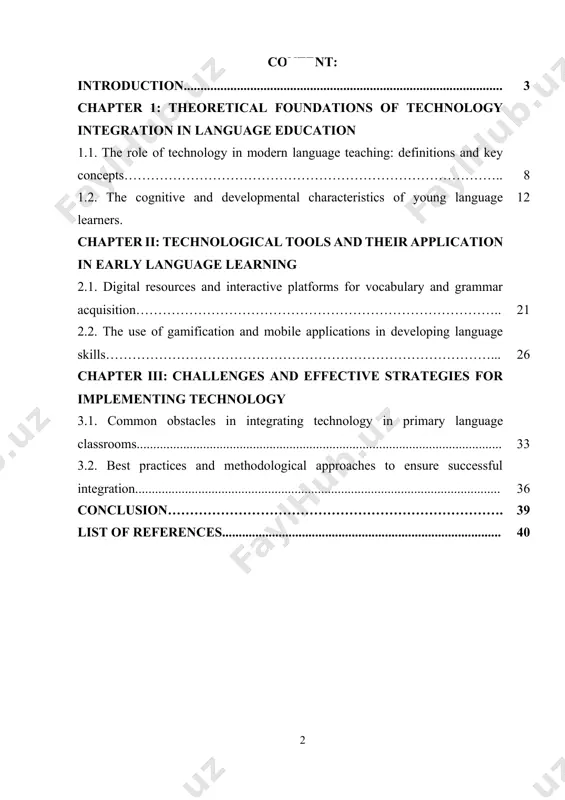
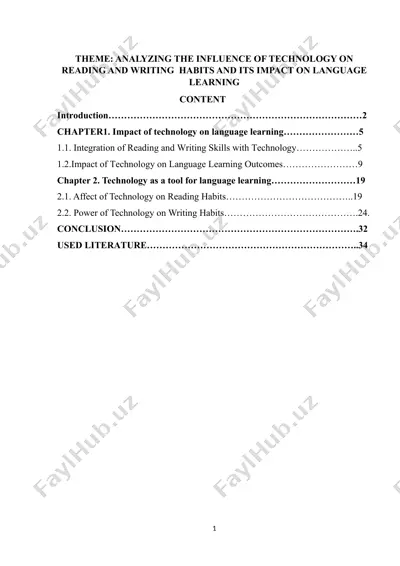
ministry of higher education, science and innovations of the republic of uzbekistan _______________________________________________________ university ___________________________________________________________ specialty: ______________________________________________________ __________________________________________________________________ on the theme: integrating modern technology into young learners’ language classes” course paper scientific adviser: phd, teacher ___________________________ tashkent 2025 content: introduction................................................................................................ 3 chapter 1: theoretical foundations of technology integration in language education 1.1. the role of technology in modern language teaching: definitions and key concepts………………………………………………………………………….. 8 1.2. the cognitive and developmental characteristics of young language learners. 12 chapter ii: technological tools and their application in early language learning 2.1. digital resources and interactive platforms for vocabulary and grammar acquisition……………………………………………………………………….. 21 2.2. the use of gamification and mobile applications in developing language skills……………………………………………………………………………... 26 chapter iii: challenges and effective strategies for implementing technology 3.1. common obstacles in integrating technology in primary language classrooms.............................................................................................................. 33 3.2. best practices and methodological approaches to ensure successful integration.............................................................................................................. 36 conclusion…………………………………………………………………. 39 list of references.................................................................................... 40 introduction …
2 / 42
learning processes. this is particularly true in language education for young learners, where digital tools can enhance engagement, improve comprehension, and cater to diverse learning needs. as today's children are digital natives, their early exposure to smartphones, tablets, and online platforms presents both an opportunity and a responsibility for educators to use these tools constructively. in support of educational innovation, the decree of the president of the republic of uzbekistan dated october 8, 2019, no. pq-5847 “on the approval of the concept for the development of the public education system of the republic of uzbekistan until 2030” emphasizes the need for introducing modern information and communication technologies into all stages of the education system. this decree underlines the importance of using digital resources to raise the quality of education, promote inclusive and continuous learning, and develop 21st-century skills among students from an early age. by leveraging educational technologies such as …
3 / 42
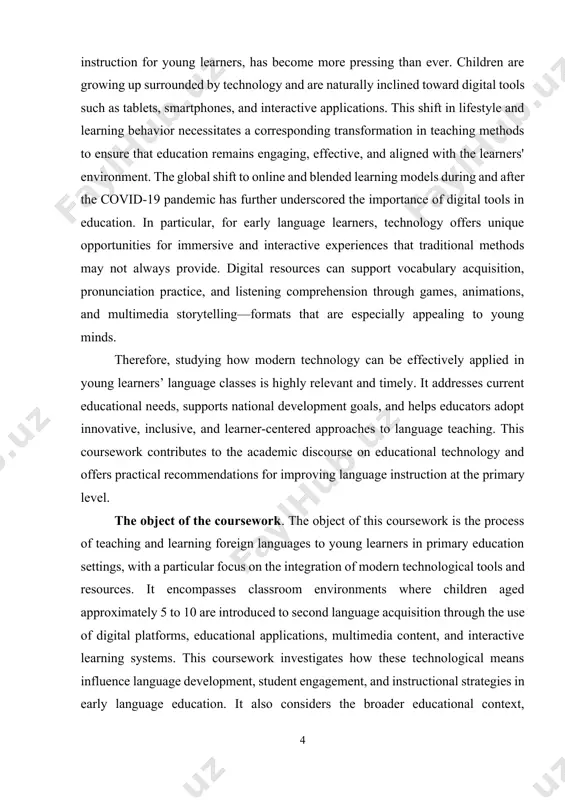
wing up surrounded by technology and are naturally inclined toward digital tools such as tablets, smartphones, and interactive applications. this shift in lifestyle and learning behavior necessitates a corresponding transformation in teaching methods to ensure that education remains engaging, effective, and aligned with the learners' environment. the global shift to online and blended learning models during and after the covid-19 pandemic has further underscored the importance of digital tools in education. in particular, for early language learners, technology offers unique opportunities for immersive and interactive experiences that traditional methods may not always provide. digital resources can support vocabulary acquisition, pronunciation practice, and listening comprehension through games, animations, and multimedia storytelling—formats that are especially appealing to young minds. therefore, studying how modern technology can be effectively applied in young learners’ language classes is highly relevant and timely. it addresses current educational needs, supports national development goals, and helps educators adopt innovative, …
4 / 42
, and instructional strategies in early language education. it also considers the broader educational context, including curriculum standards, teacher readiness, and national policy directions related to digital learning in uzbekistan and beyond. the subject of the coursework. the subject of this coursework is the pedagogical application of modern technology in teaching foreign languages to young learners. it focuses on the methods, tools, and strategies used by educators to integrate digital resources into language instruction in a way that enhances learning outcomes, supports student motivation, and develops core language skills such as listening, speaking, reading, and writing. this study also explores the interaction between young learners and various forms of technology—such as language learning apps, educational games, interactive whiteboards, and online platforms—and how these tools affect the teaching process and learner engagement in early language education. the aim of this coursework. the aim of this coursework is to explore and analyze …
5 / 42
to examine the challenges faced by educators in integrating technology into language teaching. · to propose practical strategies and recommendations for effective technology integration in young learners' language education. methods of the research: · literature review: a thorough review of existing academic research, articles, and case studies related to the use of technology in language education, focusing on primary school settings. · qualitative research: conducting interviews with language teachers to understand their experiences, challenges, and strategies in using technology in the classroom. · observations: observing classroom practices to identify how technology is currently being used in language teaching, including its impact on student interaction and learning outcomes. · surveys and questionnaires: distributing surveys to both teachers and students to gather data on the effectiveness and perception of technology in language learning. · data analysis: analyzing collected data to identify trends, correlations, and insights regarding the integration of technology in language …

Want to read more?

Download all 42 pages for free via Telegram.

Download full file

About "integrating modern technology into young learners’ language classes"

ministry of higher education, science and innovations of the republic of uzbekistan _______________________________________________________ university ___________________________________________________________ specialty: ______________________________________________________ __________________________________________________________________ on the theme: integrating modern technology into young learners’ language classes” course paper scientific adviser: phd, teacher ___________________________ tashkent 2025 content: introduction................................................................................................ 3 chapter 1: theoretical foundations of technology integration in language education 1.1. the role of technology in modern language teaching: definitions and key conce...

This file contains 42 pages in DOCX format (68.0 KB). To download "integrating modern technology into young learners’ language classes", click the Telegram button on the left.
Tags: integrating modern technology i… DOCX 42 pages Free download Telegram