parts of a sentence main parts, secondary parts, and phrase structure

DOCX 16 sahifa 962,6 KB Bepul yuklash

Sahifa ko'rinishi (5 sahifa)

Pastga aylantiring 👇
1 / 16
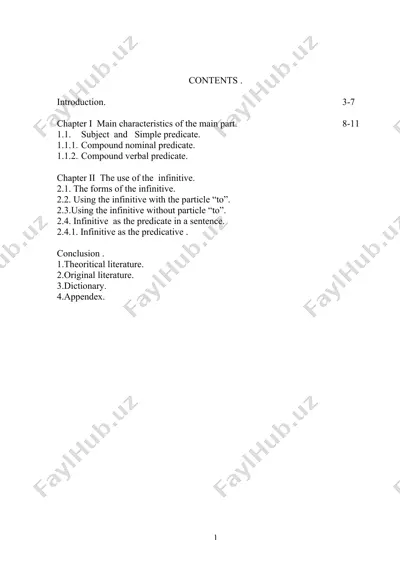
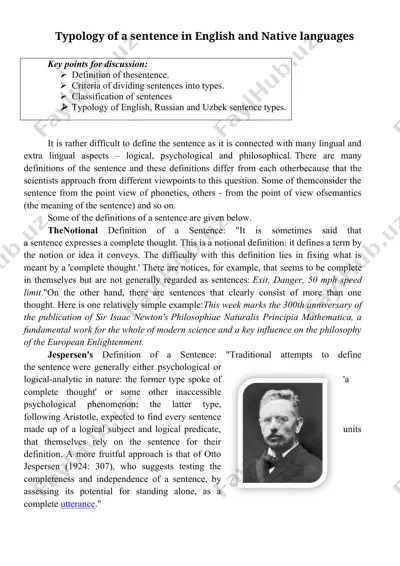
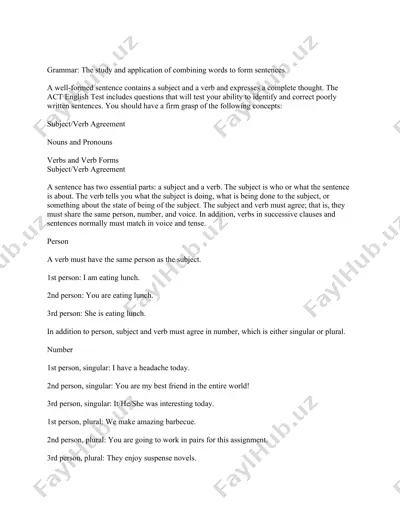
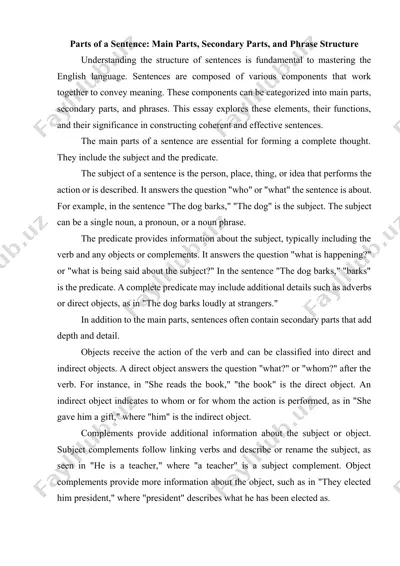
parts of a sentence: main parts, secondary parts, and phrase structure understanding the structure of sentences is fundamental to mastering the english language. sentences are composed of various components that work together to convey meaning. these components can be categorized into main parts, secondary parts, and phrases. this essay explores these elements, their functions, and their significance in constructing coherent and effective sentences. the main parts of a sentence are essential for forming a complete thought. they include the subject and the predicate. the subject of a sentence is the person, place, thing, or idea that performs the action or is described. it answers the question "who" or "what" the sentence is about. for example, in the sentence "the dog barks," "the dog" is the subject. the subject can be a single noun, a pronoun, or a noun phrase. the predicate provides information about the subject, typically including the verb …
2 / 16
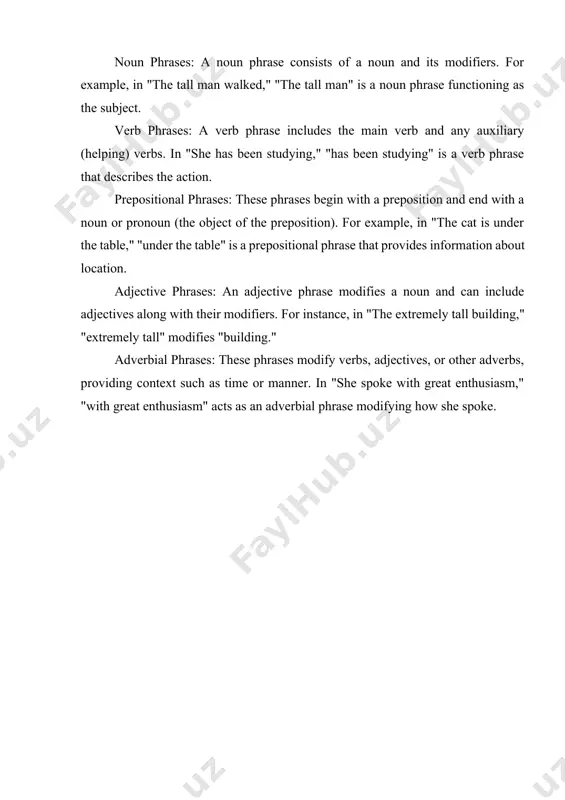
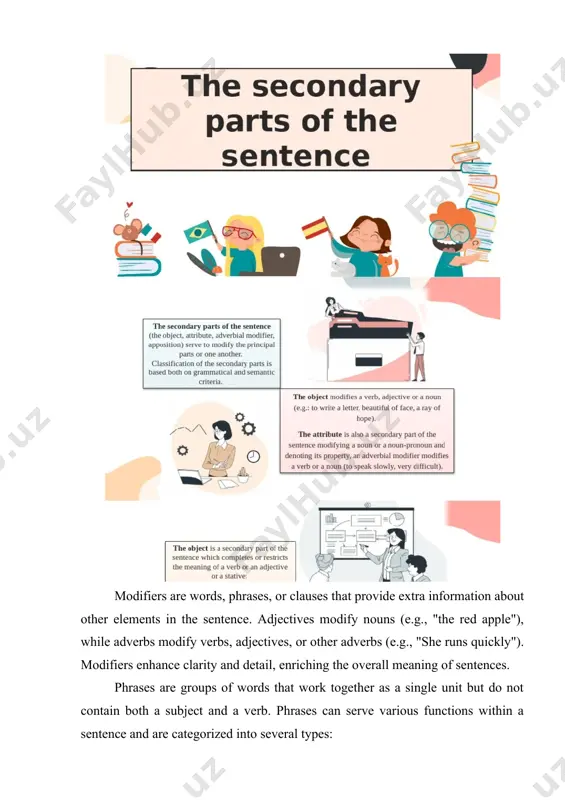
formation about the object, such as in "they elected him president," where "president" describes what he has been elected as. modifiers are words, phrases, or clauses that provide extra information about other elements in the sentence. adjectives modify nouns (e.g., "the red apple"), while adverbs modify verbs, adjectives, or other adverbs (e.g., "she runs quickly"). modifiers enhance clarity and detail, enriching the overall meaning of sentences. phrases are groups of words that work together as a single unit but do not contain both a subject and a verb. phrases can serve various functions within a sentence and are categorized into several types: noun phrases: a noun phrase consists of a noun and its modifiers. for example, in "the tall man walked," "the tall man" is a noun phrase functioning as the subject. verb phrases: a verb phrase includes the main verb and any auxiliary (helping) verbs. in "she has been …
3 / 16
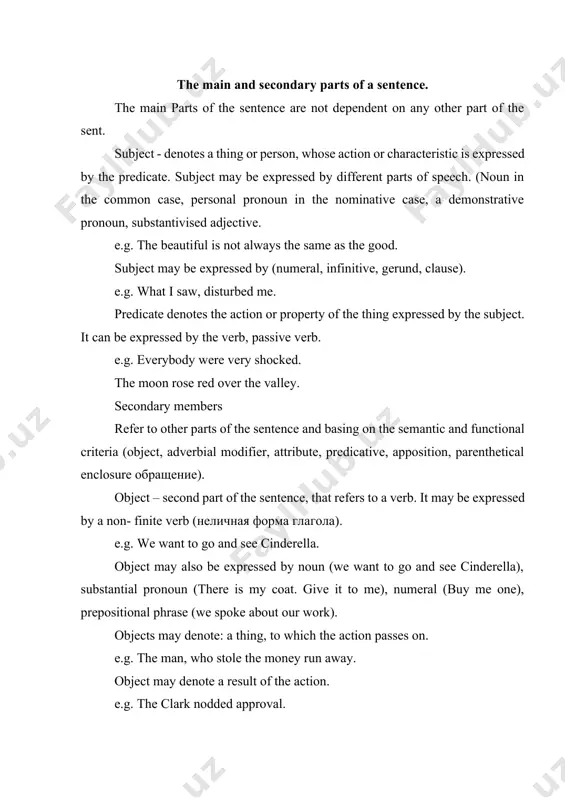
pronoun in the nominative case, a demonstrative pronoun, substantivised adjective. e.g. the beautiful is not always the same as the good. subject may be expressed by (numeral, infinitive, gerund, clause). e.g. what i saw, disturbed me. predicate denotes the action or property of the thing expressed by the subject. it can be expressed by the verb, passive verb. e.g. everybody were very shocked. the moon rose red over the valley. secondary members refer to other parts of the sentence and basing on the semantic and functional criteria (object, adverbial modifier, attribute, predicative, apposition, parenthetical enclosure обращение). object – second part of the sentence, that refers to a verb. it may be expressed by a non- finite verb (неличная форма глагола). e.g. we want to go and see cinderella. object may also be expressed by noun (we want to go and see cinderella), substantial pronoun (there is my coat. give it …
4 / 16
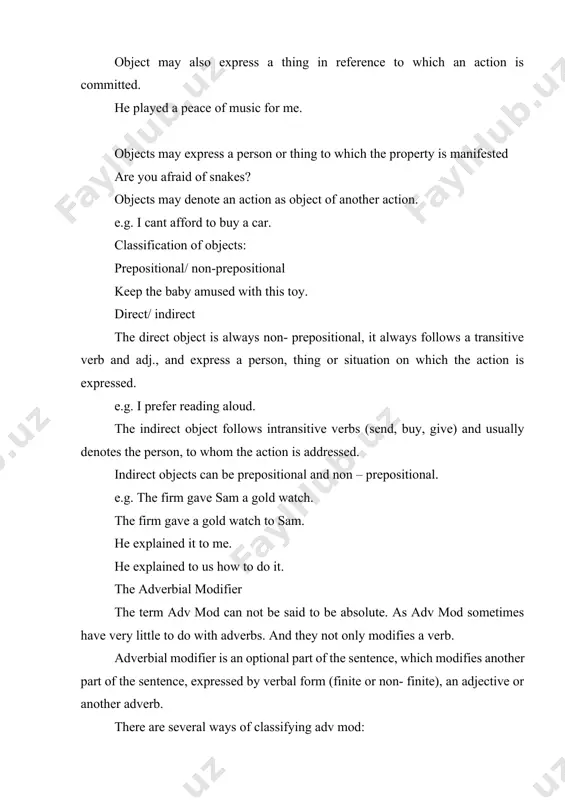
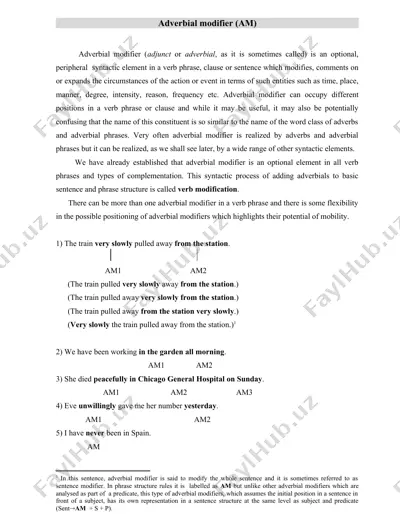
firm gave sam a gold watch. the firm gave a gold watch to sam. he explained it to me. he explained to us how to do it. the adverbial modifier the term adv mod can not be said to be absolute. as adv mod sometimes have very little to do with adverbs. and they not only modifies a verb. adverbial modifier is an optional part of the sentence, which modifies another part of the sentence, expressed by verbal form (finite or non- finite), an adjective or another adverb. there are several ways of classifying adv mod: modern classification 1. semantic adverbial classification they are classified due to their meaning: of time and frequency, place and direction, manner and attendant circumstances, cause and result, condition and concussion, degree. 2. structural bases on the type of phrase pattern, due to it, adverbials may be simple, - phrasal, e.g. the lady lived in …
5 / 16
nominal characteristic. e.g. alice is like her teacher. his skin was very pink and felt warm to touch. the four main parts of a lesson plan lesson component #1: identify the learning objectives ask yourself: what new concepts, knowledge, or skills do i want my students to learn today? when i chat with new teachers about how their class is going, i sometimes hear them say, “we’re doing the roman empire right now” or “we’re doing fractions today.” i get that the word “doing” in this context is just an expression. but i also remember the realities of being a new teacher. in my first year or two, my goal was to “fill the period” with academic activities. surely if we are doing something, the kids will learn. right? “doing” does not necessarily equate to learning. for many new teachers, a major evolution is to focus less on “filling the …

Ko'proq o'qimoqchimisiz?

Barcha 16 sahifani Telegram orqali bepul yuklab oling.

To'liq faylni yuklab olish

"parts of a sentence main parts, secondary parts, and phrase structure" haqida

parts of a sentence: main parts, secondary parts, and phrase structure understanding the structure of sentences is fundamental to mastering the english language. sentences are composed of various components that work together to convey meaning. these components can be categorized into main parts, secondary parts, and phrases. this essay explores these elements, their functions, and their significance in constructing coherent and effective sentences. the main parts of a sentence are essential for forming a complete thought. they include the subject and the predicate. the subject of a sentence is the person, place, thing, or idea that performs the action or is described. it answers the question "who" or "what" the sentence is about. for example, in the sentence "the dog …

Bu fayl DOCX formatida 16 sahifadan iborat (962,6 KB). "parts of a sentence main parts, secondary parts, and phrase structure"ni yuklab olish uchun chap tomondagi Telegram tugmasini bosing.
Teglar: parts of a sentence main parts,… DOCX 16 sahifa Bepul yuklash Telegram