cooking and cultural traditions

PPTX 20 pages 1.5 MB Free download

Page preview (5 pages)

Scroll down 👇
1 / 20
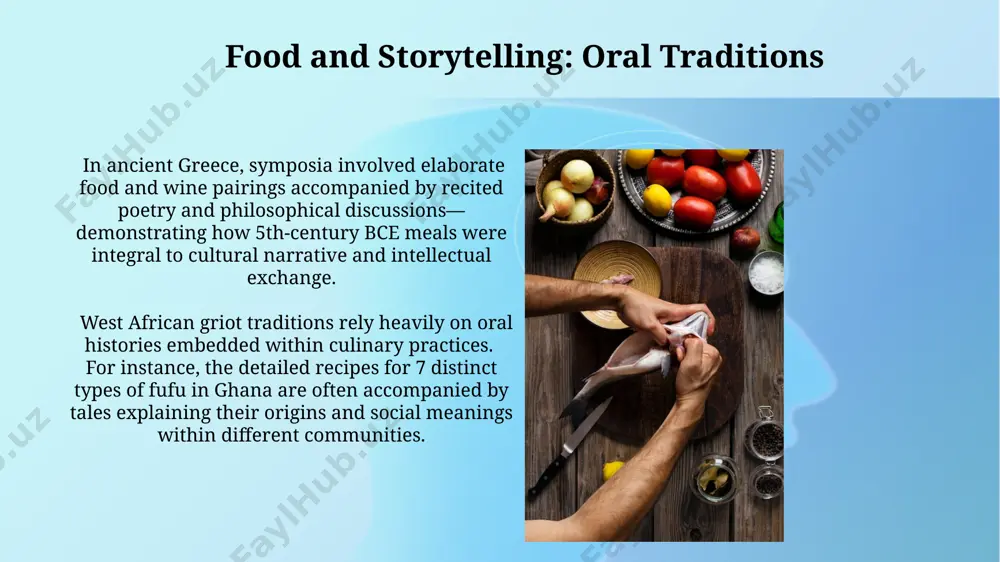
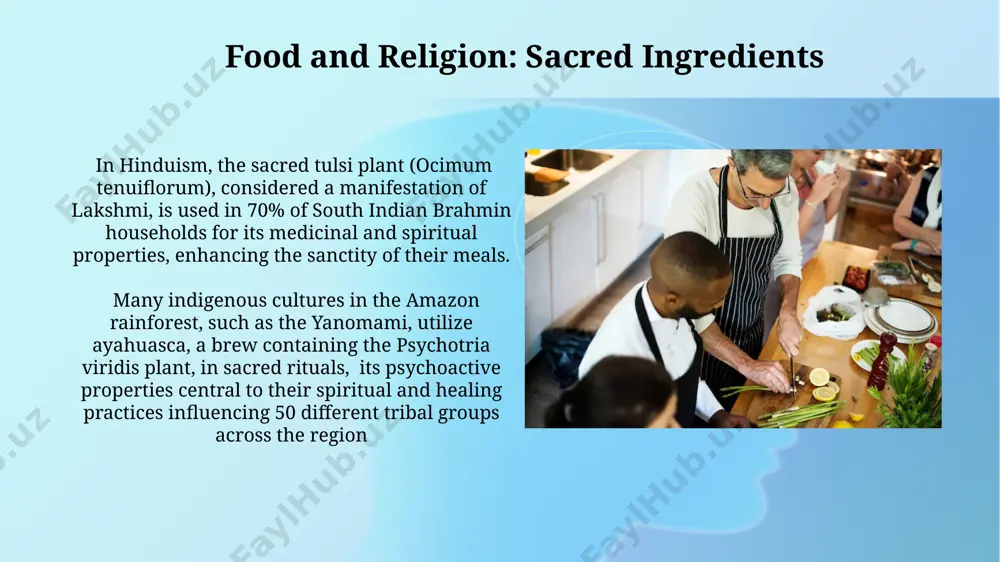
powerpoint presentation cooking and cultural traditions norqulova setora 1. food as a cultural identity 2. the evolution of cooking practices 3. culinary traditions across cultures plan: food and storytelling: oral traditions in ancient greece, symposia involved elaborate food and wine pairings accompanied by recited poetry and philosophical discussions—demonstrating how 5th-century bce meals were integral to cultural narrative and intellectual exchange. west african griot traditions rely heavily on oral histories embedded within culinary practices. for instance, the detailed recipes for 7 distinct types of fufu in ghana are often accompanied by tales explaining their origins and social meanings within different communities. food and religion: sacred ingredients in hinduism, the sacred tulsi plant (ocimum tenuiflorum), considered a manifestation of lakshmi, is used in 70% of south indian brahmin households for its medicinal and spiritual properties, enhancing the sanctity of their meals. many indigenous cultures in the amazon rainforest, such as the yanomami, …
2 / 20
storical influences and distinct regional flavors. in moroccan tagines, the blend of 15-20 spices, including turmeric, ginger, and saffron, reflects centuries of trade with the east, showcasing a complex interplay of flavors and cultural exchange across the mediterranean. preserving culinary heritage south korea's intangible cultural heritage designation protects over 150 traditional food-related practices, including kimchi making, ensuring the survival of these vital culinary skills and knowledge across generations. documenting traditional recipes from indigenous communities in the amazon rainforest, like the 300+ varieties of cassava preparation, is crucial for preserving biodiversity and cultural knowledge before it's lost to deforestation and globalization. staple foods and their significance in many parts of sub-saharan africa, sorghum and millet, two drought-resistant grains, form the nutritional base for over 300 million people; their resilience ensures food security in challenging climates, and their diverse preparation methods reflect vibrant local cultures. across the mediterranean, olive oil, used for …
3 / 20
veloped sophisticated techniques for processing cacao beans, resulting in a rich chocolate culture that significantly shaped their social and religious practices for over 3,000 years. festive foods and celebrations during the chinese new year celebrations, numerous symbolic foods are consumed, including dumplings (jiaozi) representing wealth, with families often making over 300 dumplings on new year's eve in northern china to symbolize a prosperous year. in japan, the setsubun festival, held annually around february 3rd, involves throwing roasted soybeans (approximately 100 per person) while shouting "oni wa soto! fuku wa uchi!" ("demons out! fortune in!") to ward off evil spirits and ensure good luck for the coming year food as a symbol of status and power during the song dynasty in china (960-1279 ce), the imperial court's elaborate banquets featuring hundreds of dishes served on porcelain meticulously crafted in jingdezhen, reinforced the emperor's immense power and authority. the consumption of specific …
4 / 20
or generations. globally, over 200 distinct types of bread exist, reflecting diverse grains, techniques, and cultural influences – from the sourdough of france to the naan of india – highlighting the rich tapestry of culinary heritage across continents. cultural exchange through food the columbian exchange (1492 onwards) introduced approximately 100 new food crops – including tomatoes, potatoes, and corn – from the americas to europe, profoundly altering european diets and impacting population growth significantly. the spread of pasta, originating in italy, illustrates transcultural food adoption. its variations across 5 continents – from spaghetti in italy to ramen in japan – demonstrate diverse adaptations and cultural fusions. evolution of cooking methods the development of pottery in the neolithic era (around 7000 bce in the near east) enabled the creation of stewpots and improved food storage, leading to more complex cooking techniques involving stewing and simmering, influencing cuisines across eurasia. around 1 …
5 / 20
10 distinct cooking methods, including simmering (nimono), grilling (yakimono), and steaming (mushimono), showcasing seasonal ingredients and meticulous presentation. peruvian cuisine boasts a sophisticated layering of techniques, including "adobo" (marinating in achiote paste), "anticuchos" (grilled skewers), and "pachamanca" (earth oven cooking), showcasing the diverse geography and andean heritage. family recipes: passing down traditions across 5 generations, a japanese family in kyoto has meticulously maintained a 150-year-old recipe for pickled ginger (beni shoga), a critical component in their 20 unique sushi variations, each with precise measurements and fermentation times. a study in 2018 revealed that 85% of italian families in the region of emilia-romagna still rely on grandmother's handwritten recipe books for their pasta dishes, showcasing the preservation of over 500-year-old techniques & ingredients. thank you for your attention @taqdimot_robot image2.jpg image3.jpg image4.jpg image5.jpg image6.jpg image7.jpg image8.jpg image9.jpg image10.jpg image11.jpg image12.jpg image13.jpg image14.jpg image15.jpg image16.jpg image17.jpg image18.jpg image1.png

Want to read more?

Download all 20 pages for free via Telegram.

Download full file

About "cooking and cultural traditions"

powerpoint presentation cooking and cultural traditions norqulova setora 1. food as a cultural identity 2. the evolution of cooking practices 3. culinary traditions across cultures plan: food and storytelling: oral traditions in ancient greece, symposia involved elaborate food and wine pairings accompanied by recited poetry and philosophical discussions—demonstrating how 5th-century bce meals were integral to cultural narrative and intellectual exchange. west african griot traditions rely heavily on oral histories embedded within culinary practices. for instance, the detailed recipes for 7 distinct types of fufu in ghana are often accompanied by tales explaining their origins and social meanings within different communities. food and religion: sacred ingredients in hinduism, the sacred tul...

This file contains 20 pages in PPTX format (1.5 MB). To download "cooking and cultural traditions", click the Telegram button on the left.
Tags: cooking and cultural traditions PPTX 20 pages Free download Telegram