lecture 7. language learning and language acquisition

PPTX 20 стр. 1009,0 КБ Бесплатная загрузка

Предварительный просмотр (5 стр.)

Прокрутите вниз 👇

1 / 20
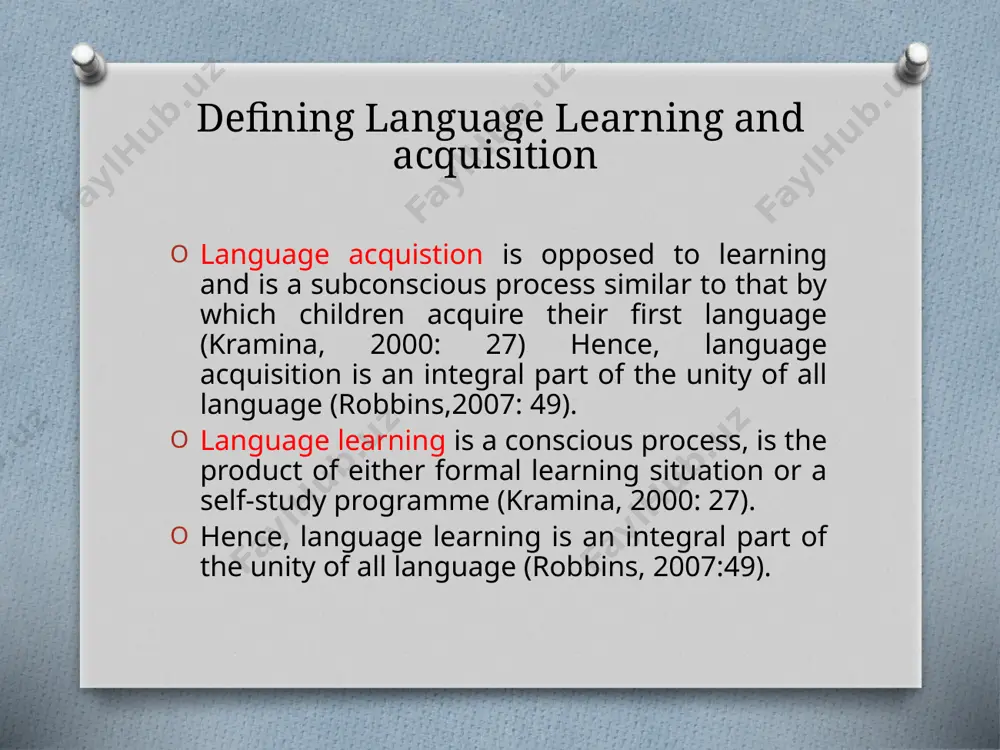
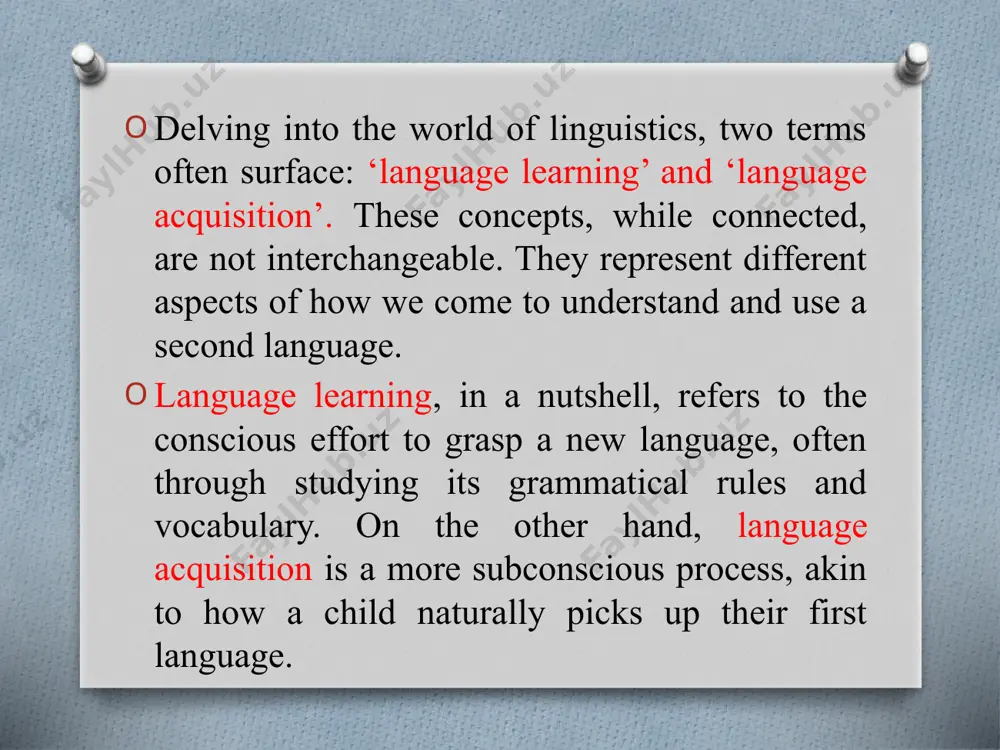
презентация powerpoint lecture 7. language learning and language acquisition teacher: yunusova muattar delving into the world of linguistics, two terms often surface: ‘language learning’ and ‘language acquisition’. these concepts, while connected, are not interchangeable. they represent different aspects of how we come to understand and use a second language. language learning, in a nutshell, refers to the conscious effort to grasp a new language, often through studying its grammatical rules and vocabulary. on the other hand, language acquisition is a more subconscious process, akin to how a child naturally picks up their first language. defining language learning and acquisition language acquistion is opposed to learning and is a subconscious process similar to that by which children acquire their first language (kramina, 2000: 27) hence, language acquisition is an integral part of the unity of all language (robbins,2007: 49). language learning is a conscious process, is the product of either formal …
2 / 20
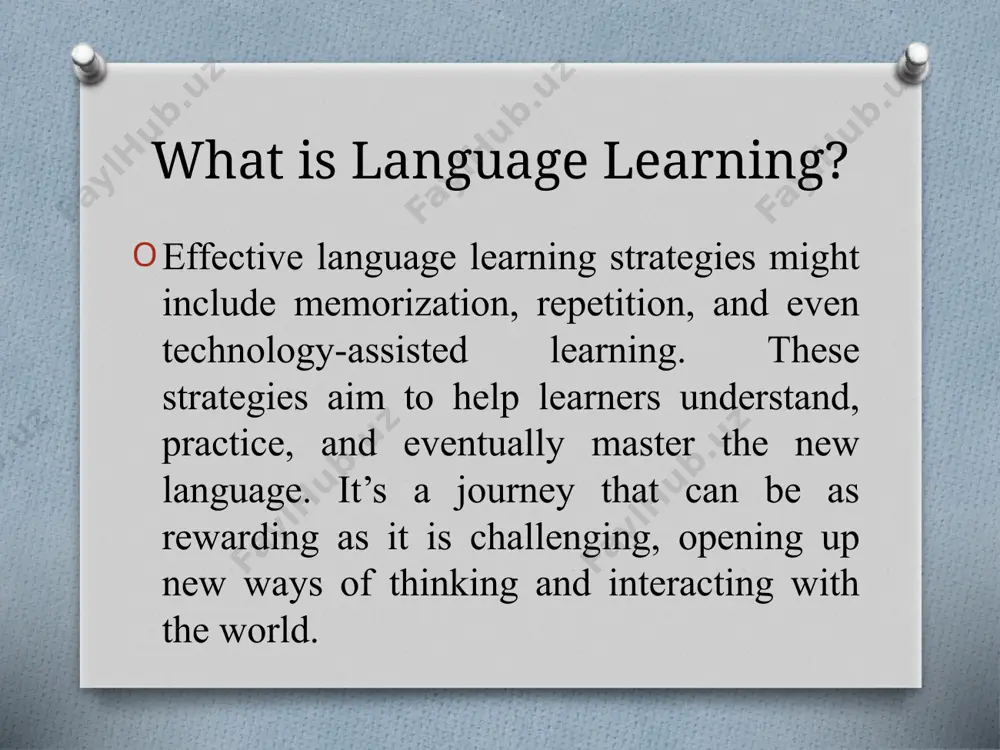
anguage. it’s a journey that can be as rewarding as it is challenging, opening up new ways of thinking and interacting with the world. language learning is a term that describes formal study of a language, such as the experience most of us remember from classes we took at school as children. this is typically a highly structured process, in which students memorize vocabulary lists, rules of grammar, and sentence structure. in most cases, language learning is a far longer path to effective communication than language acquisition. in fact, you can learn a language for years without ever being able to speak it. that’s because language learning focuses on the theoretical aspects of language, while language acquisition is more practical. through language learning, you may master grammar rules and sentence structure; however, this does not provide the skills you need to communicate naturally as you can with your native language. …
3 / 20
the process through which we each acquired our native language, the one that we learned from our parents or caregivers as infants. language acquisition takes place naturally and subconsciously. young children become aware of the sounds and patterns of their first language by hearing it all around them and internalize those sounds and patterns for later use. they will actively build their own language by repeating words until others are able to understand them. by six or seven years old, a child will have acquired all the structural features of his/her native language. those lucky enough to grow up in a multilingual home will get to experience the acquisition of multiple languages this way. distinguishing between language acquisition and language learning while both language acquisition and language learning are essential for grasping a new language, their approaches and outcomes can be distinct: nature vs. nurture: acquisition is a more natural, …
4 / 20
age acquisition occurs naturally. does not include learning sentence patterns and grammar rules. the learner is in control of his/her own learning. starts in infancy. language acquisition is a non-conscious procedure that takes place at any period of a person’s life. the term language acquisition is usually related to unconscious learning of one’s native language with the help of a close family or the surroundings. this generally happens during the first 6 -7 years of a person. generally, we do not learn the first language but acquire it via verbal and non-verbal communication. language acquisition happens through a natural or subconscious process. stages of first language acquisition 1-6 months – pre-linguistic stage 6-9 months – babbling stage 9-18 months – one-word stage (holophrastic stage) 18-24 months – two-word stage 24-30 months – telegraphic stage stages of second language acquisition 1-6 months – pre-production (silent period) 6-12 months – early-production stage …
5 / 20
lecture 7. language learning and language acquisition - Page 5

Хотите читать дальше?

Скачайте все 20 страниц бесплатно через Telegram.

Скачать полный файл

О "lecture 7. language learning and language acquisition"

презентация powerpoint lecture 7. language learning and language acquisition teacher: yunusova muattar delving into the world of linguistics, two terms often surface: ‘language learning’ and ‘language acquisition’. these concepts, while connected, are not interchangeable. they represent different aspects of how we come to understand and use a second language. language learning, in a nutshell, refers to the conscious effort to grasp a new language, often through studying its grammatical rules and vocabulary. on the other hand, language acquisition is a more subconscious process, akin to how a child naturally picks up their first language. defining language learning and acquisition language acquistion is opposed to learning and is a subconscious process similar to that by which children acqu...

Этот файл содержит 20 стр. в формате PPTX (1009,0 КБ). Чтобы скачать "lecture 7. language learning and language acquisition", нажмите кнопку Telegram слева.
Теги: lecture 7. language learning an… PPTX 20 стр. Бесплатная загрузка Telegram