the function of memory and history in postcolonial literature
Предварительный просмотр (5 стр.)
Прокрутите вниз 👇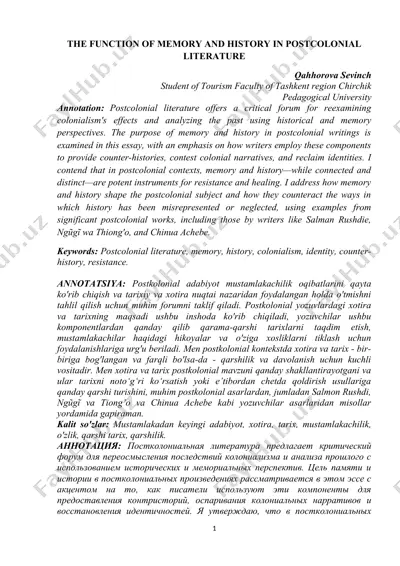
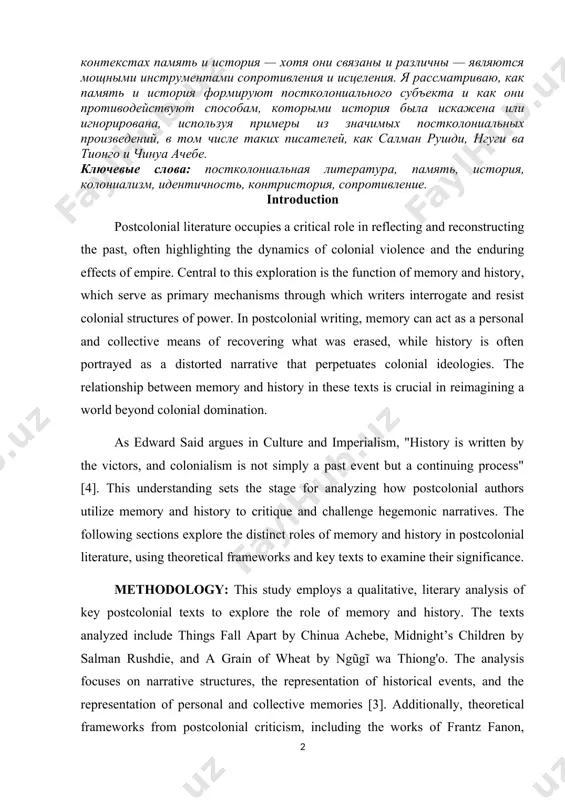
![ing sets the stage for analyzing how postcolonial authors utilize memory and history to critique and challenge hegemonic narratives. the following sections explore the distinct roles of memory and history in postcolonial literature, using theoretical frameworks and key texts to examine their significance. methodology: this study employs a qualitative, literary analysis of key postcolonial texts to explore the role of memory and history. the texts analyzed include things fall apart by chinua achebe, midnight’s children by salman rushdie, and a grain of wheat by ngũgĩ wa thiong'o. the analysis focuses on narrative structures, the representation of historical events, and the representation of personal and collective memories [3]. additionally, theoretical frameworks from postcolonial criticism, including the works of frantz fanon, homi bhabha, and maurice halbwachs, are used to deepen the understanding of how memory and history are constructed in these works. result: history and memory are portrayed as distinct yet entwined …](/media/previews/pages/preview_I42aIuR.webp "the function of memory and history in postcolonial literature - Страница 3")
![e fluidity of memory and the fragility of both memory and historical narrative in postcolonial circumstances, where personal memories and national history intersect. discussion: postcolonial literature's interplay between memory and history exemplifies the intricacy of postcolonial identity and the decolonization process. these works portray memory as being firmly anchored in collective experience opposed to just being an individual act of remembrance. it acts as a way to defend cultural identity against the erasure caused by colonialism [7]. by highlighting the significance of indigenous cultural practices, achebe's portrayal of igbo memory in things fall apart, for instance, questions colonial history and offers an alternative perspective to western narratives of african civilizations. on the other hand, history is frequently seen as a hegemonic force that dominates the discourse surrounding power. nonetheless, postcolonial writers such as rushdie and ngũgĩ highlight how historical records are subject to change and disagreement. in these books, history …](/media/previews/pages/preview_ebJpdHB.webp "the function of memory and history in postcolonial literature - Страница 4")

О "the function of memory and history in postcolonial literature"
the function of memory and history in postcolonial literature qahhorova sevinch student of tourism faculty of tashkent region chirchik pedagogical university annotation: postcolonial literature offers a critical forum for reexamining colonialism's effects and analyzing the past using historical and memory perspectives. the purpose of memory and history in postcolonial writings is examined in this essay, with an emphasis on how writers employ these components to provide counter-histories, contest colonial narratives, and reclaim identities. i contend that in postcolonial contexts, memory and history—while connected and distinct—are potent instruments for resistance and healing. i address how memory and history shape the postcolonial subject and how they counteract the ways in which history ...
Этот файл содержит 5 стр. в формате DOCX (24,5 КБ). Чтобы скачать "the function of memory and history in postcolonial literature", нажмите кнопку Telegram слева.
 DOC
DOC
 PDF
PDF
 DOCX
DOCX
 DOCX
DOCX
 DOCX
DOCX
 DOCX
DOCX
 PDF
PDF
 DOCX
DOCX
 DOCX
DOCX
 PPTX
PPTX
 DOCX
DOCX
 DOCX
DOCX