planing and organizing the work of an office manager

DOCX 16 sahifa 102,3 KB Bepul yuklash

Sahifa ko'rinishi (5 sahifa)

Pastga aylantiring 👇

1 / 16
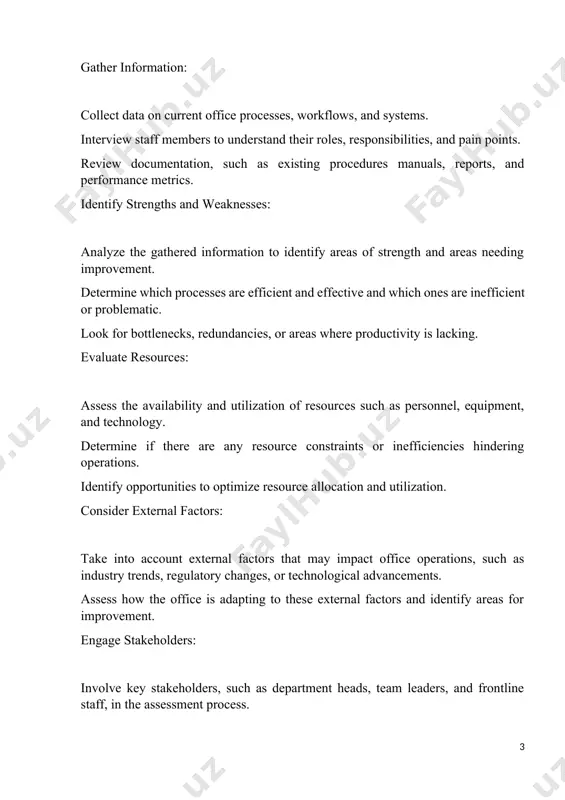
ministry of the higher and secondary special education of the republic of uzbekistan the academic luceum of uzbekistan state world languages university course work planing and organizing the work of an office manager done by: komiljonova muslima ismoil qizi teacher: yuldasheva mahfuza tashkent-2024 contents assessment and goal setting...3 standard procedures and prioritization…4 scheduling and communication…5 monitoring and adaptation…6 gather information: collect data on current office processes, workflows, and systems. interview staff members to understand their roles, responsibilities, and pain points. review documentation, such as existing procedures manuals, reports, and performance metrics. identify strengths and weaknesses: analyze the gathered information to identify areas of strength and areas needing improvement. determine which processes are efficient and effective and which ones are inefficient or problematic. look for bottlenecks, redundancies, or areas where productivity is lacking. evaluate resources: assess the availability and utilization of resources such as personnel, equipment, and technology. determine if there …
2 / 16
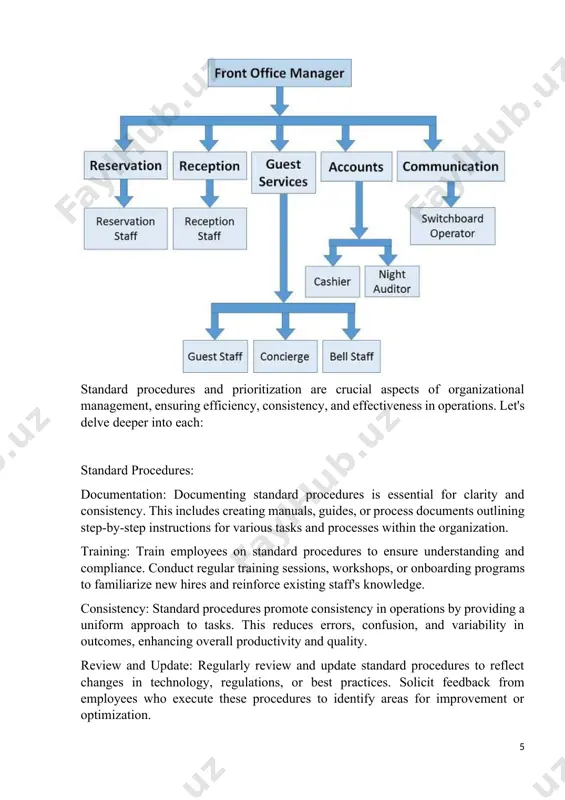
findings from the swot analysis to inform decision-making and prioritize areas for improvement. document findings: compile all findings from the assessment process into a comprehensive report or summary. document key insights, observations, and recommendations for future reference and action. by conducting a thorough assessment of current operations, an office manager can gain valuable insights into the strengths and weaknesses of the office environment, which serves as a foundation for developing effective strategies for improvement and optimization. standard procedures and prioritization are crucial aspects of organizational management, ensuring efficiency, consistency, and effectiveness in operations. let's delve deeper into each: standard procedures: documentation: documenting standard procedures is essential for clarity and consistency. this includes creating manuals, guides, or process documents outlining step-by-step instructions for various tasks and processes within the organization. training: train employees on standard procedures to ensure understanding and compliance. conduct regular training sessions, workshops, or onboarding programs to familiarize …
3 / 16
latory requirements governing the organization's operations. ensure that procedures are compliant with relevant laws, industry standards, and internal policies. prioritization: identification of priorities: identify key objectives, goals, and tasks that align with the organization's strategic priorities. clearly define what needs to be accomplished and why it is important. urgency vs. importance: distinguish between tasks that are urgent and those that are important. prioritize tasks based on their urgency and importance to allocate time and resources effectively. critical path analysis: use critical path analysis to identify the sequence of tasks that must be completed to achieve project objectives within the shortest possible time frame. this helps in identifying bottlenecks and allocating resources accordingly. resource allocation: allocate resources (such as time, manpower, and budget) based on the priority of tasks. focus resources on high-priority activities that contribute most directly to organizational goals and objectives. flexibility: be flexible in adjusting priorities as needed …
4 / 16
ganizational goals and evolving business needs. scheduling and communication are integral components of effective organizational management. let's explore how they contribute to productivity and efficiency: scheduling: planning ahead: develop a structured schedule by forecasting upcoming tasks, projects, and deadlines. this allows for proactive planning and allocation of resources. prioritization: prioritize tasks within the schedule based on their urgency, importance, and impact on organizational goals. this ensures that critical activities receive appropriate attention and resources. time blocking: allocate specific time blocks for different activities, including meetings, focused work, and breaks. this helps in managing time effectively and minimizing interruptions. resource allocation: assign resources such as personnel, equipment, and budget to scheduled tasks according to their requirements. ensure that resources are allocated efficiently to support the completion of scheduled activities. flexibility: maintain flexibility in the schedule to accommodate unexpected changes, emergencies, or new priorities. leave buffer time between tasks to account for …
5 / 16
s, email updates, instant messaging platforms, or project management tools. active listening: practice active listening to understand the needs, concerns, and ideas of team members. encourage open dialogue and create a supportive environment where everyone feels heard and valued. timely updates: provide timely updates on project progress, changes in plans, or important developments to keep everyone informed and aligned. regular communication helps in maintaining transparency and accountability. feedback mechanisms: implement feedback mechanisms to solicit input, suggestions, and constructive criticism from team members. this fosters continuous improvement and enables teams to address issues proactively. cultural sensitivity: be mindful of cultural differences and communication preferences within the organization. adapt communication styles and strategies to accommodate diverse backgrounds and preferences. conflict resolution: address conflicts or misunderstandings promptly and constructively through effective communication. encourage open dialogue, empathy, and collaboration to resolve conflicts and maintain positive relationships. by implementing effective scheduling practices and fostering open …

Ko'proq o'qimoqchimisiz?

Barcha 16 sahifani Telegram orqali bepul yuklab oling.

To'liq faylni yuklab olish

"planing and organizing the work of an office manager" haqida

ministry of the higher and secondary special education of the republic of uzbekistan the academic luceum of uzbekistan state world languages university course work planing and organizing the work of an office manager done by: komiljonova muslima ismoil qizi teacher: yuldasheva mahfuza tashkent-2024 contents assessment and goal setting...3 standard procedures and prioritization…4 scheduling and communication…5 monitoring and adaptation…6 gather information: collect data on current office processes, workflows, and systems. interview staff members to understand their roles, responsibilities, and pain points. review documentation, such as existing procedures manuals, reports, and performance metrics. identify strengths and weaknesses: analyze the gathered information to identify areas of stren...

Bu fayl DOCX formatida 16 sahifadan iborat (102,3 KB). "planing and organizing the work of an office manager"ni yuklab olish uchun chap tomondagi Telegram tugmasini bosing.
Teglar: planing and organizing the work… DOCX 16 sahifa Bepul yuklash Telegram