estern languages

PPTX 15 стр. 888,4 КБ Бесплатная загрузка

Предварительный просмотр (5 стр.)

Прокрутите вниз 👇
1 / 15
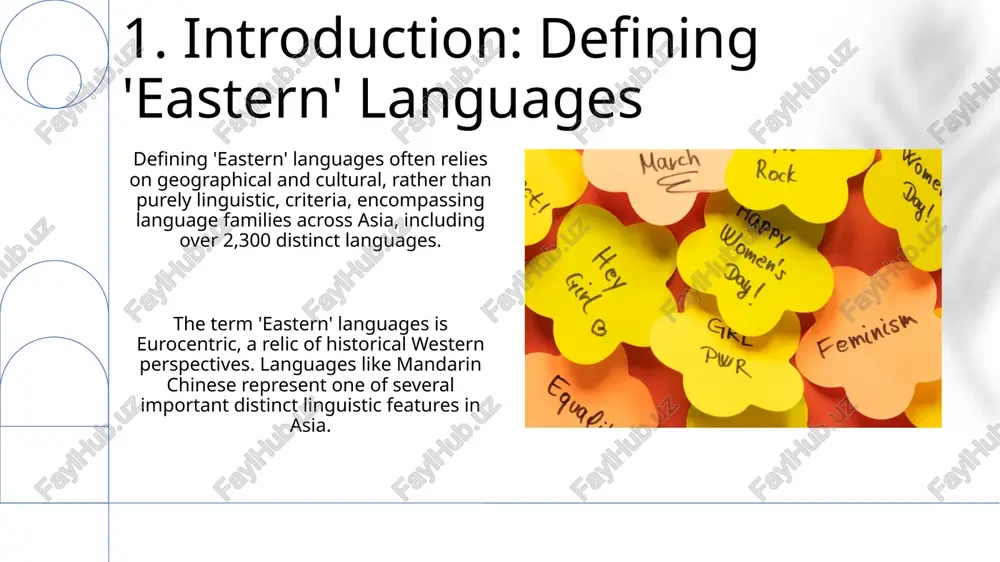
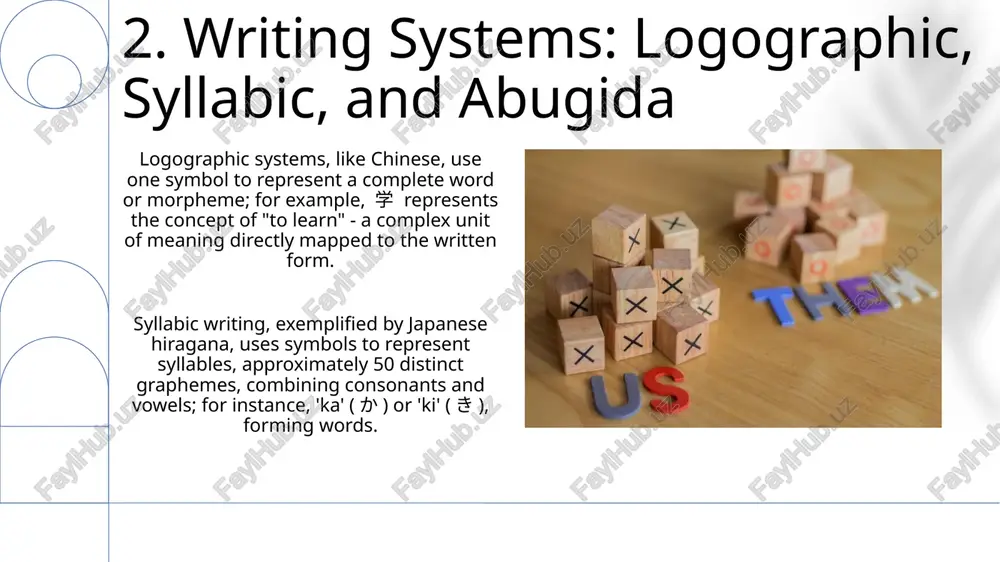
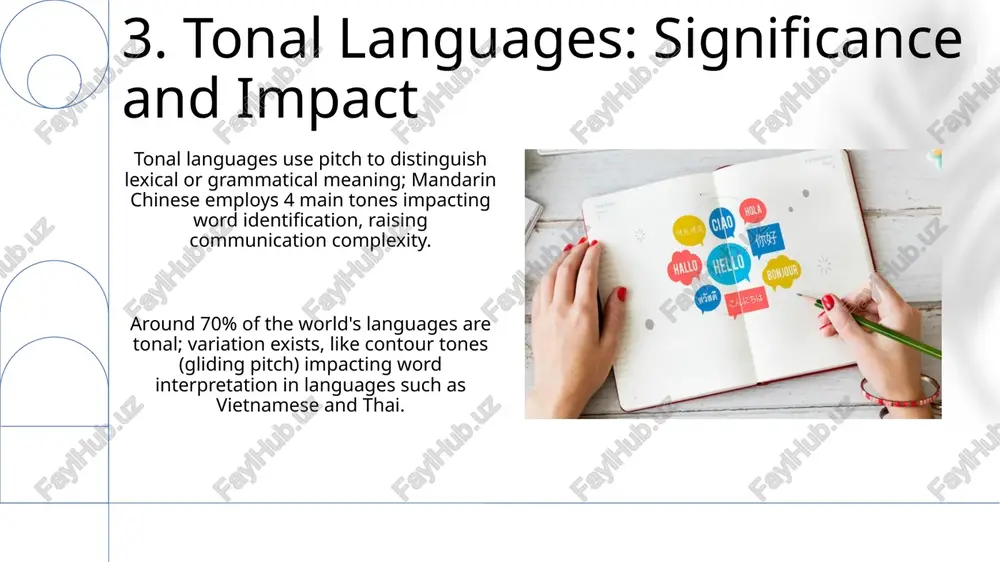
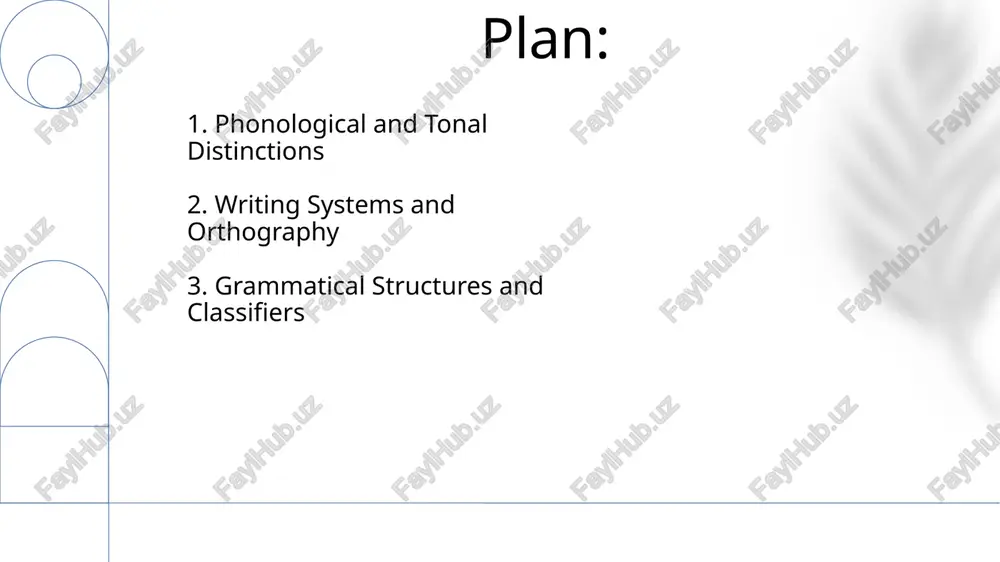
clean aesthetic company profile specific features of estern languages plan: 1. phonological and tonal distinctions 2. writing systems and orthography 3. grammatical structures and classifiers 1. introduction: defining 'eastern' languages defining 'eastern' languages often relies on geographical and cultural, rather than purely linguistic, criteria, encompassing language families across asia, including over 2,300 distinct languages. the term 'eastern' languages is eurocentric, a relic of historical western perspectives. languages like mandarin chinese represent one of several important distinct linguistic features in asia. 2. writing systems: logographic, syllabic, and abugida logographic systems, like chinese, use one symbol to represent a complete word or morpheme; for example, 学 represents the concept of "to learn" - a complex unit of meaning directly mapped to the written form. syllabic writing, exemplified by japanese hiragana, uses symbols to represent syllables, approximately 50 distinct graphemes, combining consonants and vowels; for instance, 'ka' (か) or 'ki' (き), forming words. …
2 / 15
se uses classifiers (助数詞, josūshi) based on the *type* of item counted; for example, -mai is used for flat objects, like paper, requiring memorization of over 500 distinct classifiers. in chinese, specific classifiers, or measure words (量词, liàngcí), like '个' (gè - general), are essential for grammatical correctness when quantifying nouns, creating over 120 distinct possibilities based on noun properties. 6. word order variations: sov and beyond sov, subject-object-verb, word order impacts sentence processing. studies reveal that languages using sov necessitate comprehending the whole sentence before identifying the subject and verb. head-final structures, common in sov languages, place modifiers after nouns. for example, possessors precede possessed, and adjectives precede the nouns they describe in numerous instances. 7. absence of relative clauses (or alternative structures) many eastern languages, like japanese, frequently use nominalization with particles like 'no' to transform clauses into nouns, functioning similarly, but avoiding explicit relative pronouns or complex …
3 / 15
millennium ce. japanese 'gairaigo' (loanwords) from the 19th and 20th centuries include 'rajio' from 'radio,' showing western technology’s adoption during the meiji restoration, about 1868 to 1912. 10. pronoun systems and inclusivity japanese lacks grammatical gender in pronouns, but uses different first-person pronouns like "watashi", "boku", and "ore" which subtly indicate varying degrees of politeness and masculinity affecting inclusivity. many southeast asian languages, like thai, utilize honorific particles added to pronouns. these markers denote the relative social status between the speaker and listener, impacting perceptions of formal inclusivity. 11.idioms, proverbs, and cultural nuances many east asian idioms, like the japanese saying “ichi-go ichi-e”, meaning “one time, one meeting,” highlight the concept of cherishing every encounter, underscoring interpersonal connection values. numerous chinese proverbs, such as "画蛇添足 (huà shé tiān zú)" translating to “draw a snake and add feet,” serve as warnings against overdoing something, emphasizing efficiency and restraint, even at 100%. …
4 / 15
estern languages - Page 4
5 / 15
estern languages - Page 5

Хотите читать дальше?

Скачайте все 15 страниц бесплатно через Telegram.

Скачать полный файл

О "estern languages"

clean aesthetic company profile specific features of estern languages plan: 1. phonological and tonal distinctions 2. writing systems and orthography 3. grammatical structures and classifiers 1. introduction: defining 'eastern' languages defining 'eastern' languages often relies on geographical and cultural, rather than purely linguistic, criteria, encompassing language families across asia, including over 2,300 distinct languages. the term 'eastern' languages is eurocentric, a relic of historical western perspectives. languages like mandarin chinese represent one of several important distinct linguistic features in asia. 2. writing systems: logographic, syllabic, and abugida logographic systems, like chinese, use one symbol to represent a complete word or morpheme; for example, 学 represen...

Этот файл содержит 15 стр. в формате PPTX (888,4 КБ). Чтобы скачать "estern languages", нажмите кнопку Telegram слева.
Теги: estern languages PPTX 15 стр. Бесплатная загрузка Telegram