comparative analysis of pronouns in english and uzbek languages

PPTX 7 sahifa 394,9 KB Bepul yuklash

Sahifa ko'rinishi (5 sahifa)

Pastga aylantiring 👇
1 / 7
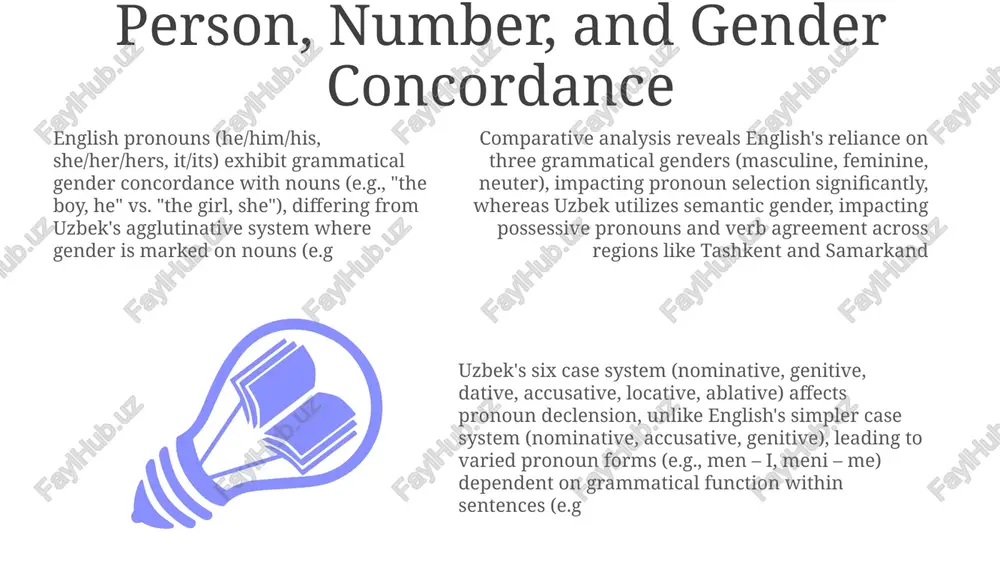
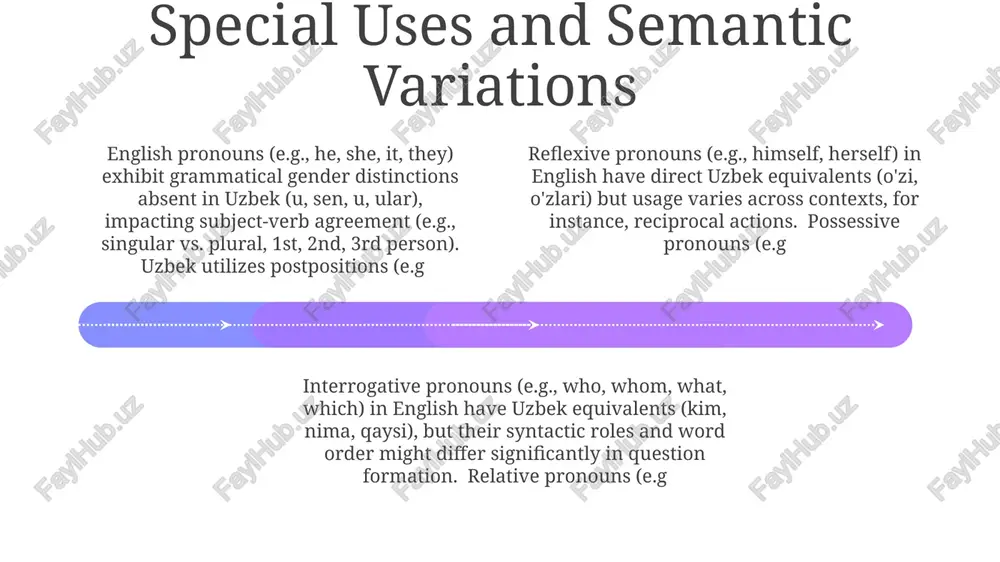
powerpoint presentation comparative analysis of pronouns in english and uzbek languages a. sabina 01 syntactic functions and distribution 02 typological classification of pronouns, 03 morphological variations and agreement, plan: person, number, and gender concordance comparative analysis reveals english's reliance on three grammatical genders (masculine, feminine, neuter), impacting pronoun selection significantly, whereas uzbek utilizes semantic gender, impacting possessive pronouns and verb agreement across regions like tashkent and samarkand english pronouns (he/him/his, she/her/hers, it/its) exhibit grammatical gender concordance with nouns (e.g., "the boy, he" vs. "the girl, she"), differing from uzbek's agglutinative system where gender is marked on nouns (e.g uzbek's six case system (nominative, genitive, dative, accusative, locative, ablative) affects pronoun declension, unlike english's simpler case system (nominative, accusative, genitive), leading to varied pronoun forms (e.g., men – i, meni – me) dependent on grammatical function within sentences (e.g special uses and semantic variations english pronouns (e.g., he, she, it, they) …
2 / 7
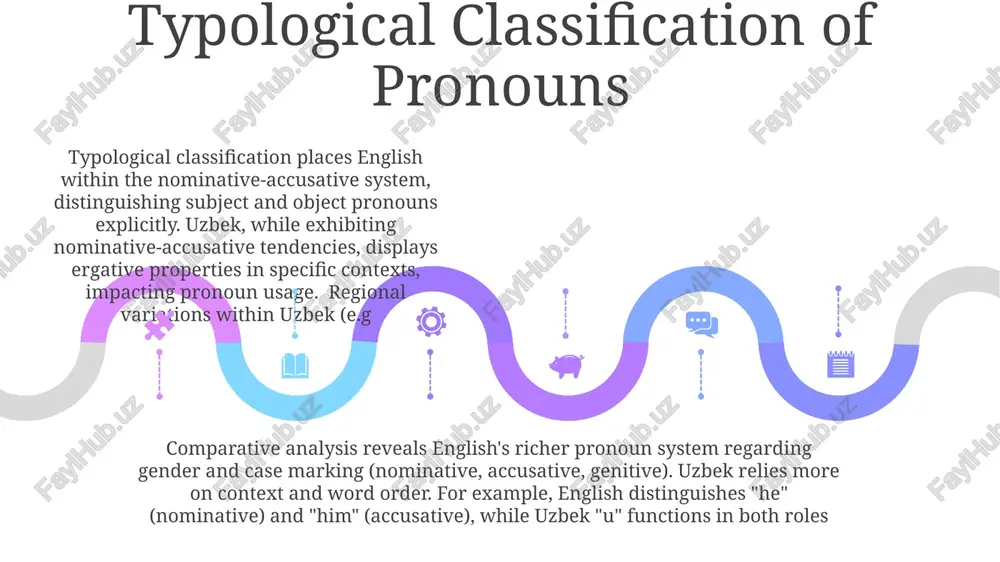
glish distinguishes "he" (nominative) and "him" (accusative), while uzbek "u" functions in both roles typological classification places english within the nominative-accusative system, distinguishing subject and object pronouns explicitly. uzbek, while exhibiting nominative-accusative tendencies, displays ergative properties in specific contexts, impacting pronoun usage. regional variations within uzbek (e.g case marking and pronoun forms uzbek pronoun case marking is overtly expressed through suffixes attached to the stem, unlike english's largely implicit system comparative analysis reveals english relies heavily on word order to indicate grammatical function, minimizing overt case marking in pronouns. uzbek, however, shows rich case morphology reflected in its pronouns (e.g., first-person singular pronouns men (nominative), meni (accusative), mening (genitive)) english employs nominative, accusative, genitive, dative, and possessive pronoun forms (e.g thank you for your attention @taqdimot_robot image1.jpeg image2.jpeg image3.jpeg
3 / 7
comparative analysis of pronouns in english and uzbek languages - Page 3
4 / 7
comparative analysis of pronouns in english and uzbek languages - Page 4
5 / 7
comparative analysis of pronouns in english and uzbek languages - Page 5

Ko'proq o'qimoqchimisiz?

Barcha 7 sahifani Telegram orqali bepul yuklab oling.

To'liq faylni yuklab olish

"comparative analysis of pronouns in english and uzbek languages" haqida

powerpoint presentation comparative analysis of pronouns in english and uzbek languages a. sabina 01 syntactic functions and distribution 02 typological classification of pronouns, 03 morphological variations and agreement, plan: person, number, and gender concordance comparative analysis reveals english's reliance on three grammatical genders (masculine, feminine, neuter), impacting pronoun selection significantly, whereas uzbek utilizes semantic gender, impacting possessive pronouns and verb agreement across regions like tashkent and samarkand english pronouns (he/him/his, she/her/hers, it/its) exhibit grammatical gender concordance with nouns (e.g., "the boy, he" vs. "the girl, she"), differing from uzbek's agglutinative system where gender is marked on nouns (e.g uzbek's six case syste...

Bu fayl PPTX formatida 7 sahifadan iborat (394,9 KB). "comparative analysis of pronouns in english and uzbek languages"ni yuklab olish uchun chap tomondagi Telegram tugmasini bosing.

Teglar: comparative analysis of pronoun… PPTX 7 sahifa Bepul yuklash Telegram