authentic vs adapted materials in language teaching

PPTX 12 sahifa 219,3 KB Bepul yuklash

Sahifa ko'rinishi (5 sahifa)

Pastga aylantiring 👇
1 / 12
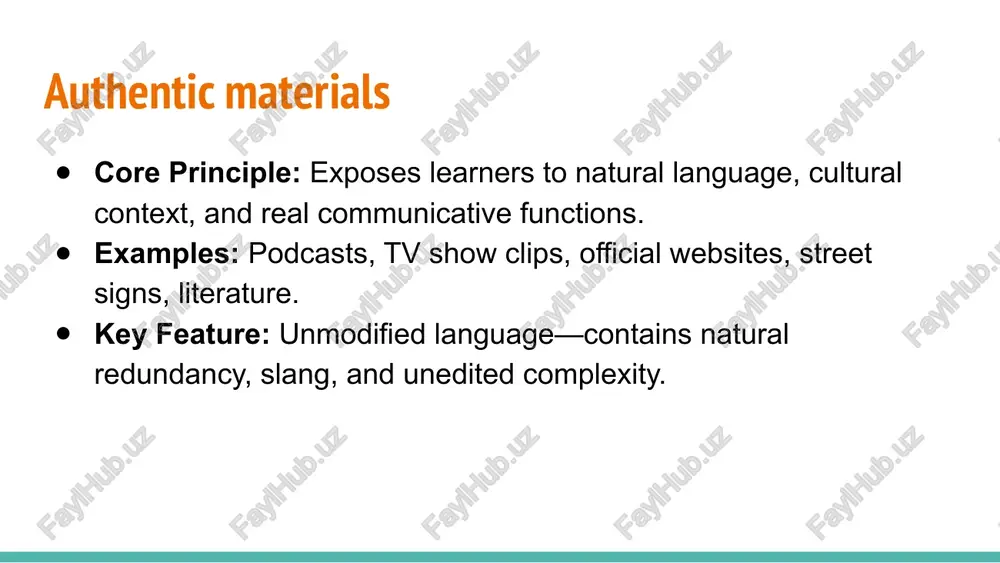
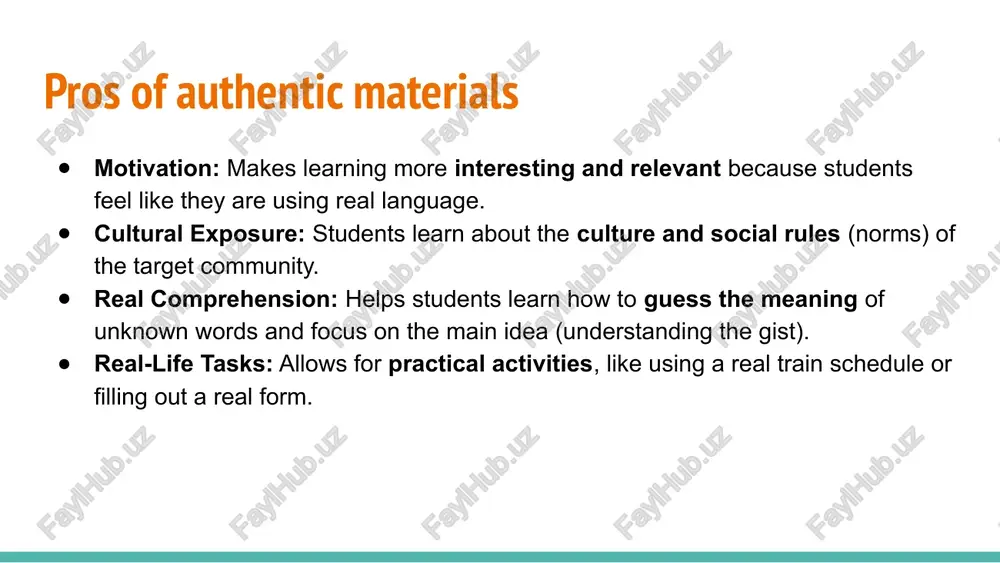
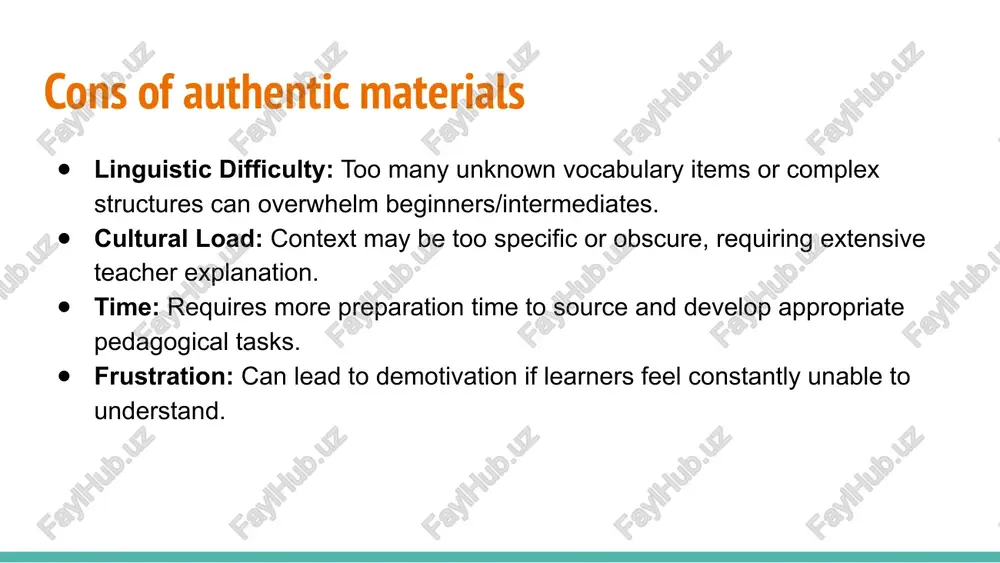
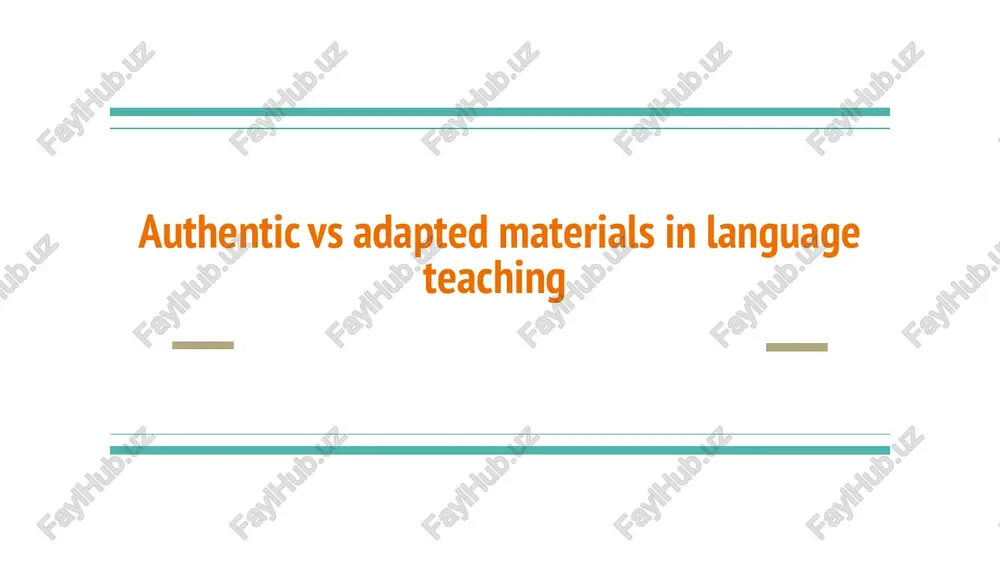
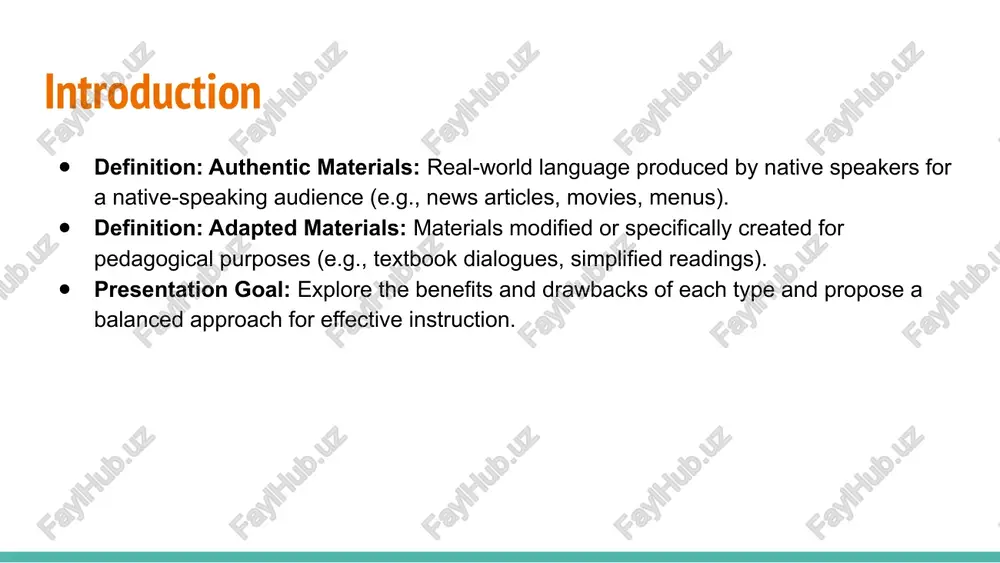
authentic vs adapted materials in language teaching authentic vs adapted materials in language teaching introduction definition: authentic materials: real-world language produced by native speakers for a native-speaking audience (e.g., news articles, movies, menus). definition: adapted materials: materials modified or specifically created for pedagogical purposes (e.g., textbook dialogues, simplified readings). presentation goal: explore the benefits and drawbacks of each type and propose a balanced approach for effective instruction. authentic materials core principle: exposes learners to natural language, cultural context, and real communicative functions. examples: podcasts, tv show clips, official websites, street signs, literature. key feature: unmodified language—contains natural redundancy, slang, and unedited complexity. pros of authentic materials motivation: makes learning more interesting and relevant because students feel like they are using real language. cultural exposure: students learn about the culture and social rules (norms) of the target community. real comprehension: helps students learn how to guess the meaning of unknown words …
2 / 12
. key feature: optimized for learning a specific language point, minimizing cognitive overload. pros of adaptated materials focus & control: targets specific learning objectives (e.g., past perfect tense only). accessibility: suitable for all proficiency levels, especially beginners. efficiency: saves time as the language difficulty is known and controlled. error prevention: reduces exposure to highly complex or confusing structures until learners are ready. cons of adaptated materials artificiality: language can sound unnatural, stilted, or dated (the "textbook language" problem). lower motivation: learners might find contrived texts boring or irrelevant to their real lives. inauthentic usage: may not prepare learners for the speed, overlap, or variation found in real communication. limited context: often strips away the rich cultural and pragmatic context. criteria for selection: finding the fit learner level (crucial): beginners need more adaptation; advanced learners thrive on authenticity. learning goal: for specific skill practice (e.g., pronunciation), adaptation is better. for general …
3 / 12
ward full authenticity. recommendation: use authentic materials for receptive skills (listening/reading) and adapted materials for productive skills (speaking/writing) at lower levels.
4 / 12
authentic vs adapted materials in language teaching - Page 4
5 / 12
authentic vs adapted materials in language teaching - Page 5

Ko'proq o'qimoqchimisiz?

Barcha 12 sahifani Telegram orqali bepul yuklab oling.

To'liq faylni yuklab olish

"authentic vs adapted materials in language teaching" haqida

authentic vs adapted materials in language teaching authentic vs adapted materials in language teaching introduction definition: authentic materials: real-world language produced by native speakers for a native-speaking audience (e.g., news articles, movies, menus). definition: adapted materials: materials modified or specifically created for pedagogical purposes (e.g., textbook dialogues, simplified readings). presentation goal: explore the benefits and drawbacks of each type and propose a balanced approach for effective instruction. authentic materials core principle: exposes learners to natural language, cultural context, and real communicative functions. examples: podcasts, tv show clips, official websites, street signs, literature. key feature: unmodified language—contains natural red...

Bu fayl PPTX formatida 12 sahifadan iborat (219,3 KB). "authentic vs adapted materials in language teaching"ni yuklab olish uchun chap tomondagi Telegram tugmasini bosing.
Teglar: authentic vs adapted materials … PPTX 12 sahifa Bepul yuklash Telegram