tailor writing for different audience

DOCX 35 стр. 44,2 КБ Бесплатная загрузка

Предварительный просмотр (5 стр.)

Прокрутите вниз 👇
1 / 35
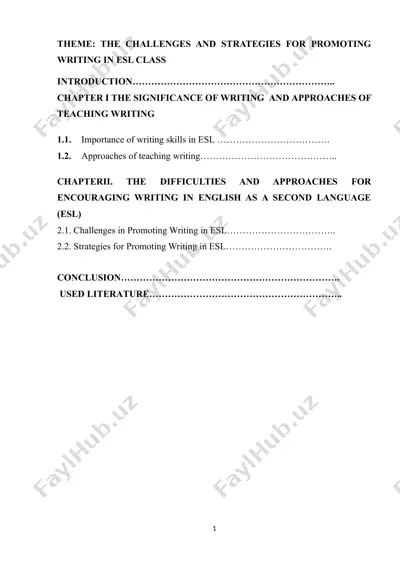
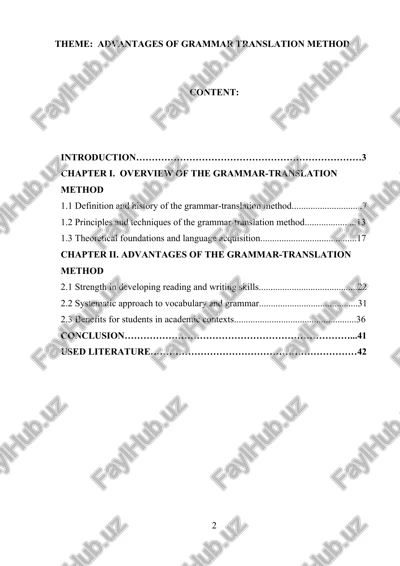
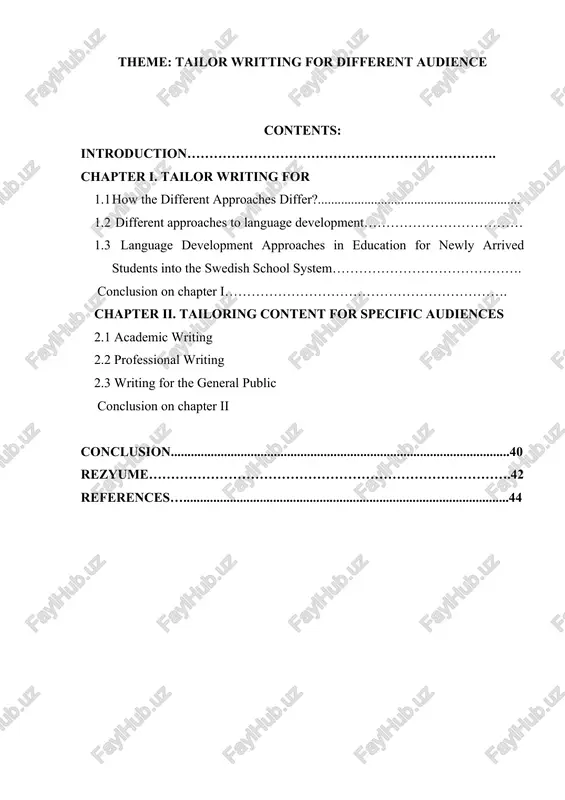
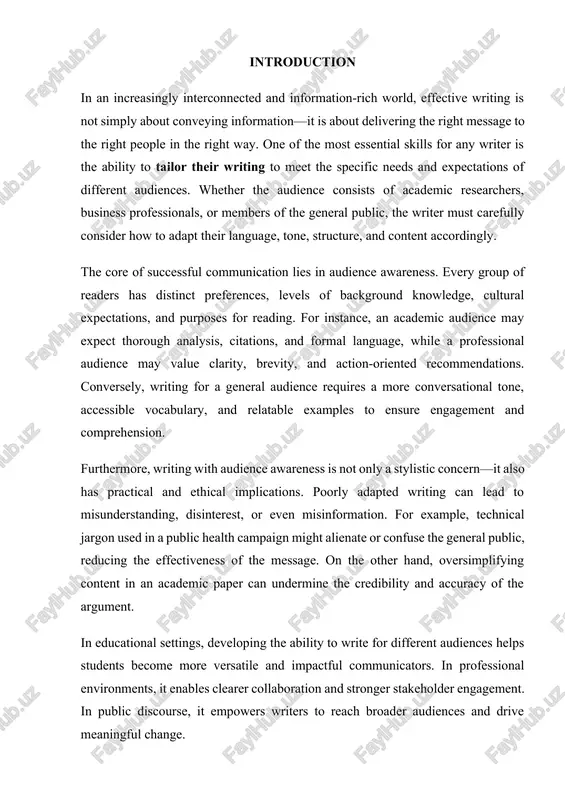
theme: tailor writting for different audience contents: introduction……………………………………………………………. chapter i. tailor writing for 1.1 how the different approaches differ?............................................................. 1.2 different approaches to language development……………………………… 1.3 language development approaches in education for newly arrived students into the swedish school system……………………………………. conclusion on chapter i………………………………………………………. chapter ii. tailoring content for specific audiences 2.1 academic writing 2.2 professional writing 2.3 writing for the general public conclusion on chapter ii conclusion......................................................................................................40 rezyume……………………………………………………………………….42 references…..................................................................................................44 introduction in an increasingly interconnected and information-rich world, effective writing is not simply about conveying information—it is about delivering the right message to the right people in the right way. one of the most essential skills for any writer is the ability to tailor their writing to meet the specific needs and expectations of different audiences. whether the audience consists of academic researchers, business professionals, or members of the general public, the writer must carefully consider how to adapt their …
2 / 35
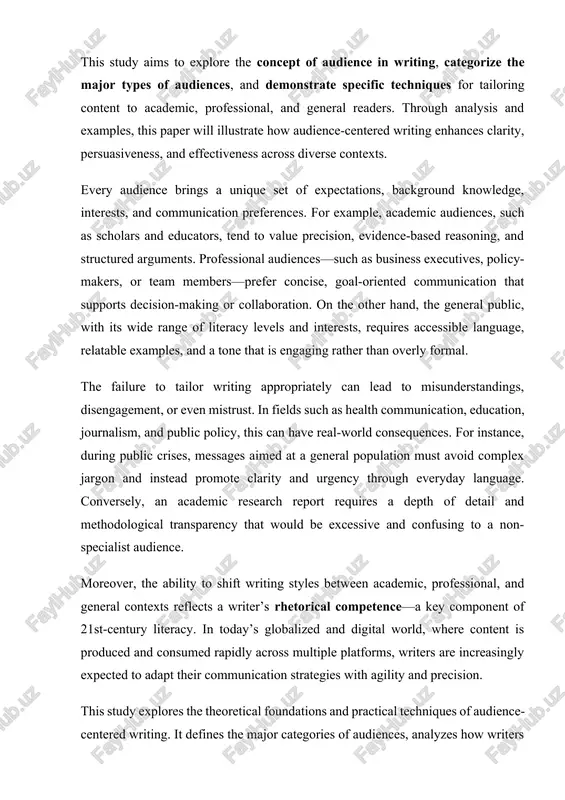
and comprehension. furthermore, writing with audience awareness is not only a stylistic concern—it also has practical and ethical implications. poorly adapted writing can lead to misunderstanding, disinterest, or even misinformation. for example, technical jargon used in a public health campaign might alienate or confuse the general public, reducing the effectiveness of the message. on the other hand, oversimplifying content in an academic paper can undermine the credibility and accuracy of the argument. in educational settings, developing the ability to write for different audiences helps students become more versatile and impactful communicators. in professional environments, it enables clearer collaboration and stronger stakeholder engagement. in public discourse, it empowers writers to reach broader audiences and drive meaningful change. this study aims to explore the concept of audience in writing, categorize the major types of audiences, and demonstrate specific techniques for tailoring content to academic, professional, and general readers. through analysis and examples, …
3 / 35
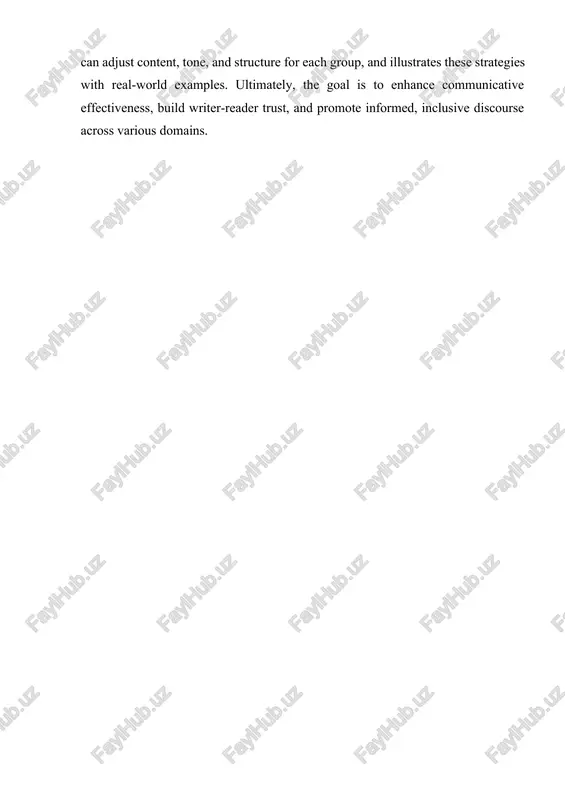
cation, education, journalism, and public policy, this can have real-world consequences. for instance, during public crises, messages aimed at a general population must avoid complex jargon and instead promote clarity and urgency through everyday language. conversely, an academic research report requires a depth of detail and methodological transparency that would be excessive and confusing to a non-specialist audience. moreover, the ability to shift writing styles between academic, professional, and general contexts reflects a writer’s rhetorical competence—a key component of 21st-century literacy. in today’s globalized and digital world, where content is produced and consumed rapidly across multiple platforms, writers are increasingly expected to adapt their communication strategies with agility and precision. this study explores the theoretical foundations and practical techniques of audience-centered writing. it defines the major categories of audiences, analyzes how writers can adjust content, tone, and structure for each group, and illustrates these strategies with real-world examples. ultimately, the …
4 / 35
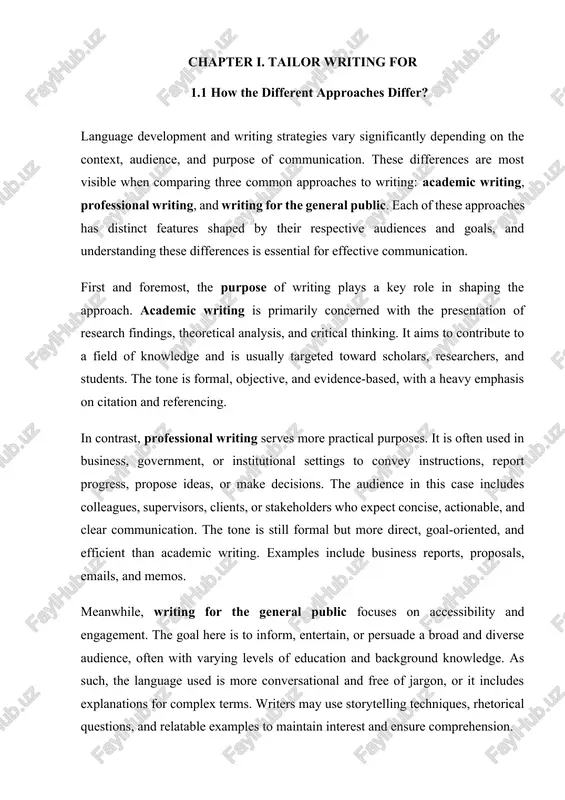
ical thinking. it aims to contribute to a field of knowledge and is usually targeted toward scholars, researchers, and students. the tone is formal, objective, and evidence-based, with a heavy emphasis on citation and referencing. in contrast, professional writing serves more practical purposes. it is often used in business, government, or institutional settings to convey instructions, report progress, propose ideas, or make decisions. the audience in this case includes colleagues, supervisors, clients, or stakeholders who expect concise, actionable, and clear communication. the tone is still formal but more direct, goal-oriented, and efficient than academic writing. examples include business reports, proposals, emails, and memos. meanwhile, writing for the general public focuses on accessibility and engagement. the goal here is to inform, entertain, or persuade a broad and diverse audience, often with varying levels of education and background knowledge. as such, the language used is more conversational and free of jargon, or …
5 / 35
tends to explain them clearly to avoid confusion. public-oriented writing avoids such terminology altogether or replaces it with analogies, metaphors, or simplified explanations. for example, a scientific concept such as climate change would be discussed in depth with data and scholarly sources in an academic paper. a professional report might summarize key statistics and recommend actions to a company. a public article or social media post might explain it through relatable everyday examples or emotional appeal to encourage behavioral change. generally speaking, qualitative and quantitative approaches are the most common methods utilized by researchers. while these two approaches are often presented as a dichotomy, in reality it is much more complicated. certainly, there are researchers who fall on the more extreme ends of these two approaches, however most recognize the advantages and usefulness of combining both methods (mixed methods). in the following sections we look at quantitative, qualitative, and mixed …

Хотите читать дальше?

Скачайте все 35 страниц бесплатно через Telegram.

Скачать полный файл

О "tailor writing for different audience"

theme: tailor writting for different audience contents: introduction……………………………………………………………. chapter i. tailor writing for 1.1 how the different approaches differ?............................................................. 1.2 different approaches to language development……………………………… 1.3 language development approaches in education for newly arrived students into the swedish school system……………………………………. conclusion on chapter i………………………………………………………. chapter ii. tailoring content for specific audiences 2.1 academic writing 2.2 professional writing 2.3 writing for the general public conclusion on chapter ii conclusion......................................................................................................40 rezyume……………………………………………………………………….42 references…..........................

Этот файл содержит 35 стр. в формате DOCX (44,2 КБ). Чтобы скачать "tailor writing for different audience", нажмите кнопку Telegram слева.
Теги: tailor writing for different au… DOCX 35 стр. Бесплатная загрузка Telegram