differences between literary language and dialectic language

PPTX 21 pages 1006.0 KB Free download

Page preview (5 pages)

Scroll down 👇
1 / 21
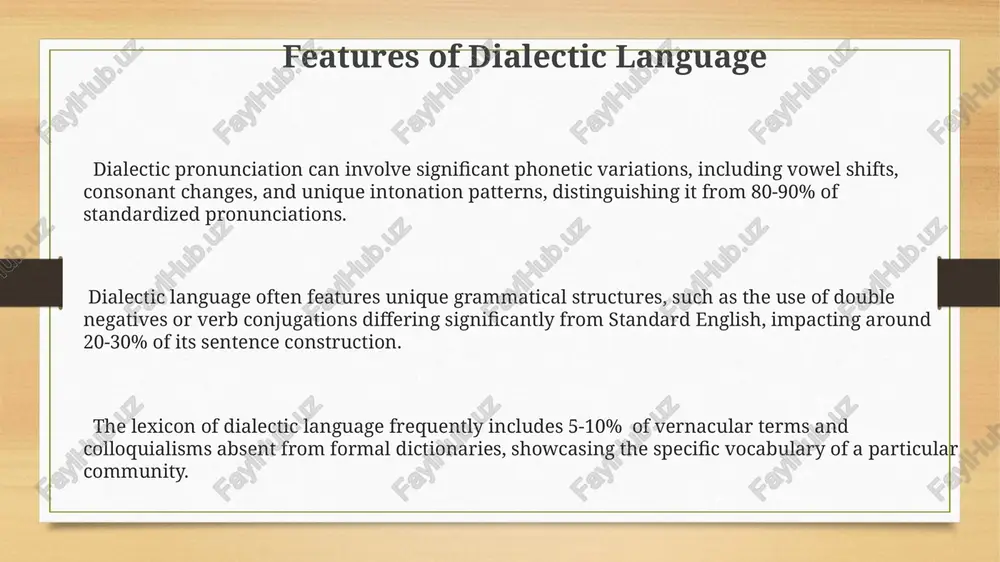
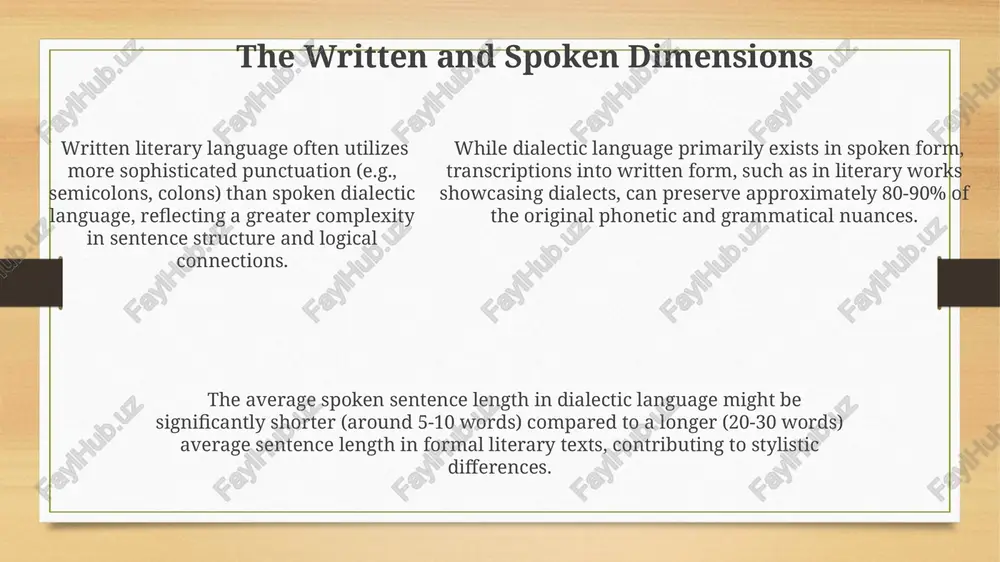
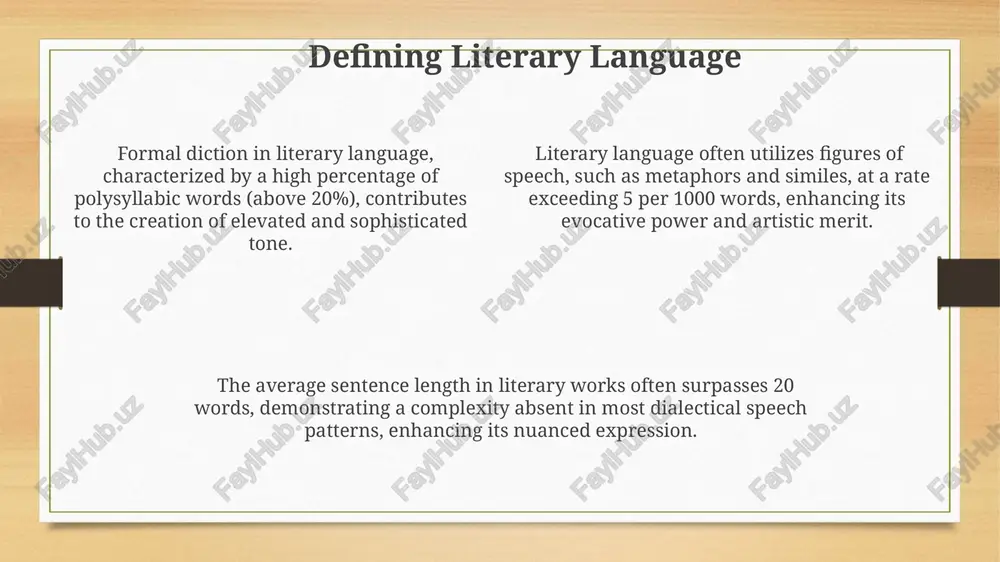
powerpoint presentation differences between literary language and dialectic language umida urmonova 1. dialectic language: voice of place and people 2. contrasting literary and dialectic language 3. literary language: precision and artistry plan: features of dialectic language dialectic pronunciation can involve significant phonetic variations, including vowel shifts, consonant changes, and unique intonation patterns, distinguishing it from 80-90% of standardized pronunciations. dialectic language often features unique grammatical structures, such as the use of double negatives or verb conjugations differing significantly from standard english, impacting around 20-30% of its sentence construction. the lexicon of dialectic language frequently includes 5-10% of vernacular terms and colloquialisms absent from formal dictionaries, showcasing the specific vocabulary of a particular community. defining literary language formal diction in literary language, characterized by a high percentage of polysyllabic words (above 20%), contributes to the creation of elevated and sophisticated tone. literary language often utilizes figures of speech, such as metaphors …
2 / 21
written form, such as in literary works showcasing dialects, can preserve approximately 80-90% of the original phonetic and grammatical nuances. temporal and geographic context analyzing 19th-century american literature reveals regional dialects like southern speech alongside formal literary styles, highlighting the coexistence of linguistic variations within a specific geographic and temporal context. shakespearean english, flourishing from the late 16th to early 17th centuries, exemplifies literary language's temporal grounding, contrasting sharply with the geographically specific dialects of elizabethan england. the evolution of african american vernacular english (aave) over 300+ years, demonstrates dialectic language's dynamic relationship with time and place, influenced by various socio-historical factors. contrasting literary and dialectic language literary language often utilizes a higher percentage, say 20-30%, of less frequent words compared to dialectic language, which favors a more limited, commonly used vocabulary. dialectic language frequently employs contractions (e.g., "can't," "won't") and colloquialisms absent in the more formal grammatical structures of …
3 / 21
exploring dialectic language analyzing dialectal variations across 5 distinct appalachian communities reveals significant phonetic and grammatical differences, impacting approximately 2 million speakers. the sociolinguistic study of african american vernacular english (aave) highlights its unique grammatical structures, such as the habitual "be," challenging prescriptive grammar rules. studies show that over 30% of english dialectal vocabulary originates from pre-18th-century influences, showcasing linguistic conservatism within specific communities. thank you for your attention @taqdimot_robot image3.png image4.png
4 / 21
differences between literary language and dialectic language - Page 4
5 / 21
differences between literary language and dialectic language - Page 5

Want to read more?

Download all 21 pages for free via Telegram.

Download full file

About "differences between literary language and dialectic language"

powerpoint presentation differences between literary language and dialectic language umida urmonova 1. dialectic language: voice of place and people 2. contrasting literary and dialectic language 3. literary language: precision and artistry plan: features of dialectic language dialectic pronunciation can involve significant phonetic variations, including vowel shifts, consonant changes, and unique intonation patterns, distinguishing it from 80-90% of standardized pronunciations. dialectic language often features unique grammatical structures, such as the use of double negatives or verb conjugations differing significantly from standard english, impacting around 20-30% of its sentence construction. the lexicon of dialectic language frequently includes 5-10% of vernacular terms and colloquia...

This file contains 21 pages in PPTX format (1006.0 KB). To download "differences between literary language and dialectic language", click the Telegram button on the left.
Tags: differences between literary la… PPTX 21 pages Free download Telegram