understanding database product

DOCX 12 sahifa 21,9 KB Bepul yuklash

Sahifa ko'rinishi (5 sahifa)

Pastga aylantiring 👇

1 / 12
theme: understanding database product plan: 1. executive summary: an overview of the plan, including the purpose, goals, and expected outcomes of the database product. 2. background and context: a description of the current state of the database system, including any existing challenges, limitations, or opportunities for improvement. 3. objectives: clearly defined goals and objectives for the database product, such as improving performance, scalability, security, or data quality. 4. scope and deliverables: a clear definition of the scope of the project, including the specific features, functionalities, or enhancements to be included in the database product. it also outlines the expected deliverables and milestones. 5. stakeholders and roles: identification of key stakeholders involved in the project, including their roles, responsibilities, and expected contributions. 6. project timeline: a timeline or schedule that outlines the major activities, milestones, and estimated timeframes for the different phases of the project, such as requirements gathering, development, testing, …
2 / 12
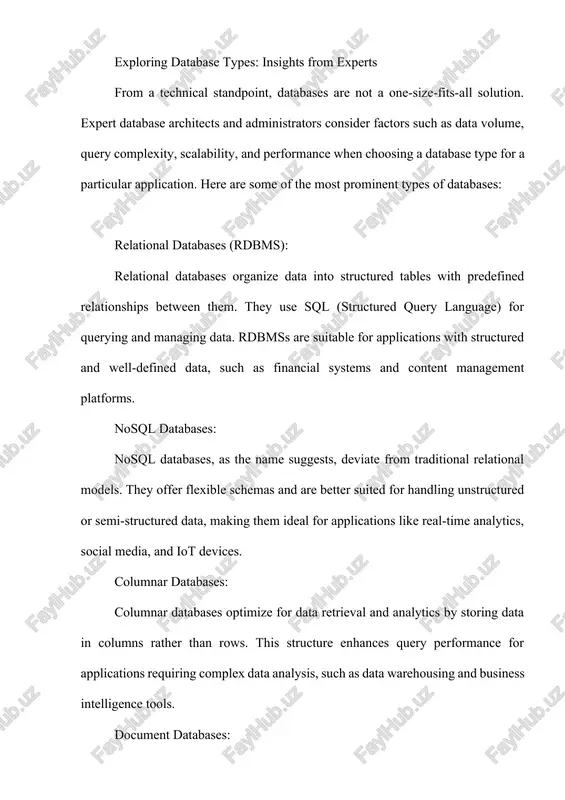
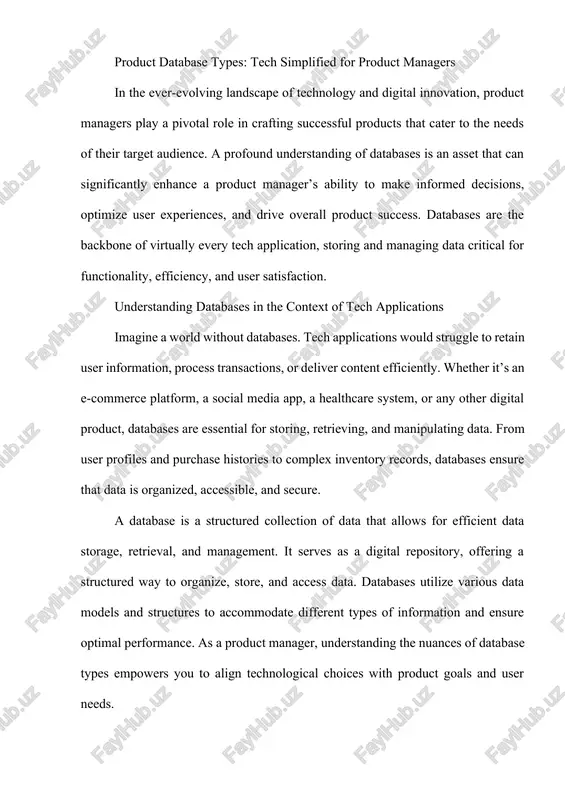
any other digital product, databases are essential for storing, retrieving, and manipulating data. from user profiles and purchase histories to complex inventory records, databases ensure that data is organized, accessible, and secure. a database is a structured collection of data that allows for efficient data storage, retrieval, and management. it serves as a digital repository, offering a structured way to organize, store, and access data. databases utilize various data models and structures to accommodate different types of information and ensure optimal performance. as a product manager, understanding the nuances of database types empowers you to align technological choices with product goals and user needs. exploring database types: insights from experts from a technical standpoint, databases are not a one-size-fits-all solution. expert database architects and administrators consider factors such as data volume, query complexity, scalability, and performance when choosing a database type for a particular application. here are some of the …
3 / 12
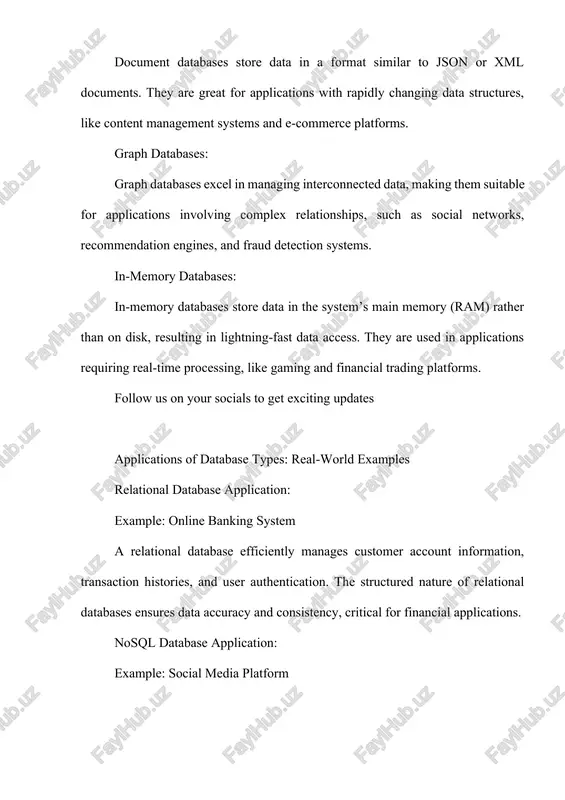
ools. document databases: document databases store data in a format similar to json or xml documents. they are great for applications with rapidly changing data structures, like content management systems and e-commerce platforms. graph databases: graph databases excel in managing interconnected data, making them suitable for applications involving complex relationships, such as social networks, recommendation engines, and fraud detection systems. in-memory databases: in-memory databases store data in the system’s main memory (ram) rather than on disk, resulting in lightning-fast data access. they are used in applications requiring real-time processing, like gaming and financial trading platforms. follow us on your socials to get exciting updates applications of database types: real-world examples relational database application: example: online banking system a relational database efficiently manages customer account information, transaction histories, and user authentication. the structured nature of relational databases ensures data accuracy and consistency, critical for financial applications. nosql database application: example: social …
4 / 12
r recommendation systems by modeling connections between users, products, and preferences. this enables accurate and personalized recommendations, enhancing user engagement. in-memory database application: example: real-time gaming in-memory databases support fast data retrieval, crucial for real-time multiplayer gaming environments. player positions, scores, and game states are readily accessible, delivering a seamless gaming experience. sql vs. nosql: a practical comparison in the world of databases, the sql vs. nosql debate boils down to structured precision versus flexible adaptability. let’s demystify these concepts through examples and understand why they matter to product managers. sql databases: the structured oasis imagine you’re overseeing an online retail store, where products, customers, and orders are neatly organized in predefined tables. sql databases thrive in such structured environments. they use a common language called sql to precisely query and manage data. picture this like arranging books on shelves based on categories, where you can easily locate specific books …
5 / 12
: "user_id_here", "username": "example_user", "posts": [ { "post_id": "post1", "content": "hello, world!", "likes": 120 }, { "post_id": "post2", "content": "an adventure awaits!", "likes": 78 } ] } choosing the right fit: structured situations: if your data has a fixed structure with relationships that rarely change (like traditional databases), sql databases provide a solid foundation. data diversity: for applications dealing with diverse data types and evolving structures (like social networks or rapidly changing content), nosql databases offer the flexibility needed. balancing structure and flexibility in the digital realm, product managers are the orchestrators of innovation, and their success hinges on informed decision-making. a solid understanding of database types equips product managers with the ability to align technology choices with business objectives, ensuring that products are efficient, scalable, and user-centric. as technology continues to shape industries, the significance of databases in driving product success cannot be overstated. from relational databases offering structured …

Ko'proq o'qimoqchimisiz?

Barcha 12 sahifani Telegram orqali bepul yuklab oling.

To'liq faylni yuklab olish

"understanding database product" haqida

theme: understanding database product plan: 1. executive summary: an overview of the plan, including the purpose, goals, and expected outcomes of the database product. 2. background and context: a description of the current state of the database system, including any existing challenges, limitations, or opportunities for improvement. 3. objectives: clearly defined goals and objectives for the database product, such as improving performance, scalability, security, or data quality. 4. scope and deliverables: a clear definition of the scope of the project, including the specific features, functionalities, or enhancements to be included in the database product. it also outlines the expected deliverables and milestones. 5. stakeholders and roles: identification of key stakeholders involved in t...

Bu fayl DOCX formatida 12 sahifadan iborat (21,9 KB). "understanding database product"ni yuklab olish uchun chap tomondagi Telegram tugmasini bosing.
Teglar: understanding database product DOCX 12 sahifa Bepul yuklash Telegram