introduction to blockchain technology

PPTX 10 стр. 585,6 КБ Бесплатная загрузка

Предварительный просмотр (5 стр.)

Прокрутите вниз 👇
1 / 10
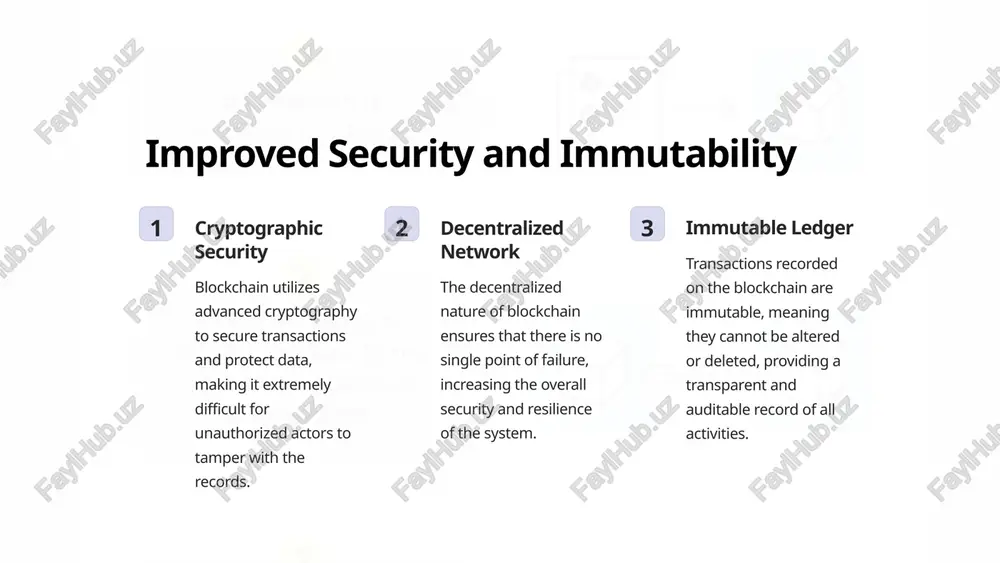
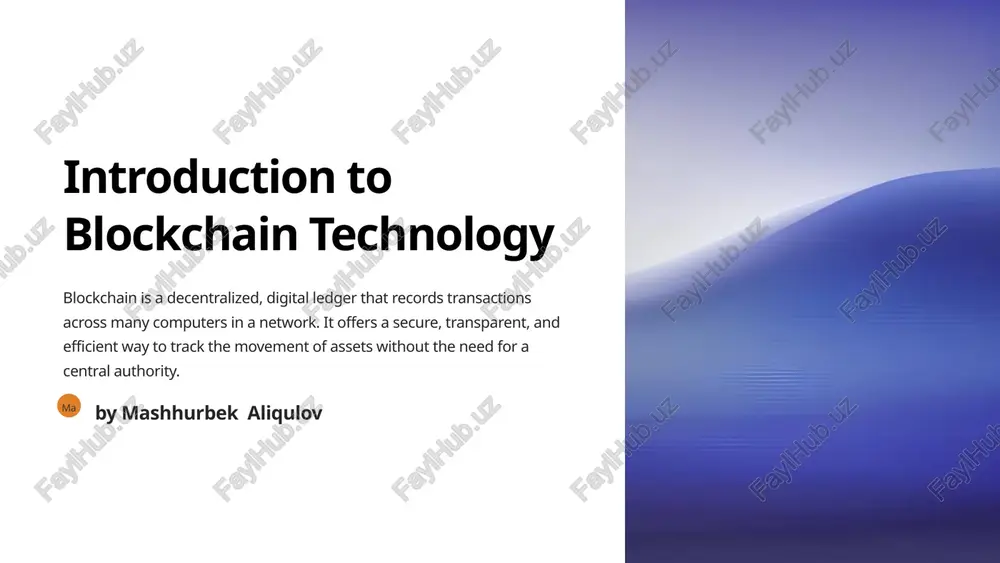
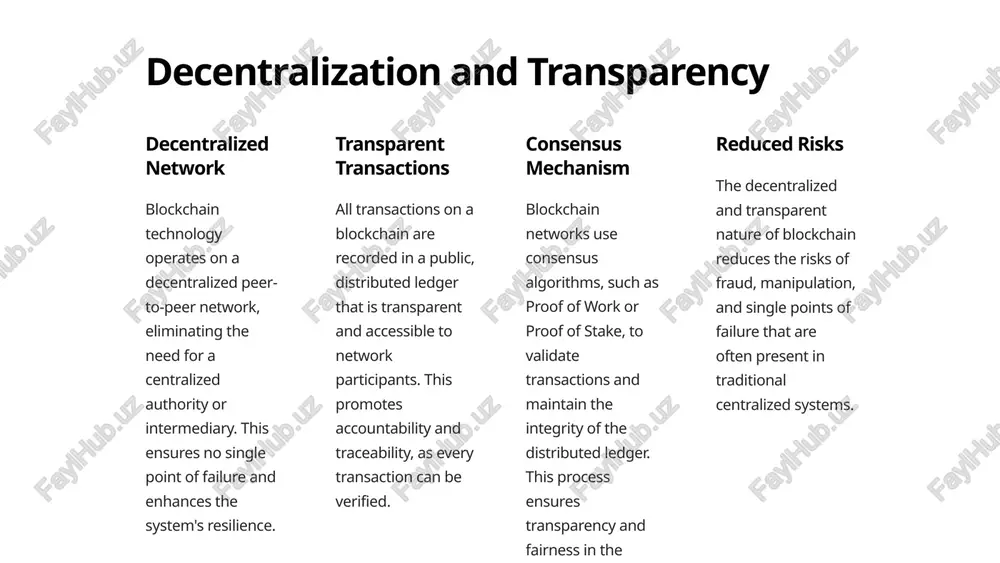
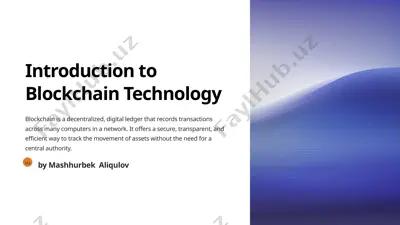
pptxgenjs presentation introduction to blockchain technology blockchain is a decentralized, digital ledger that records transactions across many computers in a network. it offers a secure, transparent, and efficient way to track the movement of assets without the need for a central authority. ma by mashhurbek aliqulov 1 decentralization and transparency decentralized network blockchain technology operates on a decentralized peer-to-peer network, eliminating the need for a centralized authority or intermediary. this ensures no single point of failure and enhances the system's resilience. transparent transactions all transactions on a blockchain are recorded in a public, distributed ledger that is transparent and accessible to network participants. this promotes accountability and traceability, as every transaction can be verified. consensus mechanism blockchain networks use consensus algorithms, such as proof of work or proof of stake, to validate transactions and maintain the integrity of the distributed ledger. this process ensures transparency and fairness in the network. …
2 / 10
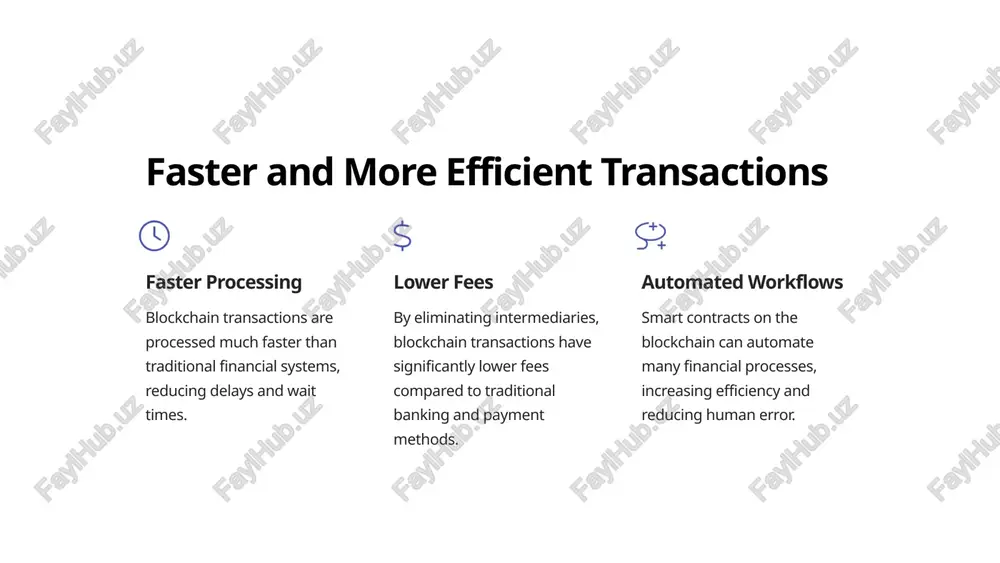
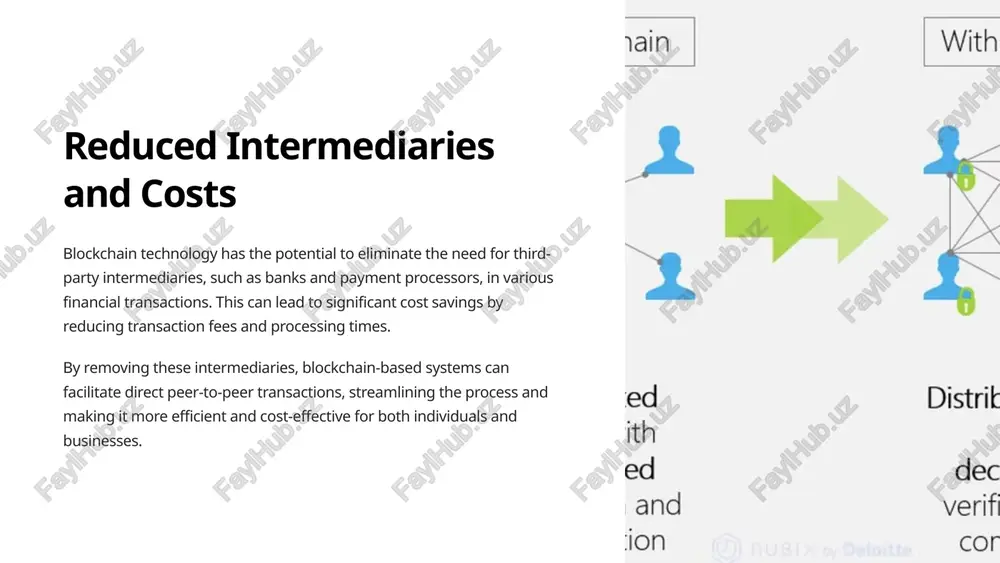
inancial systems, reducing delays and wait times. lower fees by eliminating intermediaries, blockchain transactions have significantly lower fees compared to traditional banking and payment methods. automated workflows smart contracts on the blockchain can automate many financial processes, increasing efficiency and reducing human error. 4 reduced intermediaries and costs blockchain technology has the potential to eliminate the need for third-party intermediaries, such as banks and payment processors, in various financial transactions. this can lead to significant cost savings by reducing transaction fees and processing times. by removing these intermediaries, blockchain-based systems can facilitate direct peer-to-peer transactions, streamlining the process and making it more efficient and cost-effective for both individuals and businesses. 5 challenges with scalability and throughput 1 limited throughput blockchain networks can only process a limited number of transactions per second. 2 scaling issues as adoption grows, the network can become congested and slow. 3 hardware constraints running full nodes …
3 / 10
implement in a decentralized system. 3 tax implications and reporting the tax treatment of cryptocurrencies and blockchain-based transactions is still evolving, requiring businesses and individuals to stay vigilant and properly report their activities. 7 energy consumption and environmental impact high energy demands blockchain networks, especially those that use energy-intensive proof-of-work consensus mechanisms, can have significant energy requirements to power the computational processes needed to validate transactions. e-waste concerns the rapid obsolescence of specialized mining hardware used in blockchain networks can lead to a growing electronic waste problem, as outdated equipment is discarded. transitioning to renewables to address the environmental impact, some blockchain networks are exploring the use of renewable energy sources, such as solar and wind power, to power their operations. 8 adoption and integration challenges integrating blockchain technology into existing systems can be complex, requiring significant technical expertise and coordination across multiple stakeholders. adoption barriers include regulatory uncertainty, lack …
4 / 10
ogical advancements, the future looks promising for blockchain to become a mainstream solution for secure, transparent, and efficient transactions. while challenges remain, the potential of blockchain to revolutionize various sectors will drive further innovation and integration into our digital landscape. 10 image1.jpeg image2.png image3.png image4.png image5.png image6.jpeg image7.png image8.png image9.png image10.png image11.png image12.png image13.png image14.png information is recorded in a block. once the block is full, it’s chained to the rest of the blocks in the database. ain ith and ion with distrik dec verif cor inewkqy finge peeve laws | rules compliance policies (mv standards regulations twh per year a (ek and drag inthe plot are 0 200m in way pnts whe wns im am 6m ytd yl from | fab2, 2017 | to | apr 20, 20 energy consumption popular consensus mechanism such as pow requires a lot of energy to run smoothly. regulation the lack of regulation …
5 / 10
introduction to blockchain technology - Page 5

Хотите читать дальше?

Скачайте все 10 страниц бесплатно через Telegram.

Скачать полный файл

О "introduction to blockchain technology"

pptxgenjs presentation introduction to blockchain technology blockchain is a decentralized, digital ledger that records transactions across many computers in a network. it offers a secure, transparent, and efficient way to track the movement of assets without the need for a central authority. ma by mashhurbek aliqulov 1 decentralization and transparency decentralized network blockchain technology operates on a decentralized peer-to-peer network, eliminating the need for a centralized authority or intermediary. this ensures no single point of failure and enhances the system's resilience. transparent transactions all transactions on a blockchain are recorded in a public, distributed ledger that is transparent and accessible to network participants. this promotes accountability and traceabili...

Этот файл содержит 10 стр. в формате PPTX (585,6 КБ). Чтобы скачать "introduction to blockchain technology", нажмите кнопку Telegram слева.
Теги: introduction to blockchain tech… PPTX 10 стр. Бесплатная загрузка Telegram