reproductive system

PPT 29 стр. 3,4 МБ Бесплатная загрузка

Предварительный просмотр (5 стр.)

Прокрутите вниз 👇
1 / 29
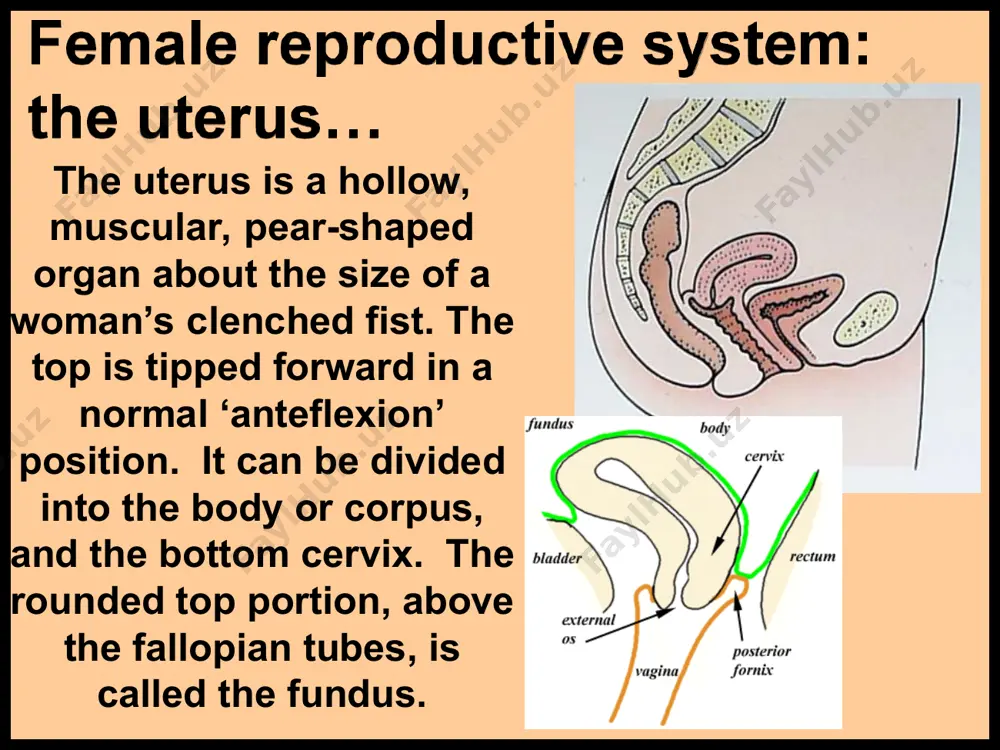
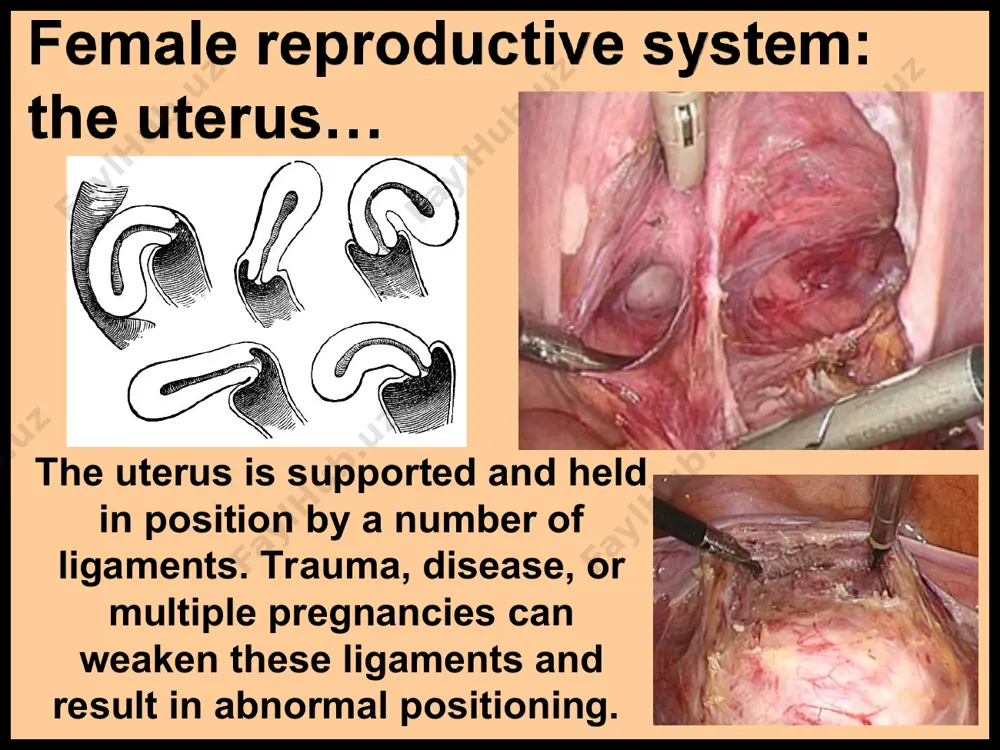
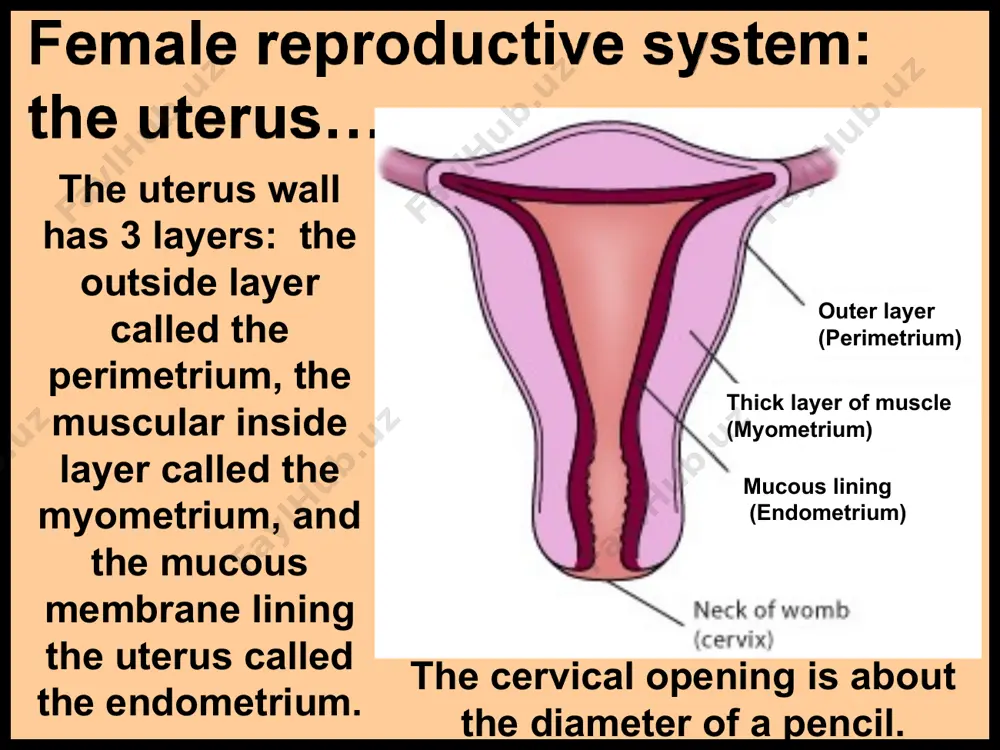
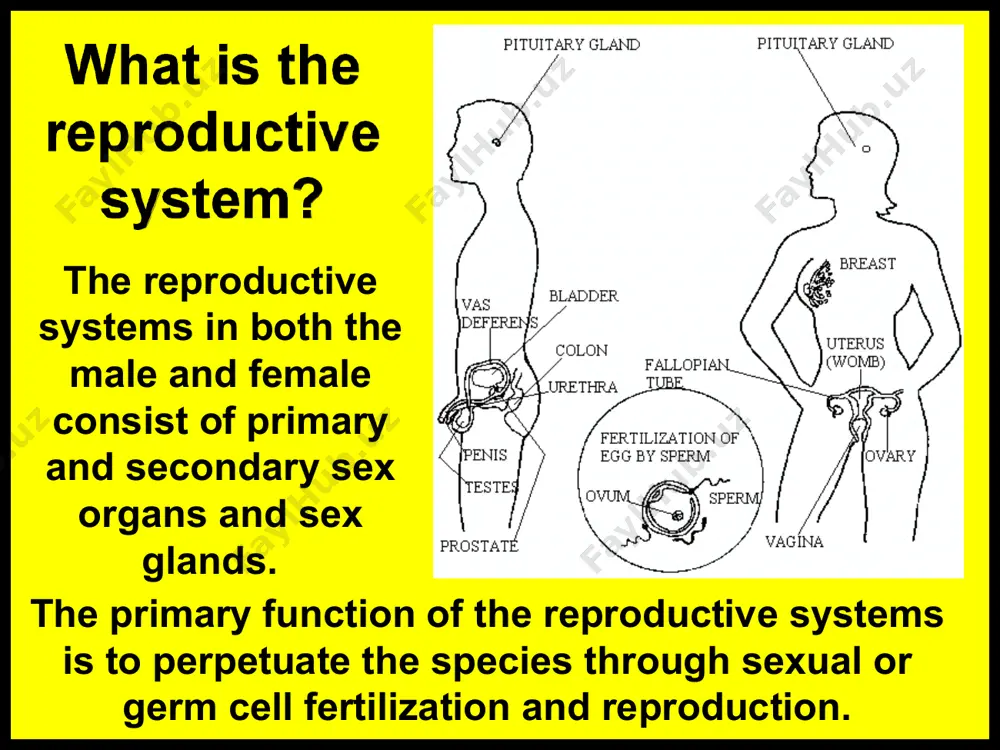
slide 1 the reproductive systems in both the male and female consist of primary and secondary sex organs and sex glands. the primary function of the reproductive systems is to perpetuate the species through sexual or germ cell fertilization and reproduction. the uterus is a hollow, muscular, pear-shaped organ about the size of a woman’s clenched fist. the top is tipped forward in a normal ‘anteflexion’ position. it can be divided into the body or corpus, and the bottom cervix. the rounded top portion, above the fallopian tubes, is called the fundus. the uterus is supported and held in position by a number of ligaments. trauma, disease, or multiple pregnancies can weaken these ligaments and result in abnormal positioning. the uterus wall has 3 layers: the outside layer called the perimetrium, the muscular inside layer called the myometrium, and the mucous membrane lining the uterus called the endometrium. outer layer …
2 / 29
f the uterus by a ligament. they are oval-shaped, about the size of a large olive, and lie close to the fimbria at the end of the fallopian tubes. each ovary is filled, already at birth, with egg-containing sacs called follicles. each egg is called an ovum. once every 21 days, one follicle in one ovary ripens. this mature follicle is a graafian (graw fee un) follicle. the follicle ruptures in response to hormones from the pituitary gland, releasing the ovum/egg… a process called ovulation. after the follicle ruptures, it becomes a mass of yellow cells called the corpus luteum. this is a temporary, progesterone-producing structure. the vagina extends from the cervix to the outside of the body. it is a 3 ½ inch long muscular tube that expands in length and width during sexual arousal. the vagina is the female organ for copulation (sexual intercourse), receiving the seminal fluid …
3 / 29
mulates these lobules with the hormone prolactin… and they produce milk. the dark-colored circle at the tip of the breast is called the areola (ah ree ah lah). it contains sebaceous glands to keep the skin conditioned. in the center is the nipple, where ducts from the lobules open. the first secretion from the breast is not a true milk, but a thin yellowish substance called colostrum. colostrum contains nutrients and the mother’s immunities that can protect baby. the onset of the menstrual cycle, or menarche, begins at puberty and ceases at menopause. the cycle has 3 phases: the follicular phase is characterized by menstruation, when the thickened lining of the endometrium is shed because no egg was fertilized or implanted. just prior to this phase is a premenstrual period characterized by hormonal and physical changes. the ovulatory phase comes next. estrogen is the hormone produced by the ovaries, which …
4 / 29
n. during the 1st trimester, all parts of the embryo are formed. during the second trimester all parts start to function; during the last trimester the embryo is now called a fetus and the main task is growth. labor, characterized by muscle contractions, dilation (to 10 cm) and effacement (thinning)of the cervix, and expulsion of the mucous plug that formed in the cervix, signals the onset of parturition… the childbirth process. the cephalic, or head-first delivery, is the most common. breech is a backward presentation; caesarian is delivery through an incision in the abdomen. the umbilical cord is cut and clamped, and placenta (afterbirth) is delivered following birth of the baby. the newborn may be covered with traces of vernix caseosa (cheesy coating) or lanugo (downy hair) that protected the skin before birth. the health of the baby is immediately evaluated on the apgar scale. color, heartbeat, reflexes, muscle tone, …
5 / 29
he function of copulation/intercourse. the oval-shaped testes are located in the scrotum, and are each divided into 250 lobules. coiled within the lobule are seminiferous tubes where the sperm are formed. the mature sperm are stored in the epididymis, a tube 13-20 feet in length, coiled and lying on the side of each testicle. the acrosome (ak roh zome) covering the head of the sperm contains enzymes that help it penetrate the ova. the head carries the genetic material. the midpiece supplies energy. the tail or flagellum (flah jell um) provides motility. sperm carry either an x/female or y/male chromosome. since all ova carry the x/female chromosome, the male sperm does influence the baby’s sex. the vas deferens are muscular tubes transporting sperm from the epididymis to the seminal vesicles. the seminal vesicles produce a slightly alkaline fluid that mixes with the sperm and becomes part of the semen ejaculated …

Хотите читать дальше?

Скачайте все 29 страниц бесплатно через Telegram.

Скачать полный файл

О "reproductive system"

slide 1 the reproductive systems in both the male and female consist of primary and secondary sex organs and sex glands. the primary function of the reproductive systems is to perpetuate the species through sexual or germ cell fertilization and reproduction. the uterus is a hollow, muscular, pear-shaped organ about the size of a woman’s clenched fist. the top is tipped forward in a normal ‘anteflexion’ position. it can be divided into the body or corpus, and the bottom cervix. the rounded top portion, above the fallopian tubes, is called the fundus. the uterus is supported and held in position by a number of ligaments. trauma, disease, or multiple pregnancies can weaken these ligaments and result in abnormal positioning. the …

Этот файл содержит 29 стр. в формате PPT (3,4 МБ). Чтобы скачать "reproductive system", нажмите кнопку Telegram слева.
Теги: reproductive system PPT 29 стр. Бесплатная загрузка Telegram