discourse between teachers and students

PPTX 22 стр. 2,8 МБ Бесплатная загрузка

Предварительный просмотр (5 стр.)

Прокрутите вниз 👇
1 / 22
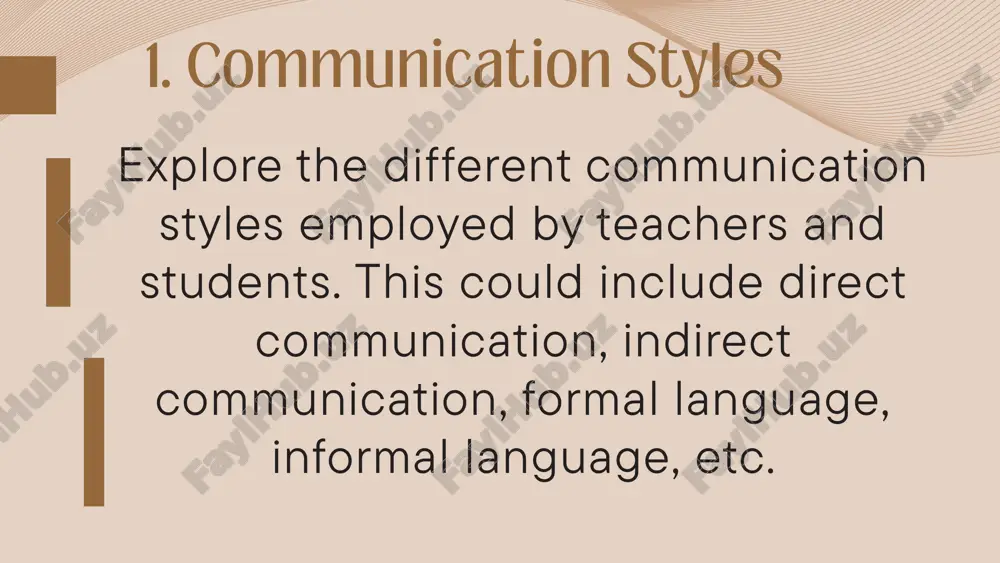
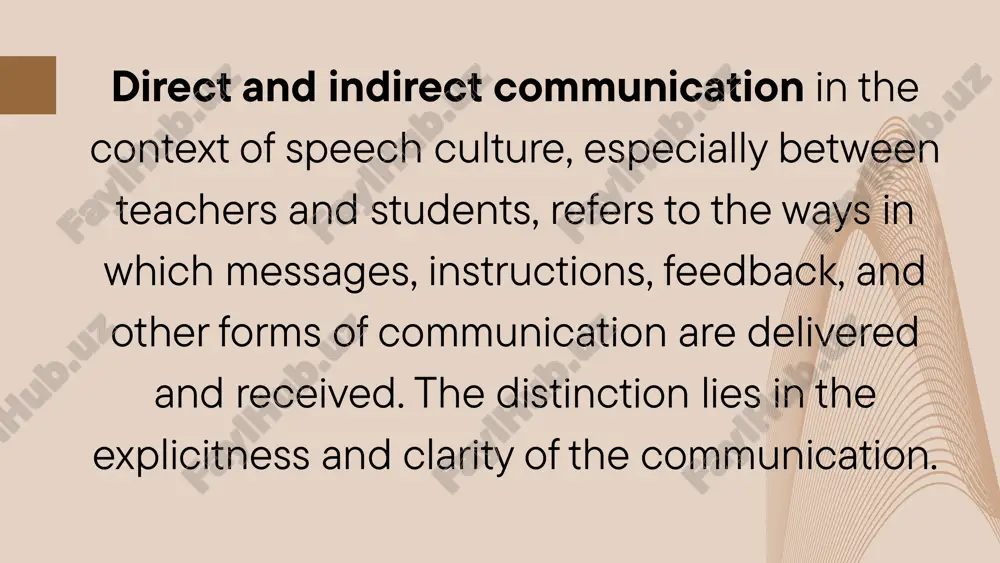
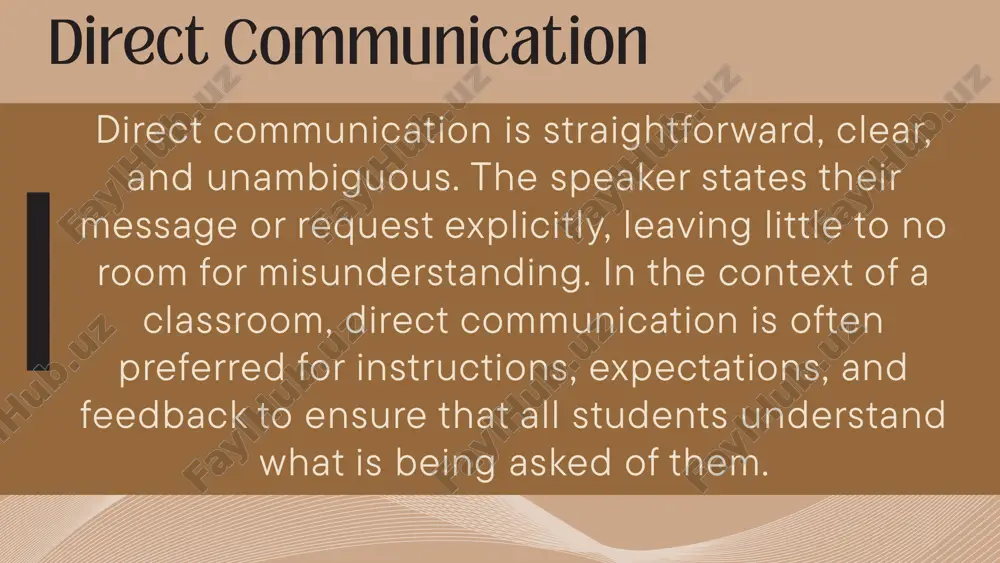
discourse between teachers and students discourse between teachers and students presentation by teacher ahmedov introduction discourse between teachers and students within speech culture examines the intricate dynamics of communication in educational settings. this encompasses the ways in which teachers and students interact verbally, the cultural norms that shape these interactions, and the impacts of these interactions on learning and socialization. the study of this discourse is multifaceted, involving several key components: 1. communication styles explore the different communication styles employed by teachers and students. this could include direct communication, indirect communication, formal language, informal language, etc. direct and indirect communication in the context of speech culture, especially between teachers and students, refers to the ways in which messages, instructions, feedback, and other forms of communication are delivered and received. the distinction lies in the explicitness and clarity of the communication. direct communication direct communication is straightforward, clear, and unambiguous. the …
2 / 22
e listener to interpret the meaning, which can sometimes lead to misunderstandings if the listener is not attuned to the subtleties of the communication. indirect communication can be used to soften criticism, suggest improvements, or navigate sensitive topics without direct confrontation. examples 1. suggesting improvement: instead of directly saying a student's work is inadequate, a teacher might say, "how do you think you could deepen your analysis of this topic?" 2. encouraging participation: rather than commanding a student to participate more, a teacher might say, "i've noticed some of you have great insights during our discussions. it would be wonderful to hear more diverse perspectives." 3. addressing behavior: instead of directly stating that a student's behavior is disruptive, a teacher might say, "we all need a conducive environment to learn. how can we ensure that everyone is getting the opportunity to focus?" 2. questioning techniques examine the types of questions …
3 / 22
he civil war, a probing question might be, "you mentioned economic factors as a cause. can you explain further how these factors contributed to the conflict?" probing questions probing questions in teaching are a type of questioning strategy used to encourage deeper thinking, clarify understanding, and promote critical analysis among students. these questions are designed to follow up on a student's initial response or answer, pushing them to elaborate, justify their reasoning, or think more deeply about the subject matter. probing questions often require more than a simple factual answer and are used to stimulate further discussion, explore ideas in greater depth, and help students develop a more comprehensive understanding of the topic. key differences purpose: open-ended questions aim to explore ideas and opinions, closed-ended questions assess specific knowledge, and probing questions seek to deepen understanding and encourage further thought. response: open-ended questions elicit detailed responses, closed-ended questions result in …
4 / 22
ffective communication and education. cultural norms refer to the shared expectations and rules that guide behavior in a group. in teaching speech culture, these norms can affect communication patterns in various ways: classroom interaction: some cultures promote a teacher-centered approach, where the teacher is the primary source of knowledge and authority, leading to patterns of communication that are more formal and hierarchical. in contrast, other cultures favor a student-centered approach, encouraging more interactive and participatory forms of communication. verbal and non-verbal communication: the acceptance and use of certain gestures, eye contact, and physical proximity can vary widely between cultures, affecting how students and teachers interact. for example, in some cultures, maintaining eye contact is a sign of respect and attentiveness, while in others, it might be considered confrontational or disrespectful. values values are the core principles and standards that are important to a cultural group, influencing people's behavior and attitudes: …
5 / 22
ucation: in cultures where education is highly valued as a means to achieve social mobility or honor family traditions, there might be a greater emphasis on formal education, rote learning, and respect for teachers. this can shape communication patterns to be more deferential and formal. beliefs beliefs about communication: cultures differ in their beliefs about the importance of spoken versus written language, the appropriateness of questioning authority figures, and the value of public speaking skills. these beliefs influence how speech culture is taught, with some cultures placing a higher emphasis on developing public speaking and presentation skills, while others might focus more on writing and listening skills. image1.png image2.png image3.svg image3.png image4.png image5.png image7.svg /docprops/thumbnail.jpeg

Хотите читать дальше?

Скачайте все 22 страниц бесплатно через Telegram.

Скачать полный файл

О "discourse between teachers and students"

discourse between teachers and students discourse between teachers and students presentation by teacher ahmedov introduction discourse between teachers and students within speech culture examines the intricate dynamics of communication in educational settings. this encompasses the ways in which teachers and students interact verbally, the cultural norms that shape these interactions, and the impacts of these interactions on learning and socialization. the study of this discourse is multifaceted, involving several key components: 1. communication styles explore the different communication styles employed by teachers and students. this could include direct communication, indirect communication, formal language, informal language, etc. direct and indirect communication in the context of speec...

Этот файл содержит 22 стр. в формате PPTX (2,8 МБ). Чтобы скачать "discourse between teachers and students", нажмите кнопку Telegram слева.
Теги: discourse between teachers and … PPTX 22 стр. Бесплатная загрузка Telegram