ralph waldo emerson on nature plot analysis

DOCX 31 pages 59.3 KB Free download

Page preview (5 pages)

Scroll down 👇
1 / 31
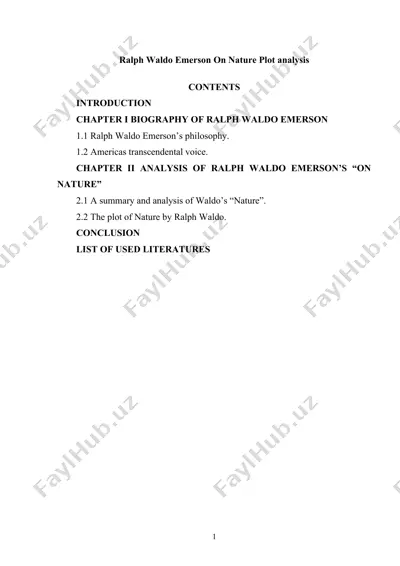
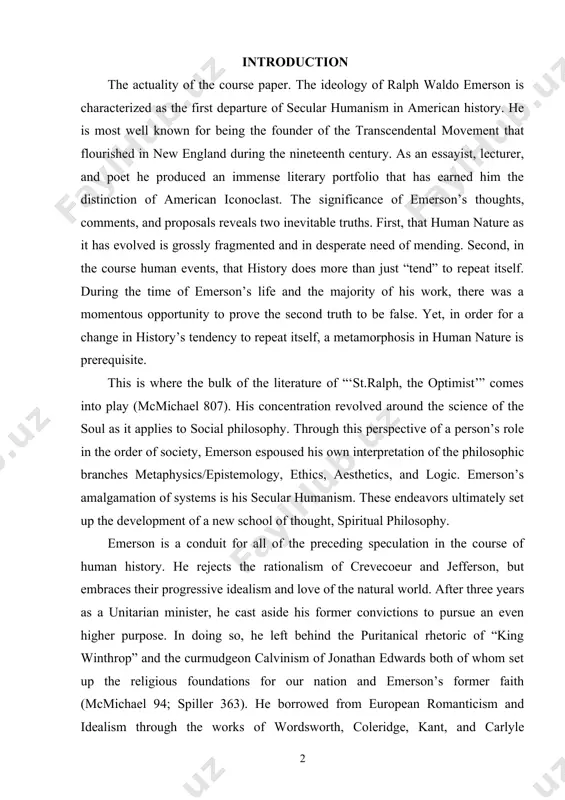
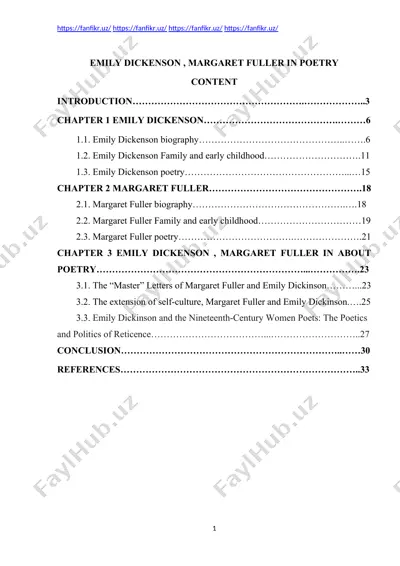
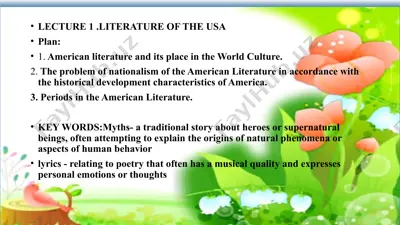
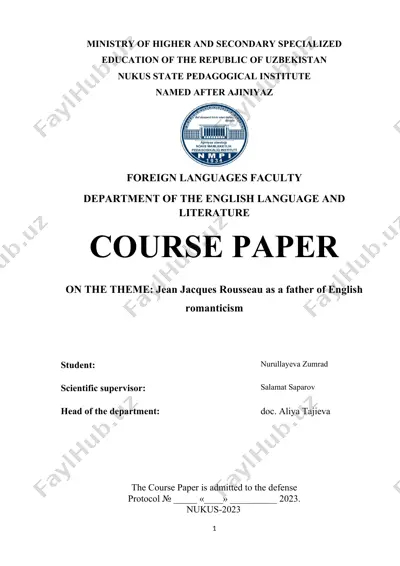
ralph waldo emerson on nature plot analysis contents introduction chapter i biography of ralph waldo emerson 1.1 ralph waldo emerson’s philosophy. 1.2 americas transcendental voice. chapter ii analysis of ralph waldo emerson’s “on nature” 2.1 a summary and analysis of waldo’s “nature”. 2.2 the plot of nature by ralph waldo. conclusion list of used literatures introduction the actuality of the course paper. the ideology of ralph waldo emerson is characterized as the first departure of secular humanism in american history. he is most well known for being the founder of the transcendental movement that flourished in new england during the nineteenth century. as an essayist, lecturer, and poet he produced an immense literary portfolio that has earned him the distinction of american iconoclast. the significance of emerson’s thoughts, comments, and proposals reveals two inevitable truths. first, that human nature as it has evolved is grossly fragmented and in desperate need …
2 / 31
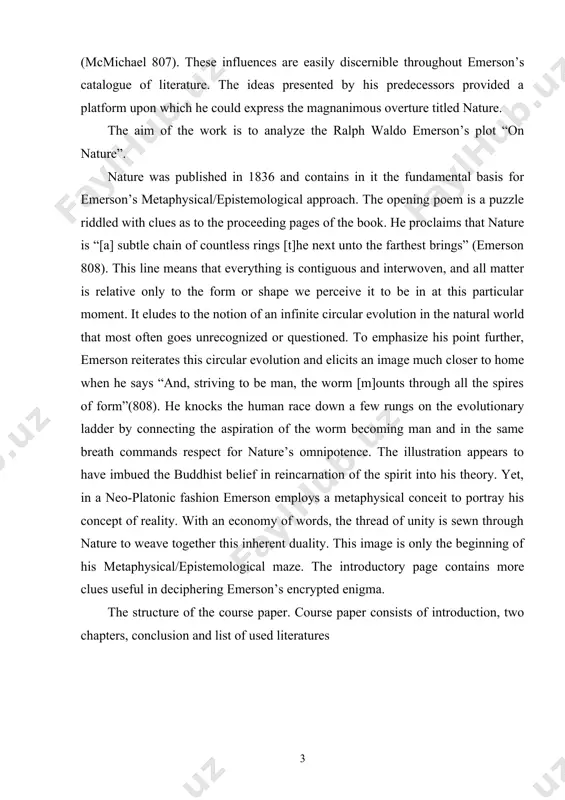
tionalism of crevecoeur and jefferson, but embraces their progressive idealism and love of the natural world. after three years as a unitarian minister, he cast aside his former convictions to pursue an even higher purpose. in doing so, he left behind the puritanical rhetoric of “king winthrop” and the curmudgeon calvinism of jonathan edwards both of whom set up the religious foundations for our nation and emerson’s former faith (mcmichael 94; spiller 363). he borrowed from european romanticism and idealism through the works of wordsworth, coleridge, kant, and carlyle (mcmichael 807). these influences are easily discernible throughout emerson’s catalogue of literature. the ideas presented by his predecessors provided a platform upon which he could express the magnanimous overture titled nature. the aim of the work is to analyze the ralph waldo emerson’s plot “on nature”. nature was published in 1836 and contains in it the fundamental basis for emerson’s metaphysical/epistemological …
3 / 31
o his theory. yet, in a neo-platonic fashion emerson employs a metaphysical conceit to portray his concept of reality. with an economy of words, the thread of unity is sewn through nature to weave together this inherent duality. this image is only the beginning of his metaphysical/epistemological maze. the introductory page contains more clues useful in deciphering emerson’s encrypted enigma. the structure of the course paper. course paper consists of introduction, two chapters, conclusion and list of used literatures chapter i biography of ralph waldo emerson 1.1 ralph waldo emerson’s philosophy. emerson s philosophy ralph waldo emerson, nineteenth century poet and writer, expresses a philosophy of life, based on our inner self and the presence of the soul. emerson regarded and learned from the great minds of the past, he says repeatedly that each person should live according to his own thinking. i will try to explain emerson s philosophy, …
4 / 31
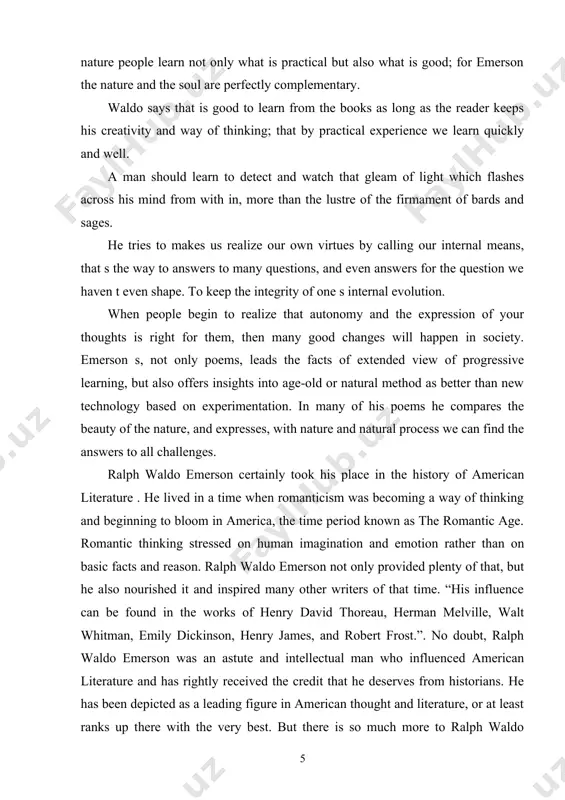
ref:1] [1: ferguson, charles a.; & heath, shirley brice (eds.). (1981). language in the usa. cambridge: cambridge university press.] the soul is the creative essence, while all of creation, including art which is human unity with natural things, is said to as nature. in nature the soul sees the picture of its own pure essence manifest, seeing beauty, truth, and justice in its laws. nature in life teaches the understanding, is a practicing for the intellect in learning how to deal with life s problems. from emerson s transcendental (a word i had to learn its meaning in order to understand waldo s theory) view the natural figures are also symbols of spirituals facts or philosophy. that by interacting with nature people learn not only what is practical but also what is good; for emerson the nature and the soul are perfectly complementary. waldo says that is good to learn …
5 / 31
when romanticism was becoming a way of thinking and beginning to bloom in america, the time period known as the romantic age. romantic thinking stressed on human imagination and emotion rather than on basic facts and reason. ralph waldo emerson not only provided plenty of that, but he also nourished it and inspired many other writers of that time. “his influence can be found in the works of henry david thoreau, herman melville, walt whitman, emily dickinson, henry james, and robert frost.”. no doubt, ralph waldo emerson was an astute and intellectual man who influenced american literature and has rightly received the credit that he deserves from historians. he has been depicted as a leading figure in american thought and literature, or at least ranks up there with the very best. but there is so much more to ralph waldo emerson when we consider the personal hardships that he had …

Want to read more?

Download all 31 pages for free via Telegram.

Download full file

About "ralph waldo emerson on nature plot analysis"

ralph waldo emerson on nature plot analysis contents introduction chapter i biography of ralph waldo emerson 1.1 ralph waldo emerson’s philosophy. 1.2 americas transcendental voice. chapter ii analysis of ralph waldo emerson’s “on nature” 2.1 a summary and analysis of waldo’s “nature”. 2.2 the plot of nature by ralph waldo. conclusion list of used literatures introduction the actuality of the course paper. the ideology of ralph waldo emerson is characterized as the first departure of secular humanism in american history. he is most well known for being the founder of the transcendental movement that flourished in new england during the nineteenth century. as an essayist, lecturer, and poet he produced an immense literary portfolio that has earned him the distinction …

This file contains 31 pages in DOCX format (59.3 KB). To download "ralph waldo emerson on nature plot analysis", click the Telegram button on the left.
Tags: ralph waldo emerson on nature p… DOCX 31 pages Free download Telegram