language and culture

PPTX 13 стр. 1,2 МБ Бесплатная загрузка

Предварительный просмотр (5 стр.)

Прокрутите вниз 👇


1 / 13
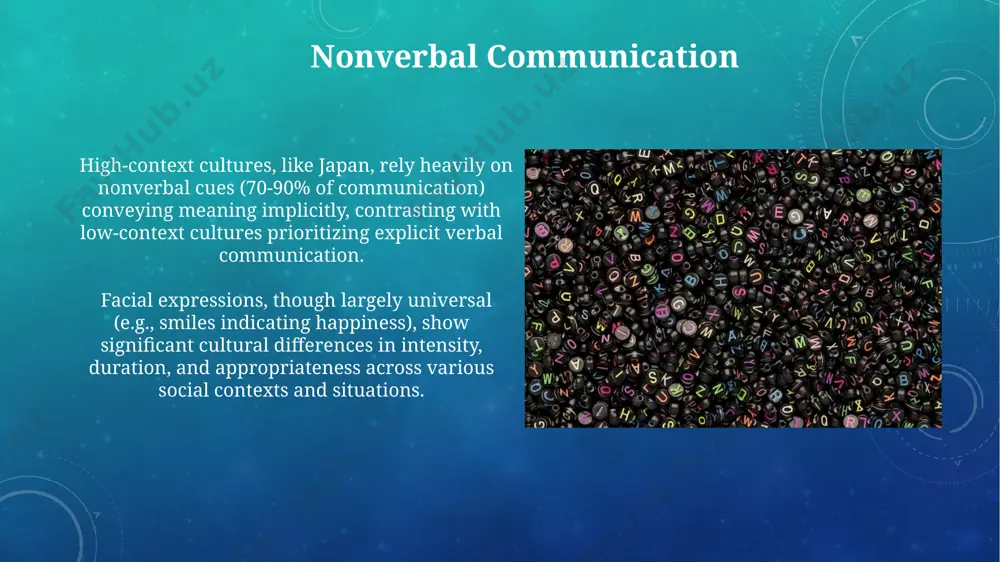
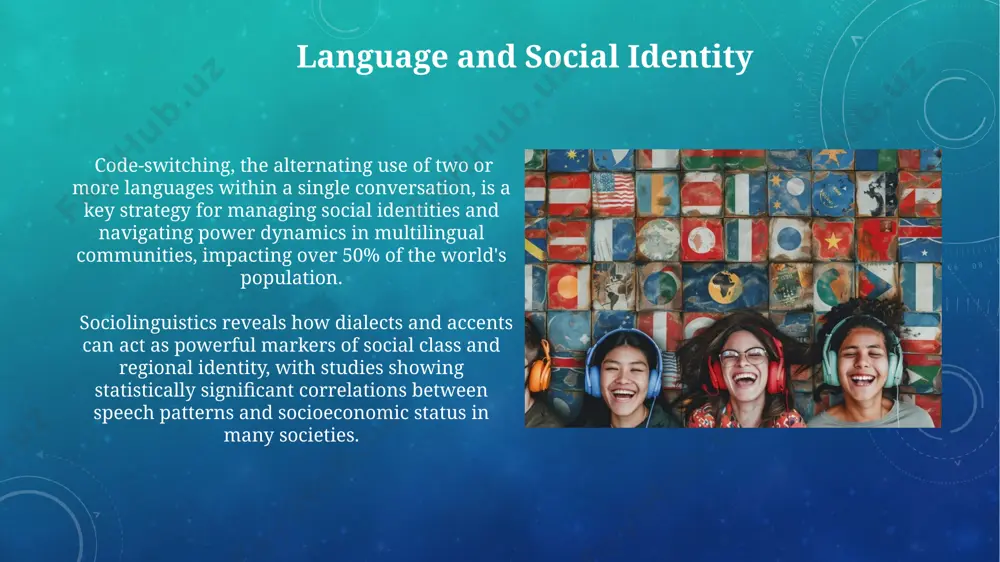
powerpoint presentation language and culture roziqova nilufar 1. culture shapes language 2. language reflects culture 3. language and cultural identity plan: cultural values reflected in language numerous studies show a strong correlation (r > 0.6) between a culture's power distance index and the formality levels in its language, with higher power distance scores (e.g collectivist cultures, like japan, often employ high-context communication, relying on implicit meaning and shared understanding (over 70% of communication is nonverbal), contrasting with individualistic cultures' direct, low-context styles prevalent in the usa. nonverbal communication high-context cultures, like japan, rely heavily on nonverbal cues (70-90% of communication) conveying meaning implicitly, contrasting with low-context cultures prioritizing explicit verbal communication. facial expressions, though largely universal (e.g., smiles indicating happiness), show significant cultural differences in intensity, duration, and appropriateness across various social contexts and situations. language and social identity code-switching, the alternating use of two or more languages within a …
2 / 13
% of a language's vocabulary can be borrowed within 2 centuries, reflecting significant cultural shifts. language and culture: an introduction cultural values and norms are often embedded within a language's grammatical structures and vocabulary, reflecting social hierarchies, religious beliefs, or approximately 20% of the world's languages facing extinction. language shapes our perception of reality; the sapir-whorf hypothesis suggests that speakers of different languages conceptualize the world differently, impacting cognitive processes with over 7,000 languages worldwide demonstrating this diversity. language acquisition and cultural transmission cross-cultural studies reveal approximately 6,000-7,000 languages worldwide, each encoding unique cultural perspectives and knowledge, illustrating the profound interconnectedness of language and cultural transmission mechanisms. the sapir-whorf hypothesis posits that linguistic structures influence thought processes, implying that language acquisition directly shapes worldview and contributes significantly to the intergenerational transmission of cultural values and beliefs. the future of language and culture globalized communication, driven by the internet, will likely …
3 / 13
olor terms versus those with more—demonstrate a nuanced relationship between language and cognitive categorization. this highlights the weak version of the hypothesis. linguistic relativity studies show a correlation between language's grammatical gender systems (masculine/feminine) and how speakers implicitly attribute characteristics to objects; for example, in languages with gendered nouns, bridges might be perceived differently based on their assigned gender (masculine vs. feminine). color perception studies reveal variations across cultures; languages with fewer basic color terms often exhibit different boundaries for categorizing colors compared to languages with more nuanced color terminology, influencing perceptual distinctions. language and power dynamics linguistic profiling, a form of discrimination based on speech patterns, shows that individuals judged as having "non-standard" accents may face significant disadvantages in areas such as employment (estimated 25% lower hiring rates). language standardization efforts, often led by dominant groups, can marginalize minority dialects, creating a power imbalance reflected in 70% of global …
4 / 13
language and culture - Page 4
5 / 13
language and culture - Page 5

Хотите читать дальше?

Скачайте все 13 страниц бесплатно через Telegram.

Скачать полный файл

О "language and culture"

powerpoint presentation language and culture roziqova nilufar 1. culture shapes language 2. language reflects culture 3. language and cultural identity plan: cultural values reflected in language numerous studies show a strong correlation (r > 0.6) between a culture's power distance index and the formality levels in its language, with higher power distance scores (e.g collectivist cultures, like japan, often employ high-context communication, relying on implicit meaning and shared understanding (over 70% of communication is nonverbal), contrasting with individualistic cultures' direct, low-context styles prevalent in the usa. nonverbal communication high-context cultures, like japan, rely heavily on nonverbal cues (70-90% of communication) conveying meaning implicitly, contrasting with low...

Этот файл содержит 13 стр. в формате PPTX (1,2 МБ). Чтобы скачать "language and culture", нажмите кнопку Telegram слева.

Теги: language and culture PPTX 13 стр. Бесплатная загрузка Telegram