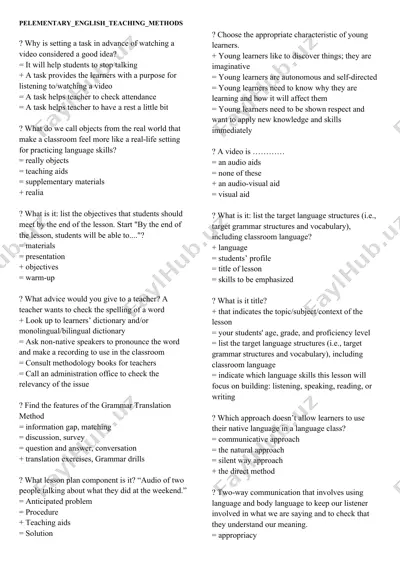
phonics teaching methods

DOCX 5 pages 181.3 KB Free download

Page preview (5 pages)

Scroll down 👇
1 / 5
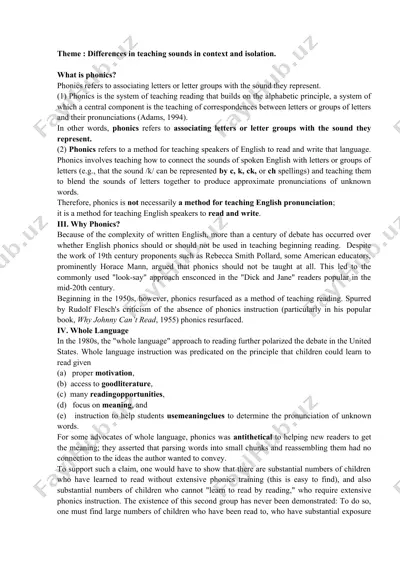
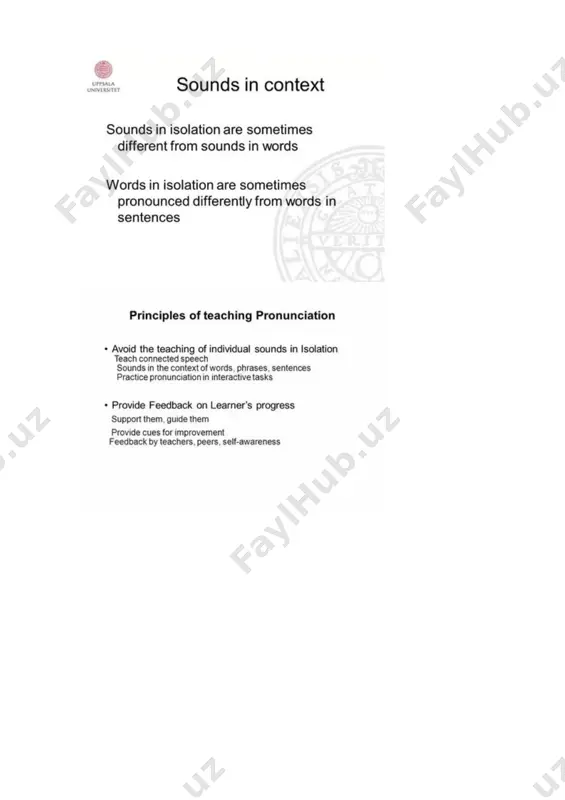
theme : differences in teaching sounds in context and isolation. what is phonics? phonics refers to associating letters or letter groups with the sound they represent. (1) phonics is the system of teaching reading that builds on the alphabetic principle, a system of which a central component is the teaching of correspondences between letters or groups of letters and their pronunciations (adams, 1994). in other words, phonics refers to associating letters or letter groups with the sound they represent. (2) phonics refers to a method for teaching speakers of english to read and write that language. phonics involves teaching how to connect the sounds of spoken english with letters or groups of letters (e.g., that the sound /k/ can be represented by c, k, ck, or ch spellings) and teaching them to blend the sounds of letters together to produce approximate pronunciations of unknown words. therefore, phonics is not necessarily …
2 / 5
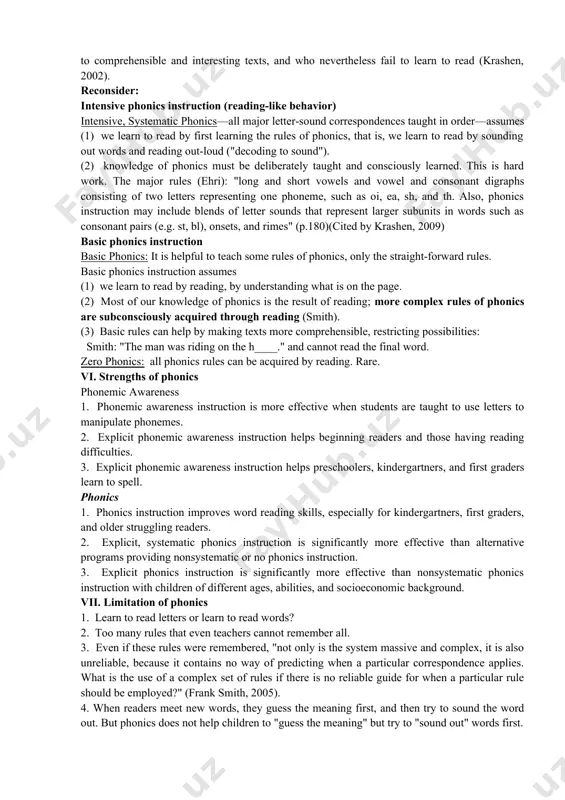
given (a) proper motivation, (b) access to goodliterature, (c) many readingopportunities, (d) focus on meaning, and (e) instruction to help students usemeaningclues to determine the pronunciation of unknown words. for some advocates of whole language, phonics was antithetical to helping new readers to get the meaning; they asserted that parsing words into small chunks and reassembling them had no connection to the ideas the author wanted to convey. to support such a claim, one would have to show that there are substantial numbers of children who have learned to read without extensive phonics training (this is easy to find), and also substantial numbers of children who cannot "learn to read by reading," who require extensive phonics instruction. the existence of this second group has never been demonstrated: to do so, one must find large numbers of children who have been read to, who have substantial exposure to comprehensible and interesting …
3 / 5
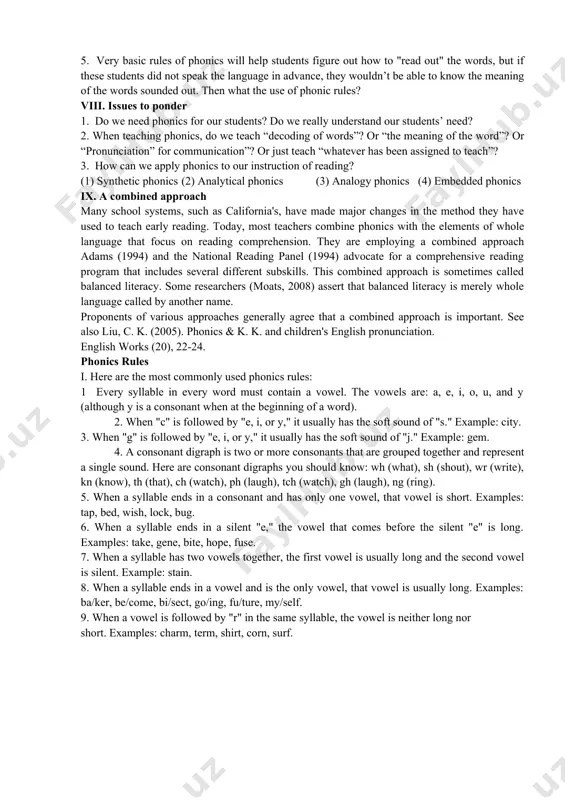
he page. (2) most of our knowledge of phonics is the result of reading; more complex rules of phonics are subconsciously acquired through reading (smith). (3) basic rules can help by making texts more comprehensible, restricting possibilities: smith: "the man was riding on the h____." and cannot read the final word. zero phonics: all phonics rules can be acquired by reading. rare. vi. strengths of phonics phonemic awareness 1. phonemic awareness instruction is more effective when students are taught to use letters to manipulate phonemes. 2. explicit phonemic awareness instruction helps beginning readers and those having reading difficulties. 3. explicit phonemic awareness instruction helps preschoolers, kindergartners, and first graders learn to spell. phonics 1. phonics instruction improves word reading skills, especially for kindergartners, first graders, and older struggling readers. 2. explicit, systematic phonics instruction is significantly more effective than alternative programs providing nonsystematic or no phonics instruction. 3. explicit phonics …
4 / 5
did not speak the language in advance, they wouldn’t be able to know the meaning of the words sounded out. then what the use of phonic rules? viii. issues to ponder 1. do we need phonics for our students? do we really understand our students’ need? 2. when teaching phonics, do we teach “decoding of words”? or “the meaning of the word”? or “pronunciation” for communication”? or just teach “whatever has been assigned to teach”? 3. how can we apply phonics to our instruction of reading? (1) synthetic phonics (2) analytical phonics (3) analogy phonics (4) embedded phonics ix. a combined approach many school systems, such as california's, have made major changes in the method they have used to teach early reading. today, most teachers combine phonics with the elements of whole language that focus on reading comprehension. they are employing a combined approach adams (1994) and the national reading …
5 / 5
(laugh), tch (watch), gh (laugh), ng (ring). 5. when a syllable ends in a consonant and has only one vowel, that vowel is short. examples: tap, bed, wish, lock, bug. 6. when a syllable ends in a silent "e," the vowel that comes before the silent "e" is long. examples: take, gene, bite, hope, fuse. 7. when a syllable has two vowels together, the first vowel is usually long and the second vowel is silent. example: stain. 8. when a syllable ends in a vowel and is the only vowel, that vowel is usually long. examples: ba/ker, be/come, bi/sect, go/ing, fu/ture, my/self. 9. when a vowel is followed by "r" in the same syllable, the vowel is neither long nor short. examples: charm, term, shirt, corn, surf. image1.jpeg image2.jpeg image3.jpeg

Want to read more?

Download all 5 pages for free via Telegram.

Download full file

About "phonics teaching methods"

theme : differences in teaching sounds in context and isolation. what is phonics? phonics refers to associating letters or letter groups with the sound they represent. (1) phonics is the system of teaching reading that builds on the alphabetic principle, a system of which a central component is the teaching of correspondences between letters or groups of letters and their pronunciations (adams, 1994). in other words, phonics refers to associating letters or letter groups with the sound they represent. (2) phonics refers to a method for teaching speakers of english to read and write that language. phonics involves teaching how to connect the sounds of spoken english with letters or groups of letters (e.g., that the sound /k/ can be …

This file contains 5 pages in DOCX format (181.3 KB). To download "phonics teaching methods", click the Telegram button on the left.
Tags: phonics teaching methods DOCX 5 pages Free download Telegram